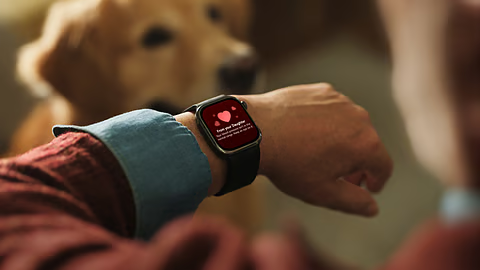
Huawei used Dubai’s hosting of the world’s biggest hypertension conference to make a pointed argument: the smartwatch on your wrist should be treated as a serious blood pressure tool, not a step counter with ambitions.
The company’s MEA Tech Innovation Talks, held at Grand Plaza Movenpick on 23 October, ran alongside ISH-ECS 2026, the hypertension-focused gathering taking place in the city from 22 to 25 October. That timing was deliberate. Huawei had just introduced the HUAWEI WATCH D3 at the conference, the latest entry in its D Series of smartwatches built around an inflatable wrist cuff rather than the optical sensors most wearables rely on to estimate blood pressure.
That distinction matters. Optical readings have long drawn skepticism from clinicians, while cuff-based measurement sits much closer to what doctors already trust. Professor George Stergiou, President of the International Society of Hypertension, called the WATCH D3 a novel and reliable way to see blood pressure profiles and patterns. He was also careful to add that the ISH and the European Society of Hypertension support clinical use of validated wrist-cuff monitors while still calling for more research into how they fit into real clinical practice. That caveat is worth taking seriously.
The more interesting idea is ambulatory blood pressure monitoring, or ABPM, which typically means wearing a bulky upper-arm cuff for 24 hours. Professor Jiguang Wang of the Shanghai Institute of Hypertension pointed to the D3’s minimally disruptive ABPM and environmental reminders as a possible template for automated, everyday monitoring. Professor Yook-Chin Chia of Malaysia’s Sunway University argued that fewer interruptions and fewer required readings could make full ABPM far more practical for patients who currently avoid it.
Huawei is also pushing beyond blood pressure. Professor Maryam Al Saeed of Mohammed Bin Rashid University of Medicine and Health Sciences confirmed that Dubai Health and Huawei are running a clinical research project evaluating non-invasive wearables for earlier diabetes risk detection. Coronary heart disease risk research rounded out the health agenda. Huawei, an ISH member, has also set up a Wearable Blood Pressure Technology Innovation Fund with the society, backed by an R&D budget that reached USD 28.62 billion in 2025, or 21.8% of revenue.
The event wasn’t purely medical. Huawei showcased its foldables and camera phones, and CTO Edwin You outlined Tau Law, a chip design approach the company says prioritises cutting signal propagation delays over shrinking transistors, using techniques such as LogicFolding to boost density and performance. Given Huawei’s restricted access to advanced manufacturing, that framing is telling.
Pricing and regional availability for the WATCH D3 were not part of the discussion, and those details will decide whether this becomes a mainstream health device or remains a niche clinical curiosity.