

Waze has introduced several updates aimed at giving drivers greater control over their navigation experience, including specialized routing options and expanded use of Google’s Gemini AI. These changes reflect the ongoing shift in mapping apps toward more adaptive, user-influenced tools that blend real-time data with personal preferences.
The most targeted addition is motorcycle mode, which accounts for the distinct needs of two-wheeled vehicles. Motorcycles often take narrower paths unavailable to cars and require awareness of surface conditions that affect stability. This mode employs AI to suggest suitable routes while highlighting hazards such as potholes, speed bumps, raised crosswalks, shoulder drop-offs, and narrow bridges. It draws on Waze’s crowd-sourced traffic data and contributions from dedicated motorcycle map editors who monitor and update local conditions. The feature is currently deploying in Argentina, Brazil, Colombia, Malaysia, Mexico, Peru, and the Philippines for both Android and iOS users, with plans for wider availability. While this addresses a genuine gap—earlier navigation systems rarely differentiated vehicle types—it remains to be seen how consistently the AI handles edge cases in varied road infrastructures across regions.
Personalized navigation represents another practical evolution. Rather than relying solely on general traffic patterns, the app now factors in a driver’s past routes to prioritize preferences, such as favoring highways over stop-heavy local streets. Users can disable this or select alternatives easily through settings. Globally available on Android and iOS, the feature builds on Waze’s long-standing strength in hyperlocal insights, though it inevitably depends on the quality and volume of historical data collected. In an era where mapping apps have moved far beyond static directions—recalling how early GPS units offered little beyond basic turn-by-turn—this personalization feels like a logical step, yet it invites scrutiny over data usage and the potential for reinforcing narrow route habits that limit exploration of alternatives.
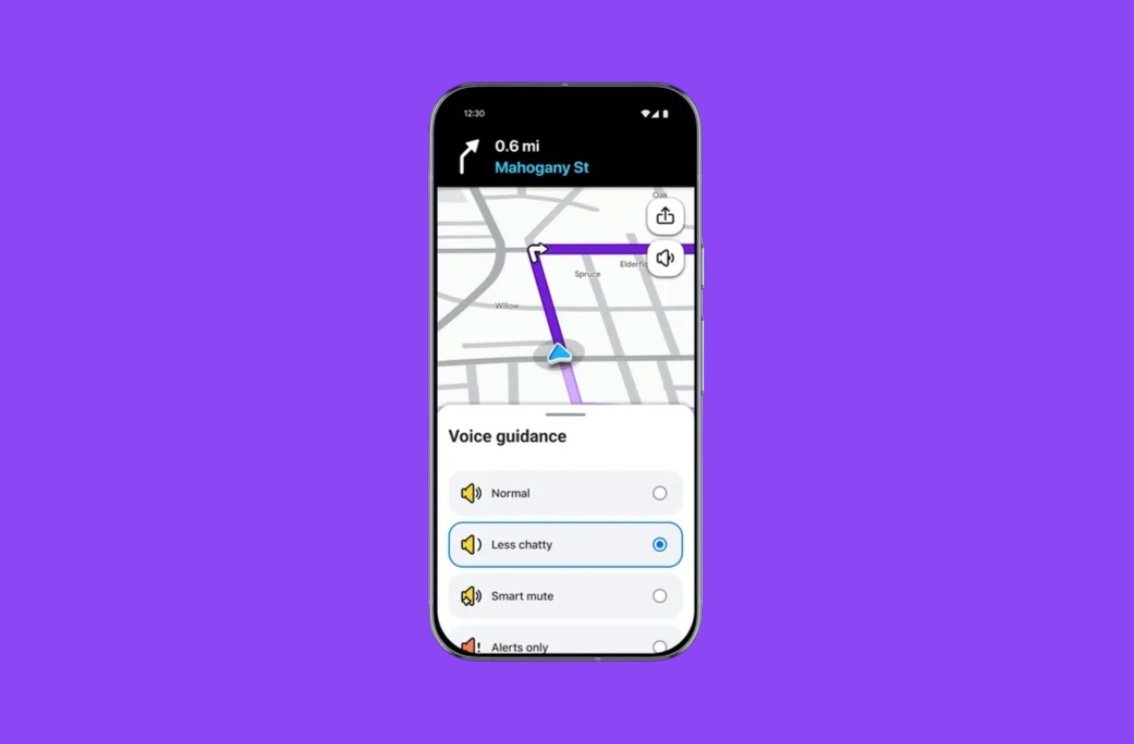
For those who prefer uninterrupted audio, a “less chatty” mode reduces non-essential voice prompts while preserving alerts for critical turns, lane changes, and road hazards. This option allows drivers to focus more on music or podcasts without sacrificing safety essentials. Rolled out worldwide, it responds to common complaints about overly talkative navigation systems that can distract as much as they assist.
Waze has also extended its conversational reporting capabilities, powered by Gemini, to include map updates. Users can now speak naturally about issues like road closures or incorrect addresses, with suggestions forwarded to local editors for verification. Similarly, voice search enhancements let drivers query for nearby options—such as open coffee shops, parking near specific venues, or competitively priced gas stations—before selecting a destination. These Gemini integrations are appearing first in beta globally, signaling a broader push toward more natural interaction with navigation tools.
Collectively, these updates underscore Waze’s reliance on its active community for both data accuracy and feature refinement, a model that has distinguished it since its early days as a crowd-powered alternative to proprietary mapping services. Yet the effectiveness of AI-driven elements will hinge on continued editor engagement and transparent handling of user data, areas where navigation platforms have faced past criticism. As driving environments grow more complex with urban density and mixed traffic, such customizations offer tangible improvements without claiming to transform the entire experience.