

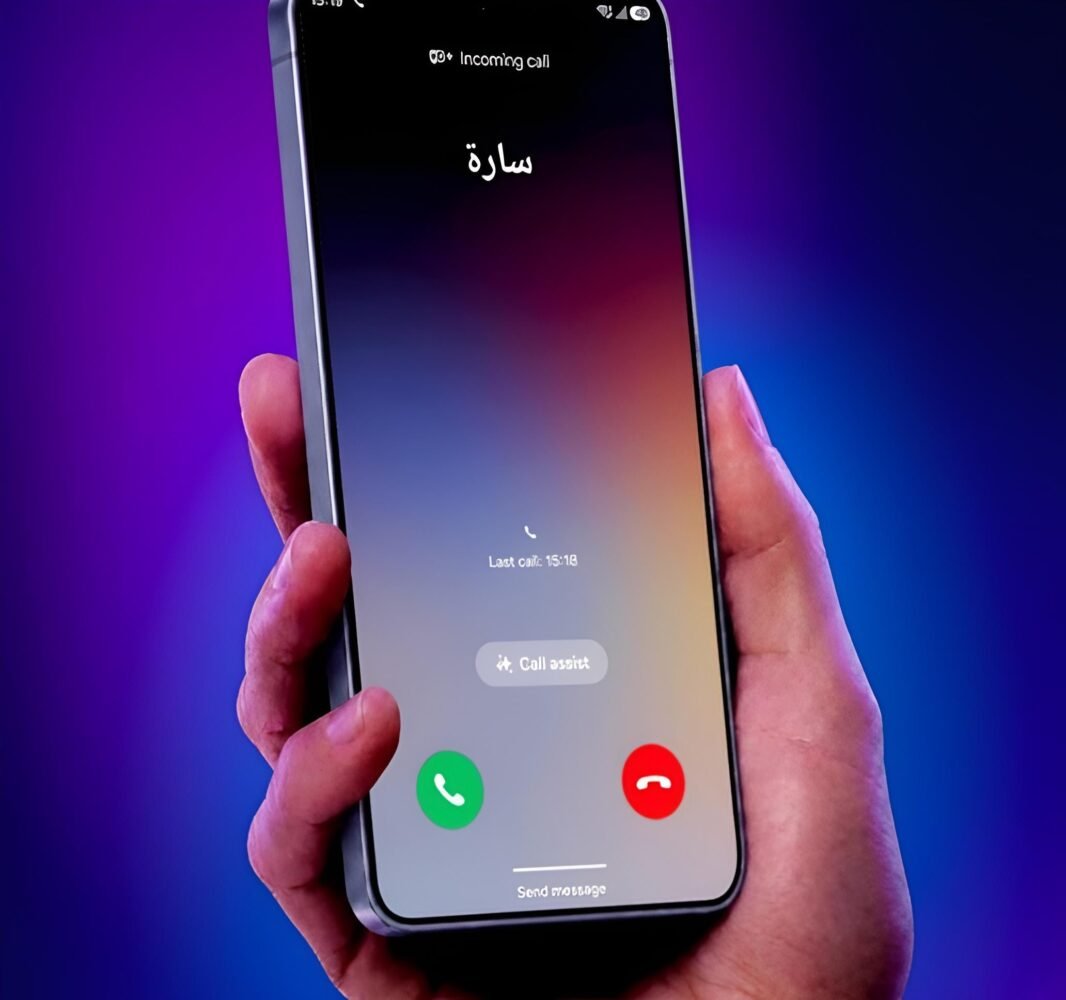
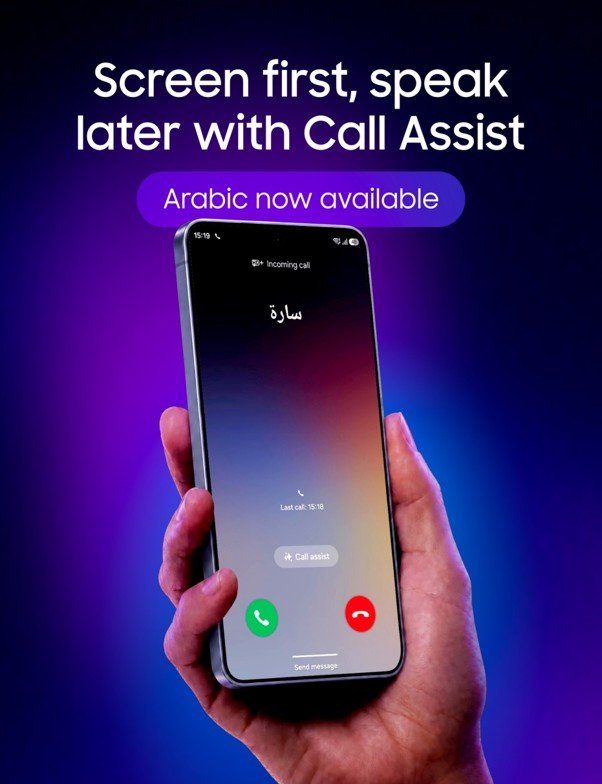
Samsung has rolled out Arabic language support for its Galaxy AI Call Screening feature, extending a practical tool for handling incoming calls to users in the Gulf Cooperation Council region. Announced on July 13, 2026, the update addresses a common frustration: the steady stream of unknown calls that many residents field weekly, whether from delivery services, financial institutions, or unsolicited numbers.
In practice, the feature functions as an automated intermediary. Upon receiving a call, the AI engages the caller, generates a real-time transcript of the conversation, and presents it to the user, who can then choose to answer, decline, or reply with a message. This setup provides context without requiring immediate engagement, potentially reducing interruptions from spam or low-priority requests. Users retain control through options to enable screening automatically for all calls or activate it manually on a case-by-case basis. Recording is limited strictly to the AI’s interaction with the caller and ceases once the user joins the conversation, a detail that may ease some privacy considerations in an era of heightened data sensitivity around voice interactions.
The Arabic expansion broadens accessibility in a linguistically diverse market where many prefer native-language interfaces for everyday functions. Previously limited in regional relevance, the feature now supports 16 languages with 23 variations including dialects, reflecting broader efforts by smartphone makers to localize AI capabilities. On compatible devices like the Galaxy S26 series, activation involves navigating to settings, selecting Call Screening, and downloading the appropriate language pack.
This development fits into the ongoing integration of artificial intelligence into mobile communication, a trend that has accelerated since early voice assistants and spam filters. Similar capabilities exist across competing platforms, though implementation details vary in transparency and user control. Call screening tools have become increasingly relevant as global spam volumes rise, driven by sophisticated robocalls and marketing tactics that exploit mobile connectivity. Yet questions linger about long-term implications, including how AI processes voice data, potential inaccuracies in transcription across dialects, and reliance on cloud processing that might introduce latency or dependency on stable networks in urban centers like Dubai.
For users in the GCC, where business and personal calls often blend across languages, the addition offers tangible convenience without fundamentally altering core phone functionality. It underscores a shift toward AI handling routine tasks, allowing people more discretion over their attention. However, such features also highlight the trade-offs of modern smartphones: greater utility paired with incremental data collection that warrants careful user oversight. As AI call tools proliferate, their real value will likely depend on consistent performance, minimal false positives, and clear boundaries around recording and storage rather than marketing promises of seamless intelligence.
Overall, the Arabic rollout represents an incremental but meaningful localization step in a competitive landscape where regional needs often outpace global feature parity. It equips users with better tools to navigate daily communication clutter, though success hinges on execution across varied accents and call scenarios rather than the breadth of language lists alone.