
Adobe is testing a new Photoshop interface built around natural-language editing, pushing the app further toward a future where users can make complex image changes without digging through layers, masks and traditional tools.
The new AI Assisted Editor is available in the Photoshop beta and sits alongside the familiar Pro Editor rather than replacing it. That distinction is important: Adobe is not removing the workflow professionals rely on, but it is creating a second path for users who would rather describe what they want than manually build every edit.
Inside AI Assisted Editor, users can type instructions into a prompt bar and access a set of AI-powered tools covering common tasks such as background removal, generative fill, object removal, image expansion and upscaling. The interface also includes AI markup, which lets users draw directly on an image to indicate where a change should happen.
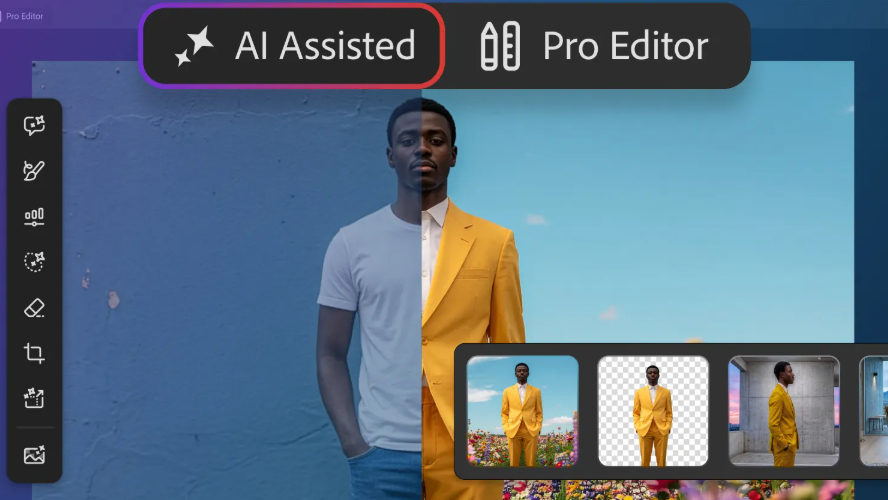
The biggest shift is the broader Prompt to Edit feature. Instead of selecting an object, adjusting masks and rebuilding a scene step by step, users can request substantial changes in plain language. A person photographed on a beach, for example, could be moved into a mountain setting through a written instruction.
That makes Photoshop considerably more approachable, but it also changes what “editing” increasingly means inside Adobe’s flagship image app. For decades, Photoshop’s power came from giving users granular control over almost every pixel. Adobe is now trying to preserve that depth while adding a conversational layer that can collapse several technical steps into a single command.
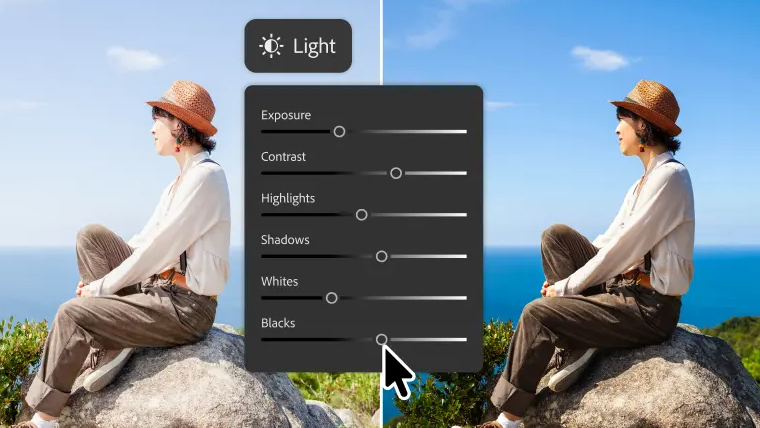
Alongside AI Assisted Editor, Adobe has introduced several other tools aimed at making edits easier to direct. A new Light Adjustment Layer provides controls for exposure, contrast, highlights, shadows, whites and blacks. Instruct Edit with Masks allows users to describe changes within selected areas, while Markup lets them circle, point to or draw around parts of an image before telling the AI what to modify.
These additions follow a steady expansion of AI across Adobe’s software. Photoshop gained an AI Assistant earlier this year, and Adobe has since brought similar assistant-style tools into applications including Premiere Pro, Illustrator and InDesign. The company has also been extending its creative tools beyond its own apps, including integrations with ChatGPT.
The strategy is becoming clear: Adobe wants AI to function less like a standalone feature and more like an alternative interface for creative software.
That could make Photoshop significantly easier for newcomers, especially people who only need occasional edits and have little interest in mastering decades of interface conventions. Experienced users may be less willing to surrender control, particularly when generative results need precision, consistency or repeatability.
For now, keeping AI Assisted and Pro Editor side by side is the sensible approach. The more interesting question is whether that separation lasts, or whether Photoshop eventually becomes a single workspace where prompts and traditional tools are simply two ways of reaching the same result.