

Meta is expanding its open AI strategy with Muse Glimmer, a 30-billion-parameter model designed to run locally on high-end consumer hardware rather than depending on cloud infrastructure. The company is releasing the model’s weights under the Apache 2.0 licence, giving developers considerable freedom to download, modify and deploy it.
The more interesting part of Muse Glimmer is its focus on agentic workloads. Rather than functioning purely as a chatbot that responds to individual prompts, the model is designed to take a task, create a plan and use developer-approved tools to complete multiple steps. It can also inspect results and attempt to recover when something goes wrong.
That approach reflects the AI industry’s growing interest in agents capable of doing work across applications and services with less human supervision. The challenge is making those systems reliable enough to be useful. Giving a model access to tools is relatively straightforward; ensuring it consistently chooses the right actions, handles failures safely and knows when to stop remains a much harder problem.
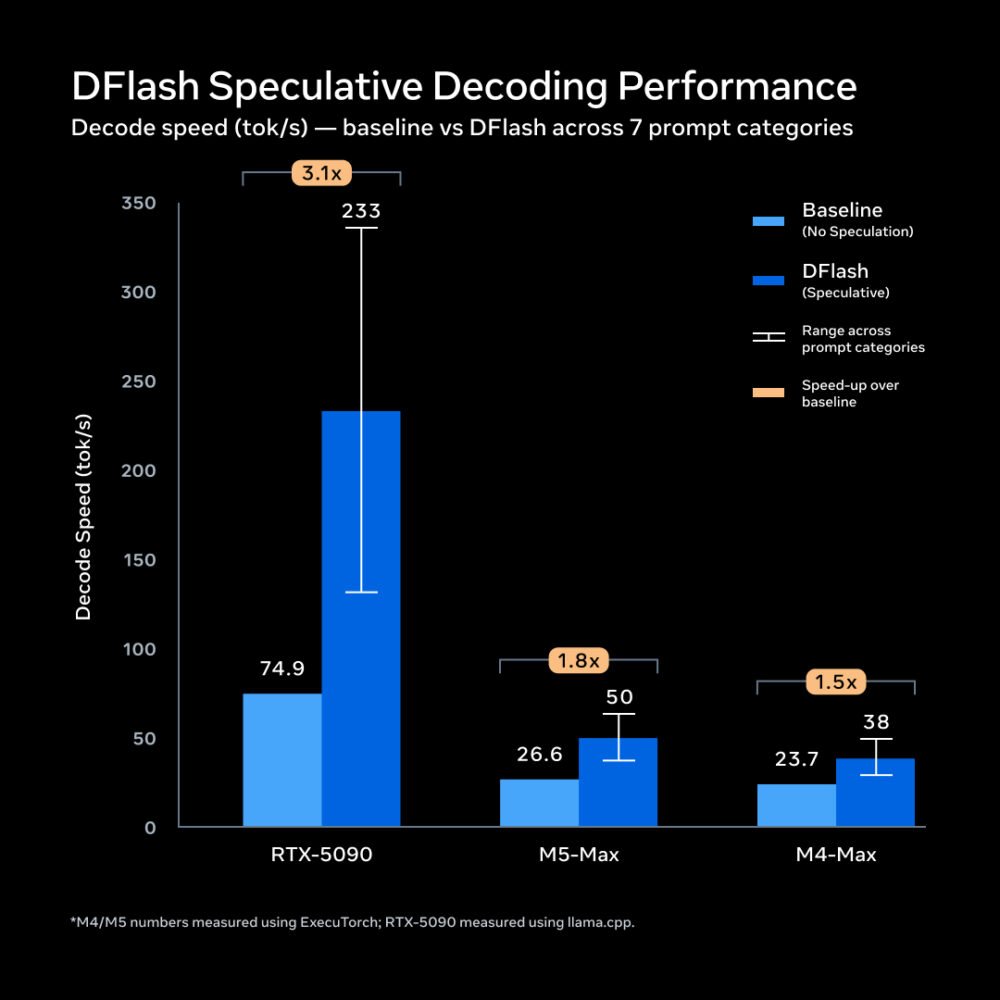
Meta is positioning local execution as another important part of the equation. Muse Glimmer operates within a claimed 24GB to 32GB memory range, putting it within reach of powerful desktop PCs and newer Apple silicon machines. Meta lists Macs equipped with M4 or M5 chips and at least 32GB of memory, Nvidia’s GeForce RTX 5090 and AMD Radeon AI PRO hardware among its intended platforms.
Running an agentic AI model locally could offer practical advantages for developers concerned about latency, cloud costs or sending sensitive information to remote servers. The hardware requirements still put Muse Glimmer well above an average laptop, however, so “runs locally” should not be confused with being accessible on every consumer computer.
The release is unusually complete compared with model launches that provide only a limited set of downloadable files. Meta says Muse Glimmer includes full-precision and 4-bit quantised weights, inference code and its DFlash speculative decoding head. Distribution is being handled through Hugging Face, while the model is also receiving support across tools including Ollama, LM Studio, llama.cpp, MLX, vLLM and SGLang.
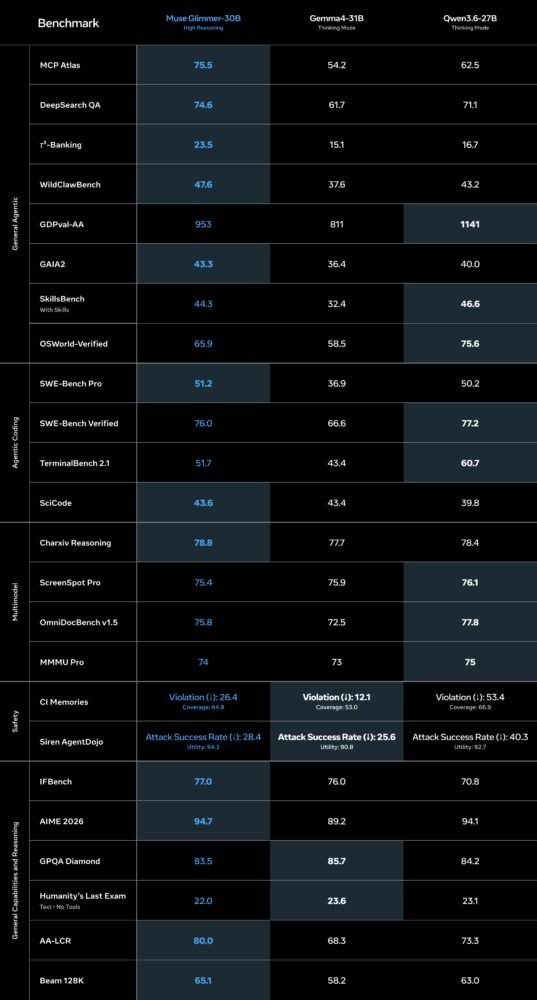
Hardware and infrastructure companies including Nvidia, AMD, Intel, Arm and Dell are part of the broader support ecosystem, alongside inference providers such as Together AI, Fireworks AI and OpenRouter. Unsloth support is also intended to make fine-tuning more accessible.
Muse Glimmer will not be Meta’s only open-weight release. The company says it plans to open the weights for a version of Muse Spark 1.2 in the coming weeks, although details about that release remain limited for now.
The Apache 2.0 licensing of Muse Glimmer is particularly notable as AI companies continue debating how much access developers should have to increasingly capable models. Meta has previously made openness a significant part of its AI strategy, and Muse Glimmer extends that philosophy into agentic AI. Whether a 30B model running on a single workstation can deliver dependable autonomous workflows will be the more important test once developers begin putting it to work.