
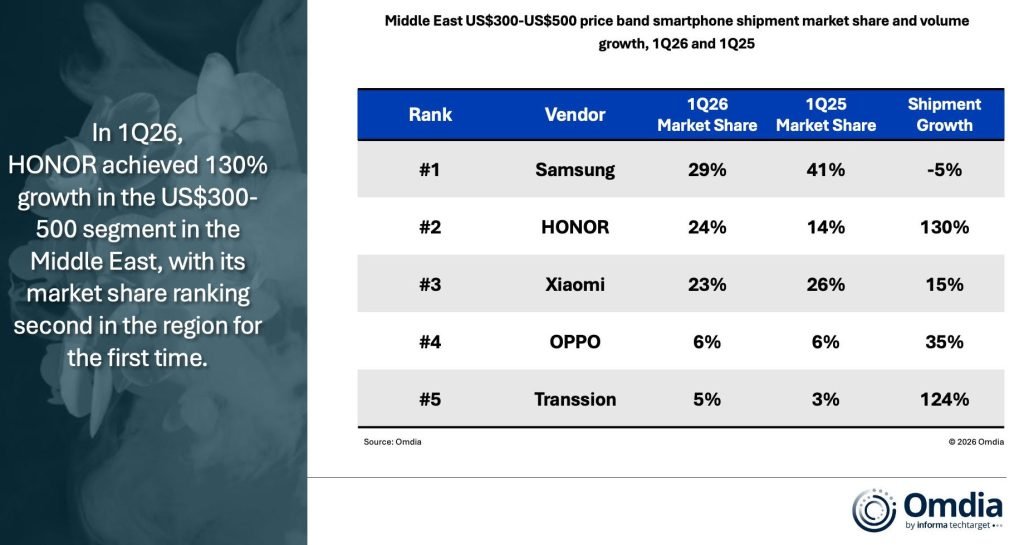
HONOR has secured the position of second-largest smartphone vendor in the Middle East for the first time in the first quarter of 2026, according to Omdia data. This marks a notable shift in a region long dominated by established players like Samsung, reflecting the brand’s targeted push into mid-to-high-end devices amid growing consumer demand for capable phones at competitive prices.
The company reported 73 percent year-on-year growth across the Middle East in Q1, contributing to a broader 25 percent global increase. Much of this regional momentum came from the $300–500 price band, where HONOR posted 130 percent growth and captured a 24 percent share, trailing only Samsung. Such figures highlight how mid-range and upper-mid-range segments continue to drive volume in markets where value-conscious buyers balance performance needs against cost, especially in Gulf countries with high smartphone penetration and social media usage.
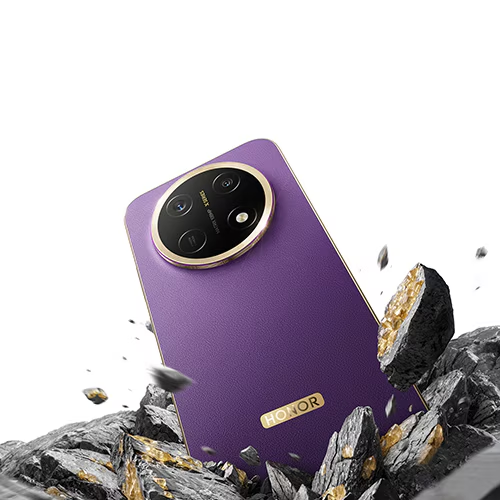
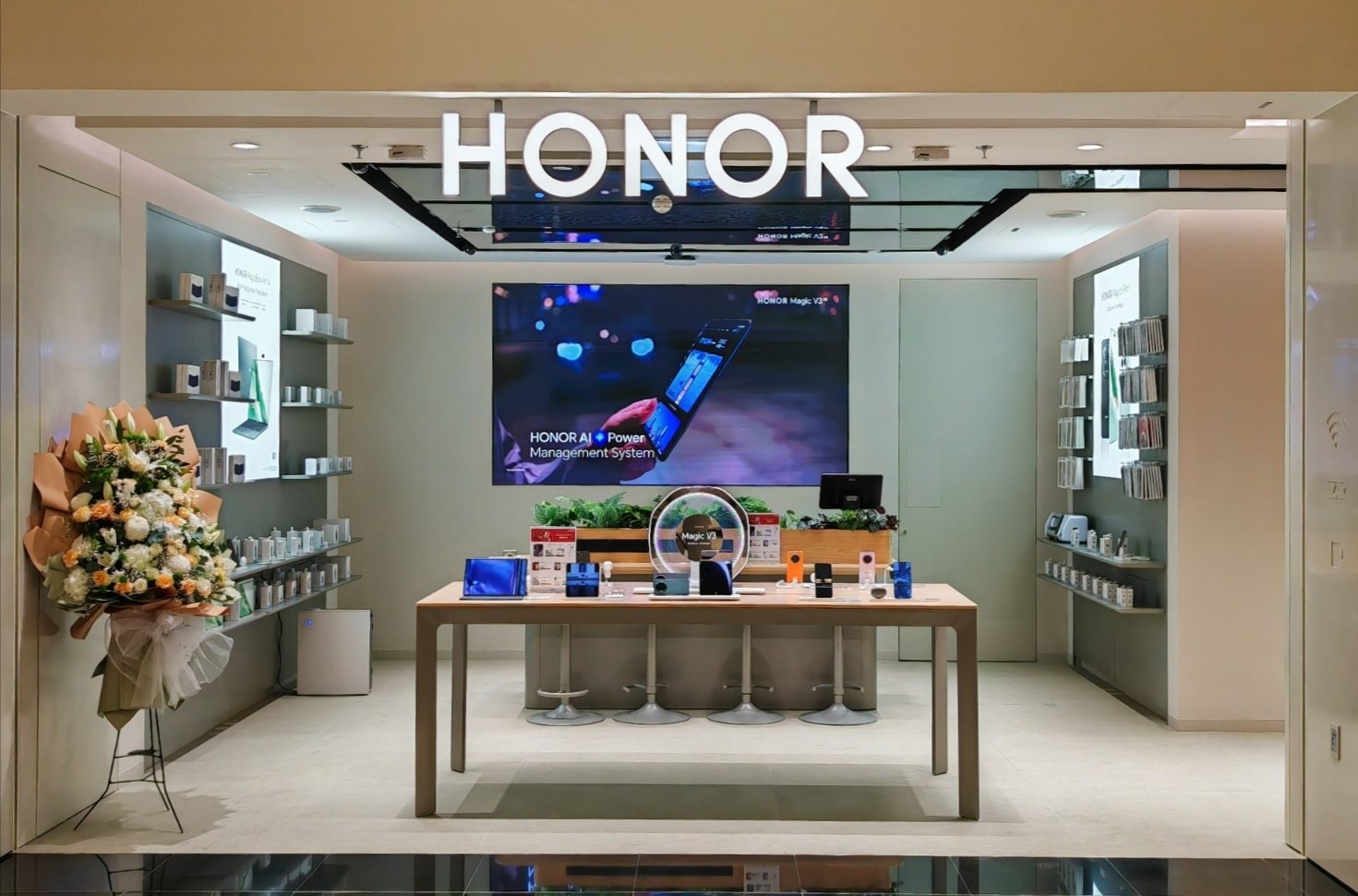
Product performance played a clear role. The HONOR 600 Series delivered flagship-like features, including a 200MP camera system with AI enhancements, at more accessible price points, while the X9d appealed to users prioritizing durability and everyday reliability. This portfolio approach—covering entry-level through premium devices—allows HONOR to address diverse consumer groups, from budget buyers to those seeking premium foldables. The company has also invested in local retail partnerships and operator ties, tailoring features like extended battery life and robust build quality to regional preferences for devices that withstand heat, dust, and active lifestyles common in the UAE and beyond.
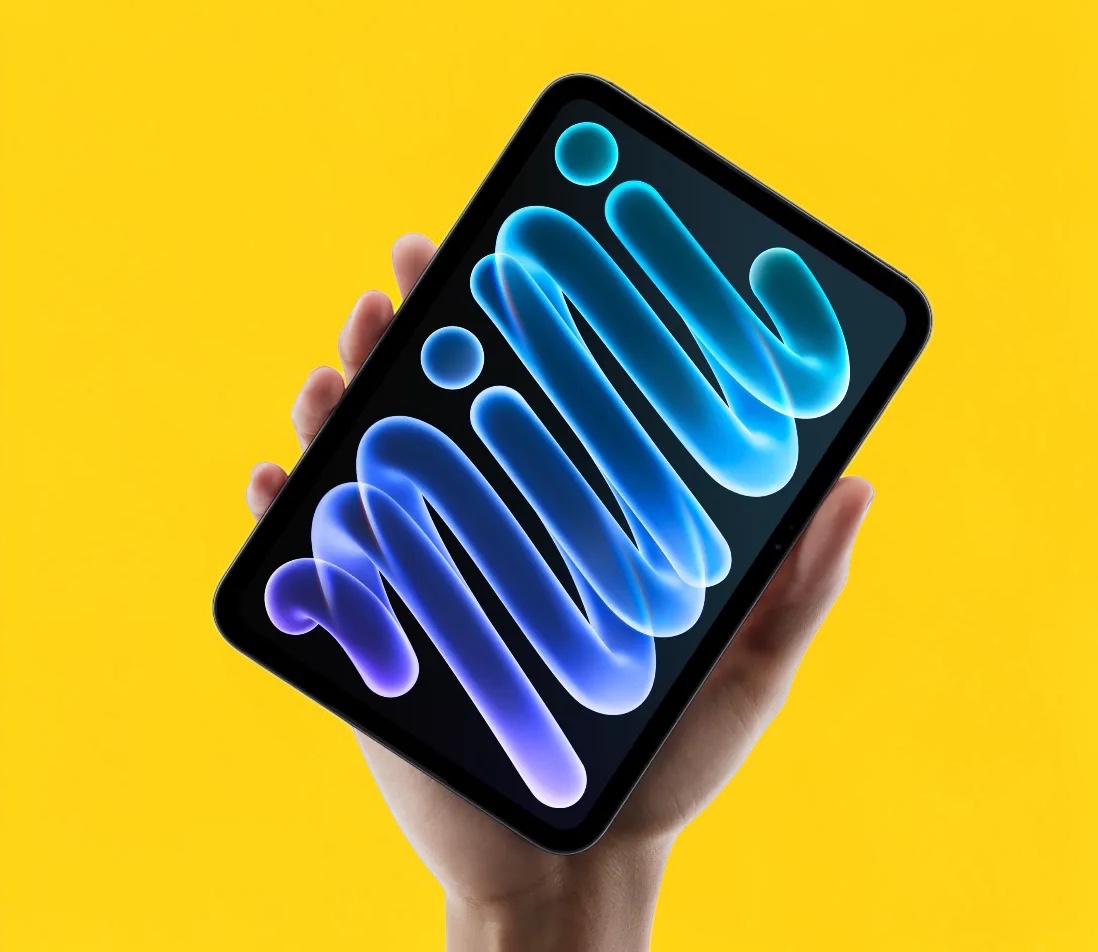
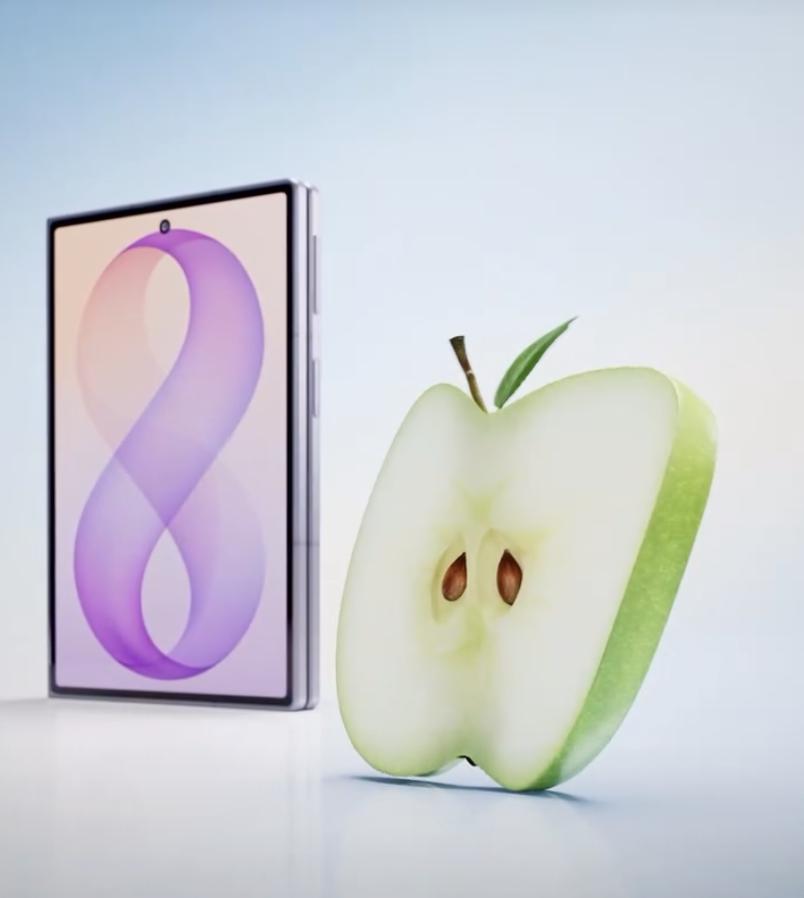
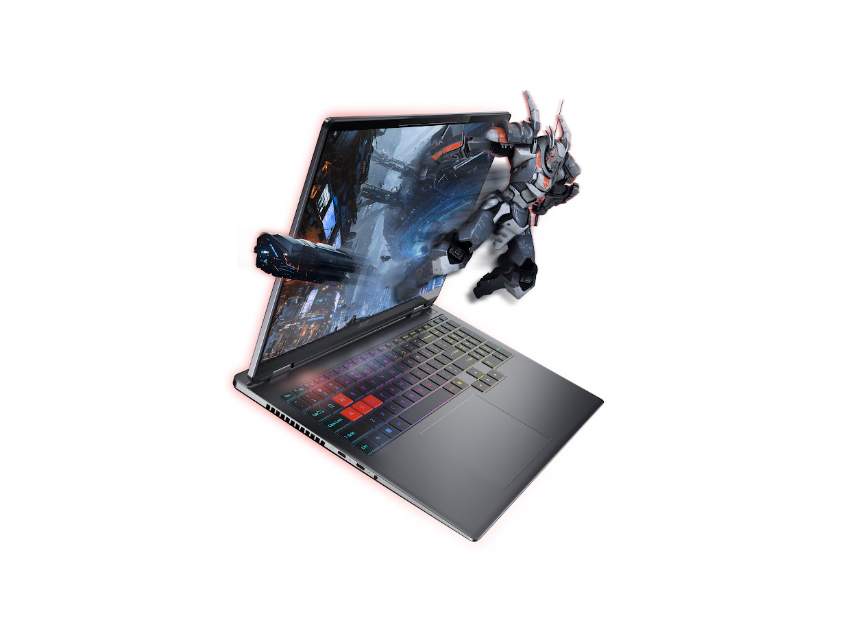
Beyond handsets, HONOR has expanded into a wider ecosystem that includes MagicBook laptops and MagicPad tablets, aiming for smoother cross-device use. Notably, it has prioritized compatibility with Apple products, enabling easier file sharing, notification syncing, and multi-device workflows between HONOR hardware and iPhones, Macs, or AirPods. In a market where users often mix ecosystems, this pragmatic openness could prove more practical than closed-off approaches, though long-term software support and update consistency will ultimately determine its staying power.
The upcoming Magic V6 foldable illustrates HONOR’s ambitions in the premium space. When folded, it measures a slim 8.75mm and weighs around 219g, approaching the feel of a traditional slab phone. It packs a substantial 6,660mAh silicon-carbon battery with 80W wired and 66W wireless charging, alongside solid durability credentials: an IP68/IP69 rating, reinforced hinge, and protective glass layers that minimize creasing on the inner 7.95-inch display. Powered by Snapdragon 8 Elite, it features a capable camera array with a 50MP main sensor, 64MP periscope telephoto, and AI tools. While these specs position it competitively against other foldables, real-world battery endurance under heavy use and the longevity of the folding mechanism remain key tests for adoption in a segment that has historically struggled with compromises in thickness, weight, and price.
Overall, HONOR’s rise in the Middle East underscores the ongoing fragmentation in the smartphone market, where strong regional execution and balanced pricing can challenge incumbents. Sustaining this trajectory will depend on delivering consistent software experiences and proving the ecosystem’s everyday value rather than relying solely on hardware headlines. In a crowded field, execution matters more than ambition.