

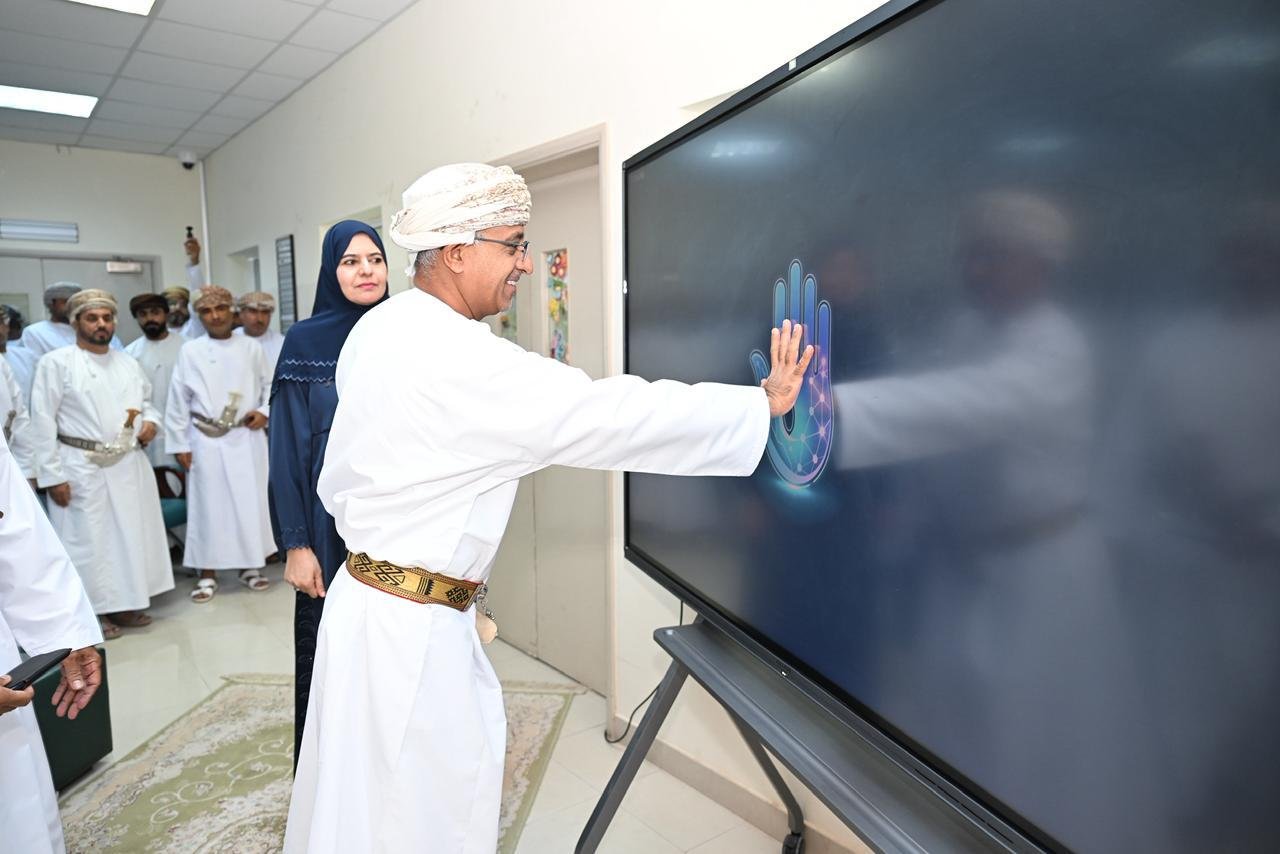
ASUS has partnered with Intel and local firm Bahwan Projects and Telecoms to establish an Artificial Intelligence Lab at the Directorate-General of Education in Ibri, Oman. Opened on July 8, 2026, the facility represents the company’s first dedicated education-sector AI project in the region and aligns with Oman’s broader push to integrate technology into learning under Vision 2040, which emphasizes building a knowledge-based economy and advancing national AI capabilities.
The lab equips classrooms and research spaces with a range of ASUS devices, including rugged Chromebooks, AI PCs, all-in-one systems, and higher-performance laptops such as the ExpertBook P3405, P5405, B1403, and B3405 models. These systems leverage Intel Core Ultra processors featuring CPU, GPU, and NPU engines for on-device AI acceleration, supporting tasks from basic productivity to more demanding creative and analytical work. Battery life, durability, and connectivity features are highlighted for hybrid learning environments, while sustainability aspects like reduced carbon footprints are noted in the deployment.
This initiative reflects ongoing regional efforts across the Middle East to modernize education through digital tools. Governments in the Gulf have increasingly invested in infrastructure to prepare students for tech-driven futures, yet the actual impact of such AI labs often hinges on teacher training, curriculum integration, and measurable learning outcomes rather than hardware specifications alone. While AI can assist with personalized tutoring, content generation, and administrative efficiency, challenges around equitable access, data privacy, and the risk of over-reliance on technology remain relevant in any large-scale educational rollout.
ASUS positions the lab as a hub for innovation, enabling educators and students to explore AI applications in real settings. The included devices support Windows-based AI features alongside ChromeOS options, aiming for versatility across different learning scenarios. Collaboration with Intel provides the processing foundation, while Bahwan brings local implementation expertise. Officials from the Ministry of Education, ASUS, Intel, and Suhail Bahwan Group have welcomed the project as a step toward skill development in the AI era.
In the wider context, ASUS has experience deploying education technology in over 100 countries, working with governments on digital learning programs. However, success in Oman will ultimately depend on sustained support beyond the initial launch—regular updates, teacher professional development, and adaptation to local needs—rather than the novelty of AI-ready hardware. Many similar initiatives worldwide have shown that technology deployment is only the starting point; meaningful transformation requires addressing pedagogical shifts and infrastructure consistency over time.
For Oman’s students and educators in Al Dhahirah Governorate, the AI Lab offers tangible access to current tools that blend portability, performance, and AI capabilities. It contributes to national goals of fostering innovation while highlighting the practical realities of implementing advanced technology in public education systems.