

Qualcomm is backing an Abu Dhabi research project that aims to bring AI-powered predictive maintenance directly onboard drones and future electric aircraft, awarding its first Tech for Good Grant in the Middle East to the Technology Innovation Institute (TII).
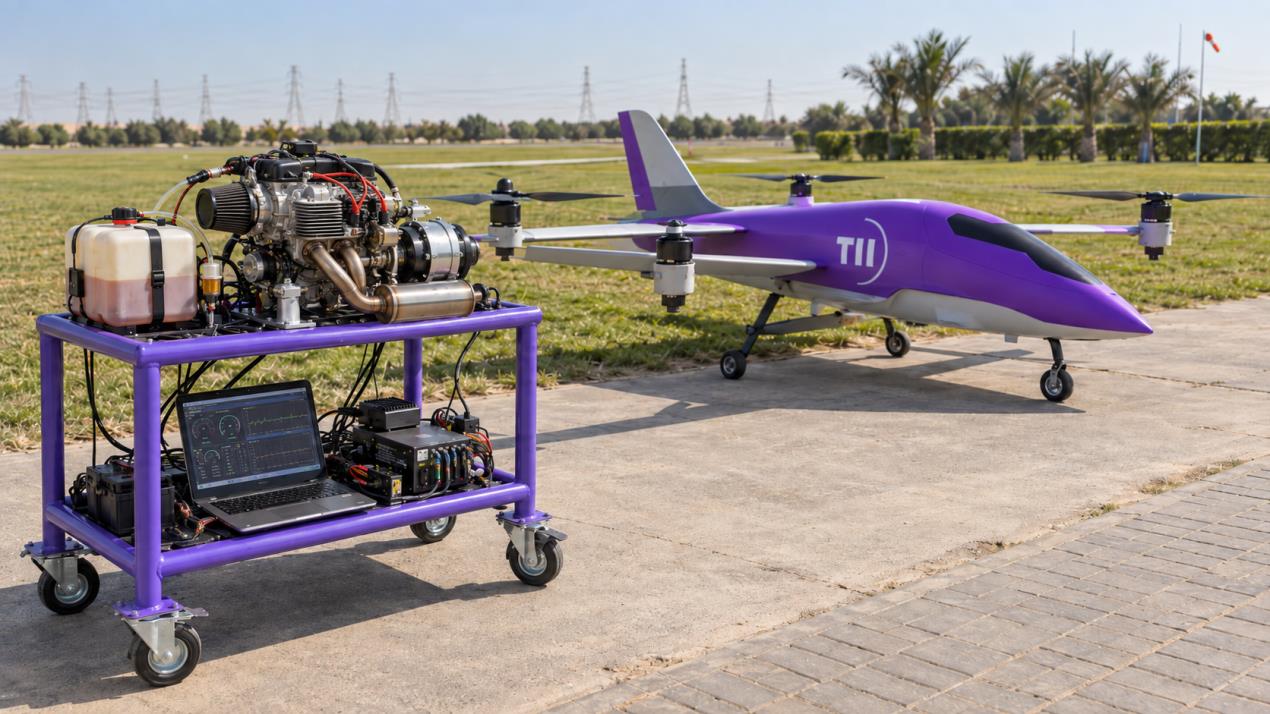
The collaboration centres on SADEED, a Prognostics and Health Management platform developed by TII’s Propulsion and Space Research Center. Researchers will adapt the system to run on Qualcomm’s Dragonwing IQ9 edge AI processor, with the goal of monitoring aircraft components and detecting signs of degradation before they turn into potentially serious failures.
The important part is where that processing happens. Rather than continuously sending aircraft health data to the cloud for analysis, SADEED is designed to evaluate safety-critical systems locally. That could be particularly useful for cargo drones and electric vertical take-off and landing (eVTOL) aircraft, where reliable connectivity cannot necessarily be assumed throughout every flight.
Moving diagnostics onto the aircraft also fits a broader shift toward edge AI, where increasingly capable processors handle machine learning workloads without depending on remote data centres. Beyond reducing latency, local processing can keep operational data onboard and allow systems to react immediately when anomalies appear.
For Advanced Air Mobility, predictive maintenance could become an important piece of the commercialisation puzzle. Conventional aviation maintenance frequently combines scheduled inspections with component replacement and servicing based on established intervals. TII’s approach is intended to supplement that model with continuous condition monitoring, potentially allowing operators to identify developing problems earlier and reduce unnecessary downtime.
TII says SADEED is the result of more than two years of work by its AI Diagnostics and Prognostics team. The Qualcomm project represents a move from research toward onboard implementation, although neither organisation has provided a timetable for flight testing or commercial deployment.
The technology is also described as platform-agnostic, opening the possibility of applications beyond aviation. Similar predictive health systems could potentially be applied to other machinery where failures are expensive or safety-critical, provided the underlying models and sensors can be adapted appropriately.
The grant also feeds into Abu Dhabi’s wider ambitions around Advanced Air Mobility, including work on infrastructure and technical foundations for future air corridors. But establishing routes for autonomous aircraft is only part of the challenge. Regulators and operators will also need convincing evidence that these aircraft can identify problems reliably and behave predictably when something goes wrong.
Putting more intelligence onboard could help address that requirement. Proving that the AI can consistently spot meaningful warning signs without generating unacceptable false alarms will be the more difficult test.