
TL;DR: Lupin season 4 locks Assane Diop up and lets his legend run loose, delivering bigger set pieces, sharper themes and another magnetic Omar Sy performance, even if the blockbuster ambitions occasionally get too loud.
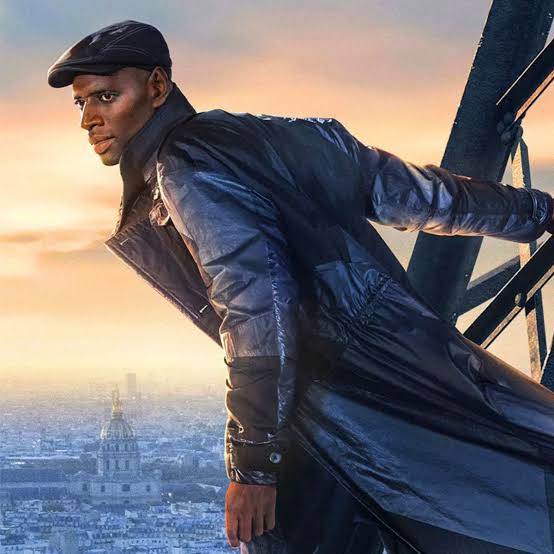
There is a special kind of joy in watching a show about a man who is always three moves ahead, and Lupin has milked that joy beautifully since its 2021 debut on Netflix. Season 4 flips the board entirely, and I think that is the smartest decision the series has made in years. Omar Sy’s Assane Diop has spent four years in a maximum-security prison after handing himself over at the end of season 3, and he is a week away from walking out a free man. The plan is refreshingly simple by his standards: keep his promise to his son, leave the gentleman thief persona behind, and join his family in Senegal. Then Paris gets hacked, warnings of upcoming heists start appearing signed with the name “Lupin,” and the man who built his whole identity around Maurice Leblanc’s legendary burglar suddenly has a copyright problem of the worst kind.
What follows in the opening stretch is brutal in a way the show rarely allows itself to be. Within roughly a dozen minutes of the first episode, Assane is in a straitjacket and sealed inside a glass cell where guards and inmates can watch him around the clock. It is the anti-heist opening, and it works because it strips away the thing we come to Lupin for, which is control. Watching the most composed man in French television reduced to an exhibit gives the season an urgency that the slightly comfy rhythms of earlier parts sometimes lacked.
A show finally interrogating its own legend
The thematic hook this season is fame as a trap, and it is a genuinely interesting one. Assane’s reputation has grown so large that investigators cannot imagine anyone else pulling off a sophisticated job, so the impossible becomes the assumed: if Lupin’s name is on it, Assane must have found a way out. Copycats emerge, the myth takes on a life of its own, and the architect of the legend finds himself unable to steer it. It reminds me of the Phantom Thieves in Persona 5 losing control of their own calling cards once the public turns them into a brand. The difference here is that Assane’s loss of control carries real, painful stakes for his family.
The writing also sharpens one of the series’ most important ideas. Assane has always weaponised the way French society refuses to see Black men, slipping through institutions disguised as cleaning staff or delivery workers because nobody looks twice. This season turns that invisibility inside out, with grainy security footage showing a Black man treated as all the proof anyone needs. There is a bitter, deliberate echo of the story that started everything, since Assane’s father was falsely accused of a jewel theft, and now the son faces the same fate while his own child watches. It is the most emotionally coherent the show’s revenge-to-redemption arc has felt, and it gives the twists something to stand on besides cleverness.
Bigger budget, bigger swagger, the occasional wobble
You can feel the money from the opening titles. Lupin has expanded from its old five-episode parts to an eight-episode season, and Sy now co-runs the show, steering it towards something closer to a superhero franchise with a top hat. The tech is flashier, the set pieces are larger, and the whole production has a glossier, more cinematic sheen. Think less cosy Parisian caper, more Mission: Impossible with a library card. For the most part, that ambition suits a series that was already punching well above the usual weight of a French-language drama on the global stage.
The trade-off is that not every swing connects. Some moments lean too hard into theatrical drama, playing beats at full volume when the show’s best tricks have always been quiet sleight of hand. The premise also leans on a very familiar trope, the retired legend pulled back for one more round, which fans of John Wick or basically every heist movie since Heat will spot from orbit. Lupin’s trick has always been making old formulas feel stylish, and it mostly pulls that off again, but the seams show more often when the scale goes up. I would rather the show trust its puzzle-box instincts than chase blockbuster noise.
Omar Sy remains the master key
None of this would hold together without Sy, who is as magnetic as ever. He has always played Assane with a charm that never curdles into smugness, and this season gives him something new to work with: helplessness. Watching a character built on effortless confidence scrambling under constant surveillance adds a vulnerability that makes the inevitable comebacks land harder. The returning shadow of Hubert Pellegrini, the nemesis whose hidden hand shaped so much of the earlier chaos, keeps the paranoia simmering. By now, the show has trained us not to trust anything at face value, and I found myself constantly second-guessing whether Assane is truly innocent this time, which is exactly where Lupin wants its audience.
The timing adds an unexpected layer, too. After the real-world Louvre jewel theft of 2025, in which the thieves posed as construction workers in broad daylight, Assane’s original night-time Louvre job in disguise looks less like fantasy and more like prophecy. The show could never have planned that kind of publicity, yet it gives the new season’s fixation on disguise, myth and institutional blind spots an eerie relevance. One firm piece of advice: switch the audio to French. The English dub flattens Sy’s performance and makes the more Hollywood-leaning moments feel even louder.
Verdict
Lupin season 4 is the series at its most ambitious, and mostly at its most interesting. Putting Assane in a cage and letting his own legend run wild gives the season a strong emotional engine, sharpens its commentary on race and visibility, and delivers a fresh angle on a character we thought we had figured out. Omar Sy is superb, the production has never looked better, and the twisty storytelling keeps you guessing. The bigger scale occasionally tips into overstatement, and the one-last-job framing is overly familiar. Longtime fans should absolutely binge it, and newcomers who enjoy stylish heist thrillers with real emotional stakes will find plenty to love, provided they start from the beginning.