
TL;DR: Silent Hill: Townfall combines first-person survival horror, tense stealth and excellent retro-tech puzzles into a distinctive new nightmare. Its CRTV occasionally reveals too much for maximum scares, but St. Amelia’s atmosphere and methodical survival systems keep the dread firmly switched on.
Silent Hill has never needed an enormous arsenal to make me uncomfortable. Give the series a lonely street, questionable architecture, something unpleasant moving just outside the field of view, and enough psychological baggage to bankrupt a therapist, and it can usually handle the rest. Silent Hill: Townfall understands that philosophy remarkably well, but it also refuses to simply cosplay as one of its predecessors.
Developed by Screen Burn Games, formerly known as No Code, Townfall trades the more aggressive combat direction of Silent Hill f for first-person survival horror built around stealth, exploration, environmental puzzles and a wonderfully strange handheld detection device. Its mid-1990s Scottish setting gives it an identity immediately distinct from the familiar American nightmare, while its obsession with obsolete technology turns floppy disks, payphones and chunky computers into surprisingly effective pieces of horror design.
The result is a Silent Hill that feels recognisable without becoming trapped by nostalgia. Townfall isn’t relentlessly terrifying, and one of its most useful mechanics occasionally works against its ability to surprise you, but its suffocating atmosphere, clever puzzles and methodical approach to survival make this an intriguing new branch of Konami’s horror series.
St. Amelia is a very bad place to wash ashore
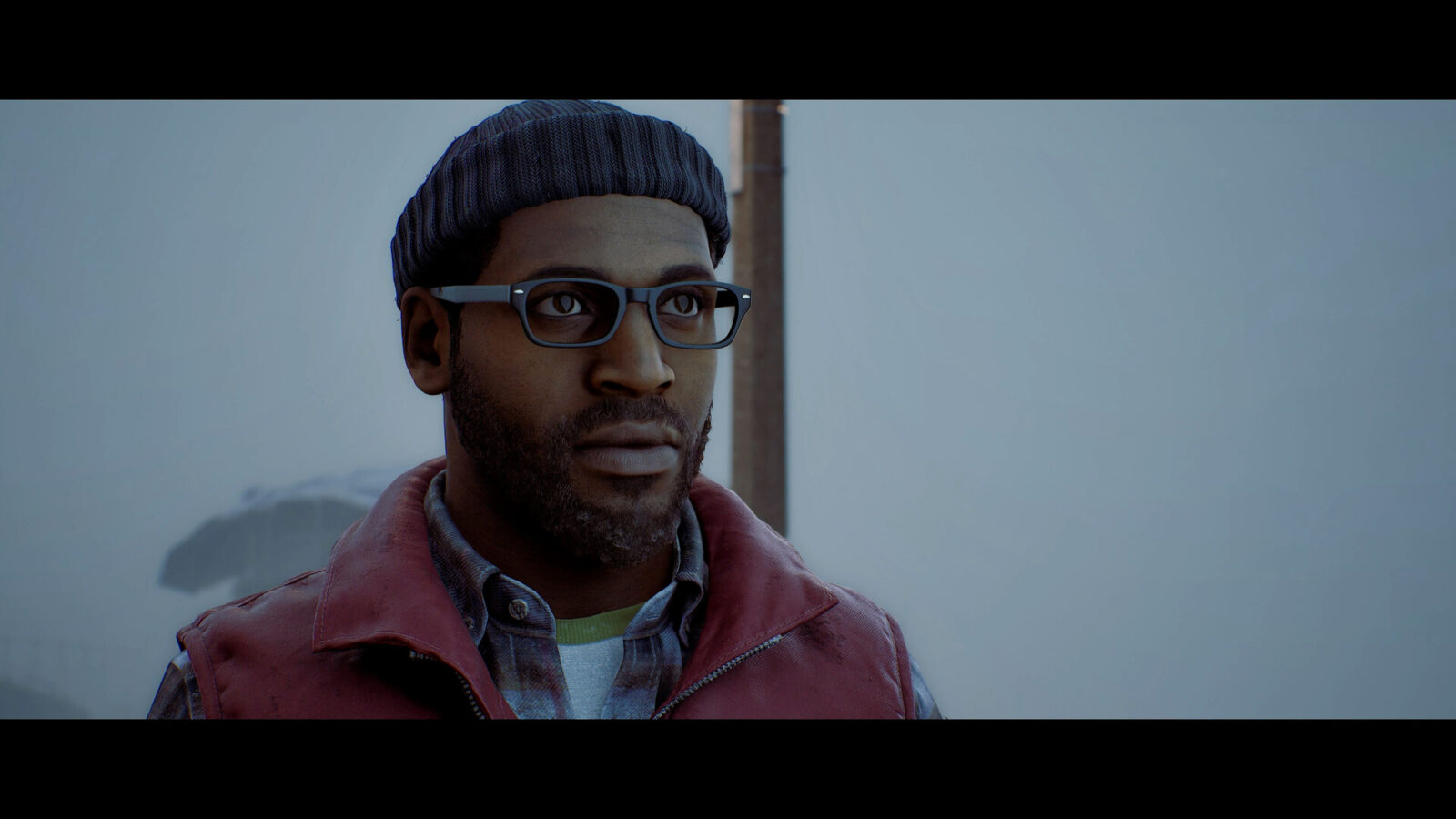
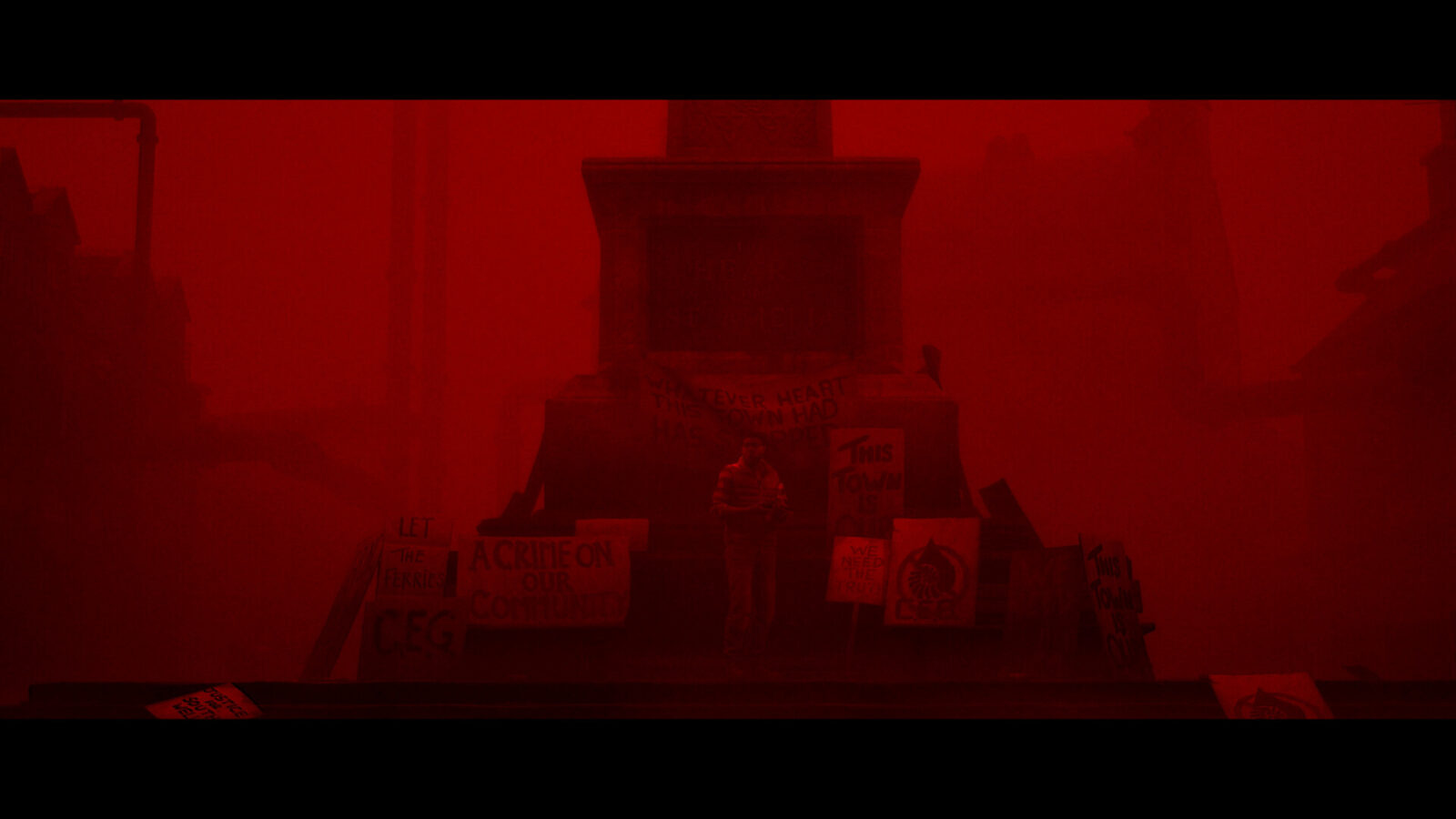
Townfall begins with American protagonist Simon Ordell arriving on the coast of St. Amelia, a fictional Scottish seaside community, wearing a hospital bracelet and with an IV line still attached to him. The town isn’t exactly preparing a tourism campaign. Homes are up for sale, abandoned stalls and protest signs suggest a community that has already fallen apart, and it doesn’t take long before considerably more disturbing imagery confirms that whatever happened here went far beyond an economic downturn.
Simon enters the story looking for redemption without immediately explaining what he needs redeeming for, giving Townfall a mystery with two interconnected questions: what happened to St. Amelia, and why is Simon caught in the middle of it? The narrative gradually links his personal history with the town’s collapse, while occasional shifts to other playable perspectives broaden the picture without requiring a giant exposition dump.
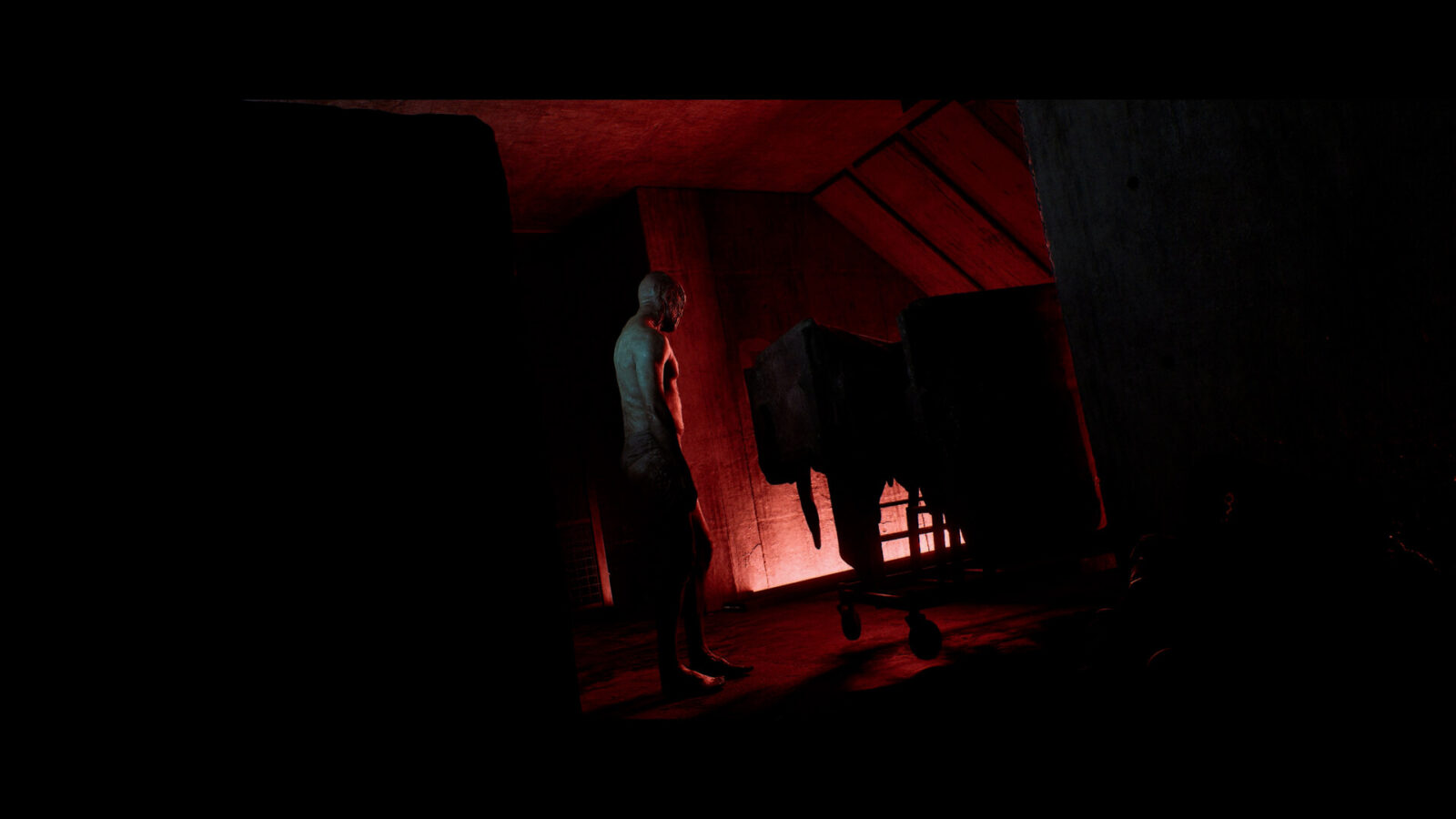
Trauma and guilt remain firmly embedded in the Silent Hill DNA, but Townfall expands its thematic reach into corporate greed and environmental mismanagement. That’s important because Silent Hill’s symbolism is most effective when the monsters and impossible spaces feel connected to something more meaningful than an art department asking how many rusty pipes can legally occupy one corridor.
Townfall certainly doesn’t abandon those familiar industrial nightmares. St. Amelia mutates into spaces consumed by pipes, grotesque bodies, unnatural skies and enormous organic horrors, while deteriorating apartments and hospital environments retain some classic series imagery. Yet the Scottish location and 1990s technology give these familiar ingredients a different flavour.
First-person Silent Hill changes the relationship with fear
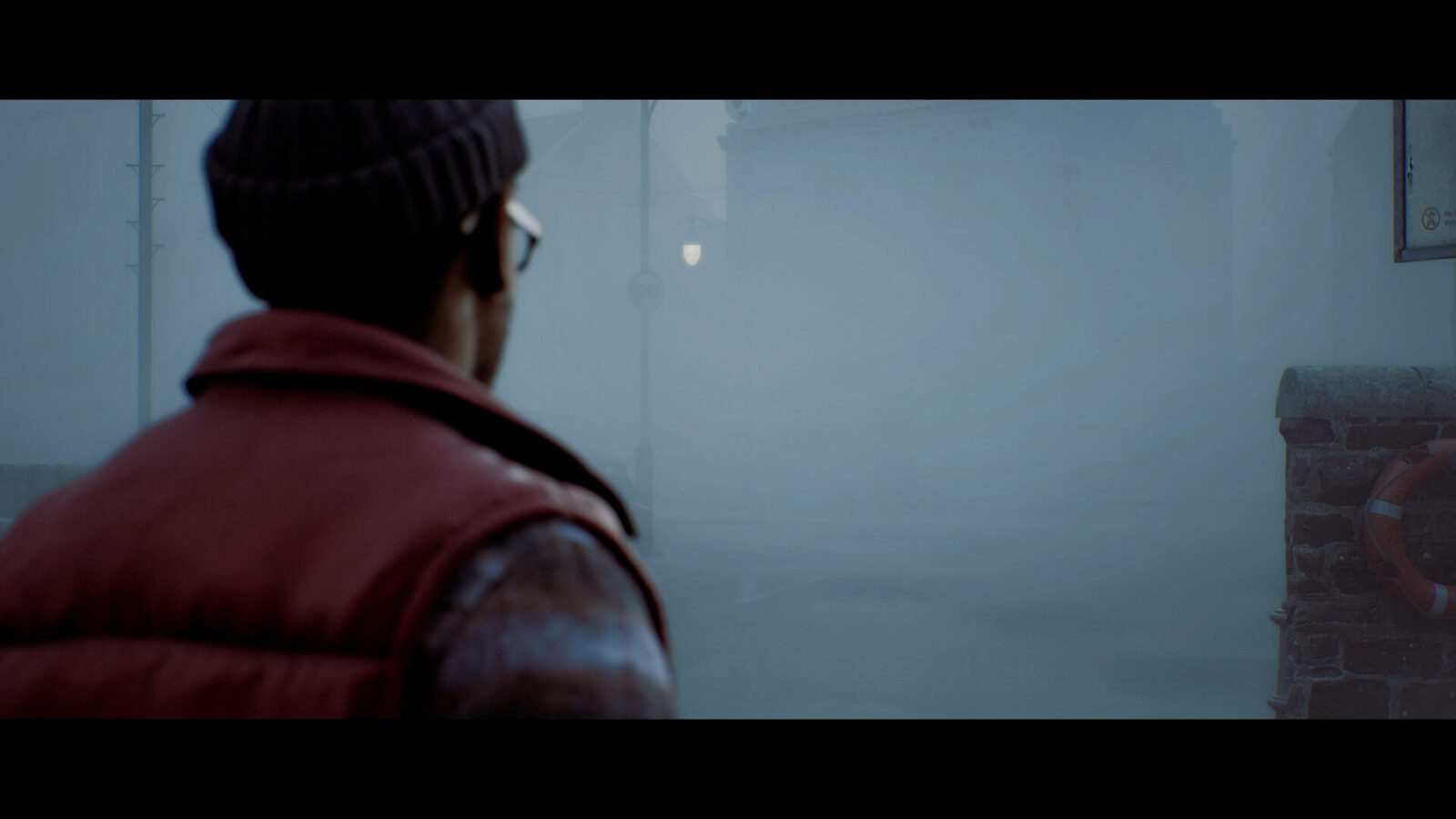
The switch to first-person is one of Townfall’s most significant decisions. Silent Hill has traditionally created vulnerability by making its protagonists feel clumsy and overwhelmed, but putting the camera directly behind Simon’s eyes removes another layer of safety between player and monster.
The effect is particularly useful during exploration. Peeking around a doorway becomes inherently more uncomfortable when you can’t rely on a third-person camera to scout the room first, while cramped interiors feel appropriately oppressive. Townfall further reinforces that sensation with a default letterboxed presentation that narrows the visible space and gives the game an unusually cinematic frame.
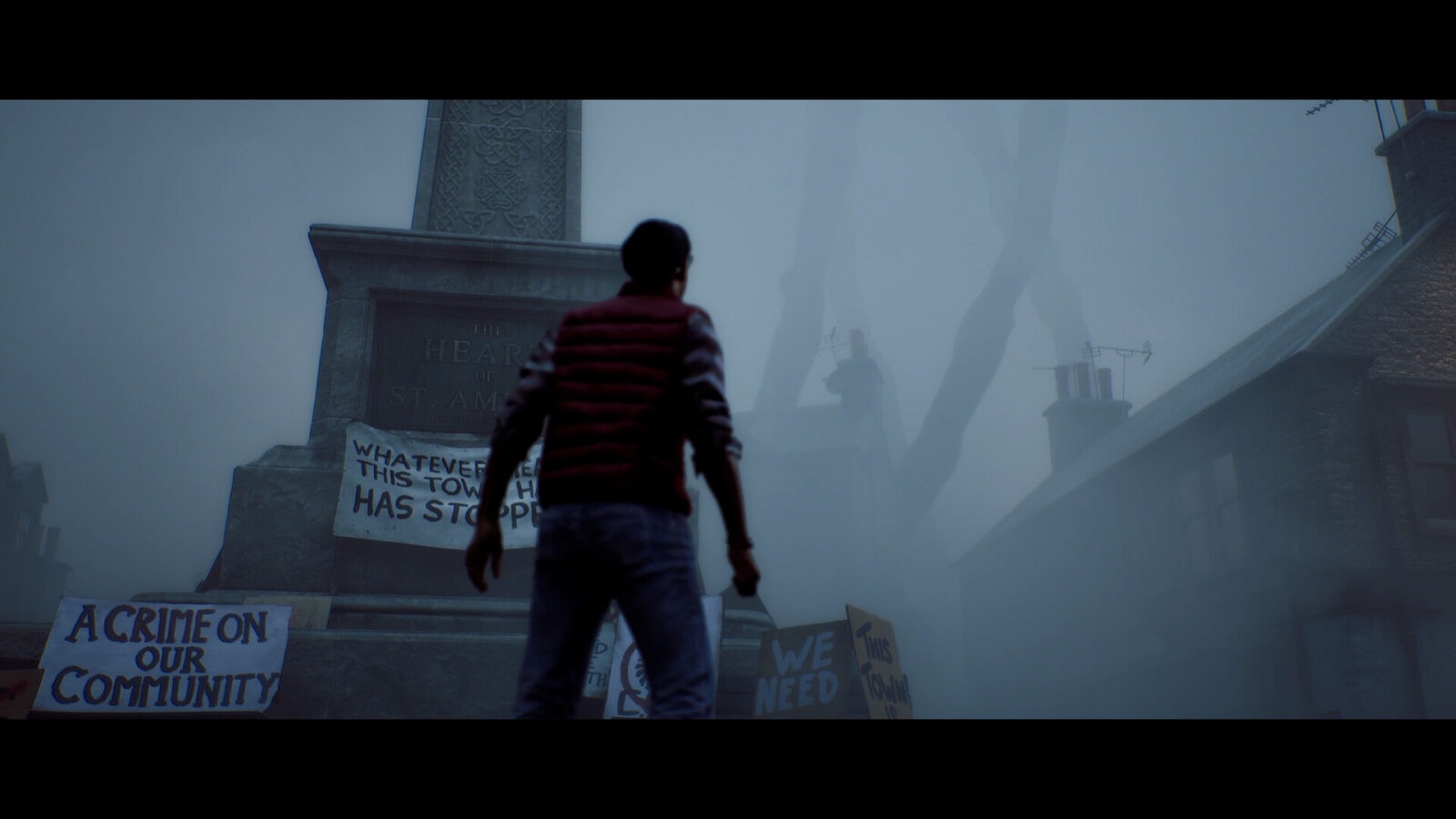
It’s a smart fit for a game that wants you to move carefully rather than storm into rooms like Doomguy accidentally took a wrong turn.
That distinction matters because Townfall isn’t designed primarily around killing everything unfortunate enough to appear in front of you. Its tension comes from knowing that confrontation is possible while frequently deciding that avoiding it is the smarter option.
Fighting is possible, but hiding is usually smarter
Simon can defend himself with melee weapons including wooden planks and pipes, but close combat is deliberately cumbersome and those weapons eventually break. Firearms including a revolver and shotgun become available too, yet scarce ammunition, slow reloads and the noise generated by gunfire prevent them from becoming an easy solution to St. Amelia’s population problem.
That resource pressure changes the purpose of combat. A gun isn’t permission to start clearing rooms; it’s insurance for when stealth collapses and something horrible has already introduced itself at biting distance.
Townfall consequently gives its environments an important role in surviving encounters. Bottles and bricks can redirect enemies or briefly stun them, radios can draw attention away from your route, and hiding places offer an escape once you’ve broken line of sight. Certain persistent enemies can even pull Simon out of hiding if they see where he went, so reaching a wardrobe isn’t an automatic reset button.
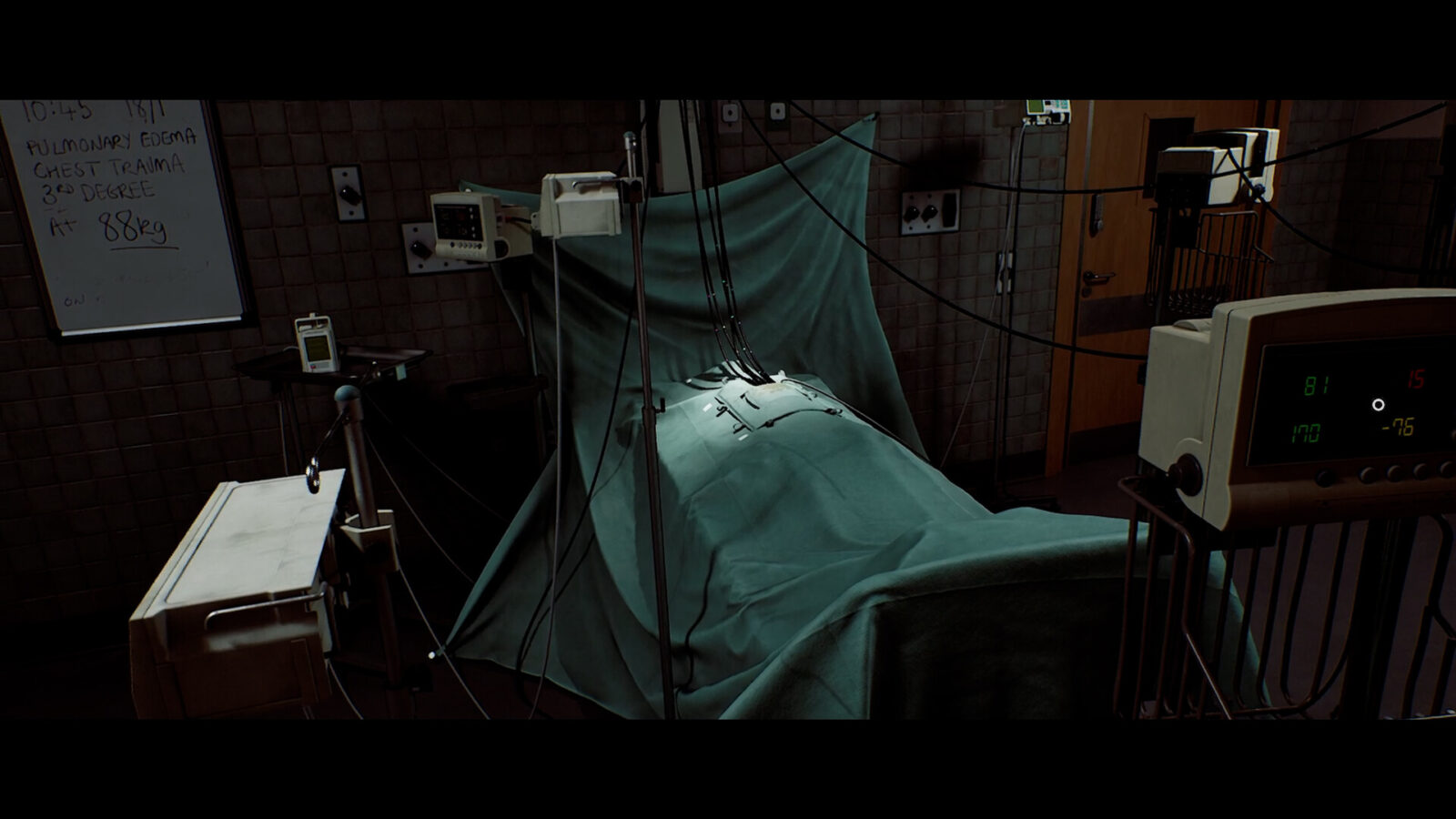
This creates the kind of survival-horror decision-making I want from Silent Hill. The interesting question isn’t whether Simon can kill something. It’s whether spending ammunition, risking health and making enough noise to attract additional trouble is worth whatever lies on the other side of the room.
The CRTV is Townfall’s smartest idea — and occasionally its biggest problem
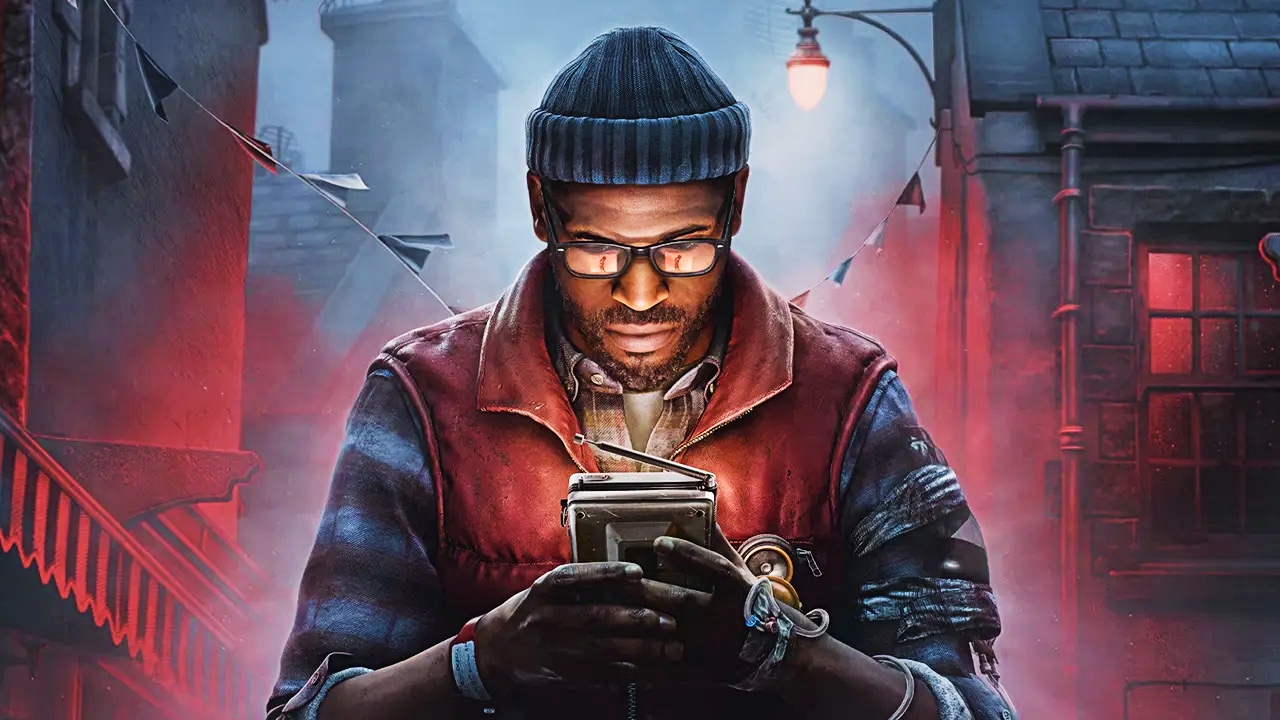
Townfall’s defining mechanic is a handheld CRTV device that functions partly as an enemy detector. Static warns Simon when creatures are nearby, while tuning through different frequencies reveals their approximate locations on its small display. Different monsters occupy different parts of the frequency range, meaning crowded environments require switching between channels rather than receiving one convenient supernatural radar screen.
It’s an excellent concept because gathering information becomes an active process. Instead of simply tapping detective vision and turning every enemy into a glowing outline, you’re fiddling with a piece of temperamental retro hardware while something unpleasant may be waiting around the corner.
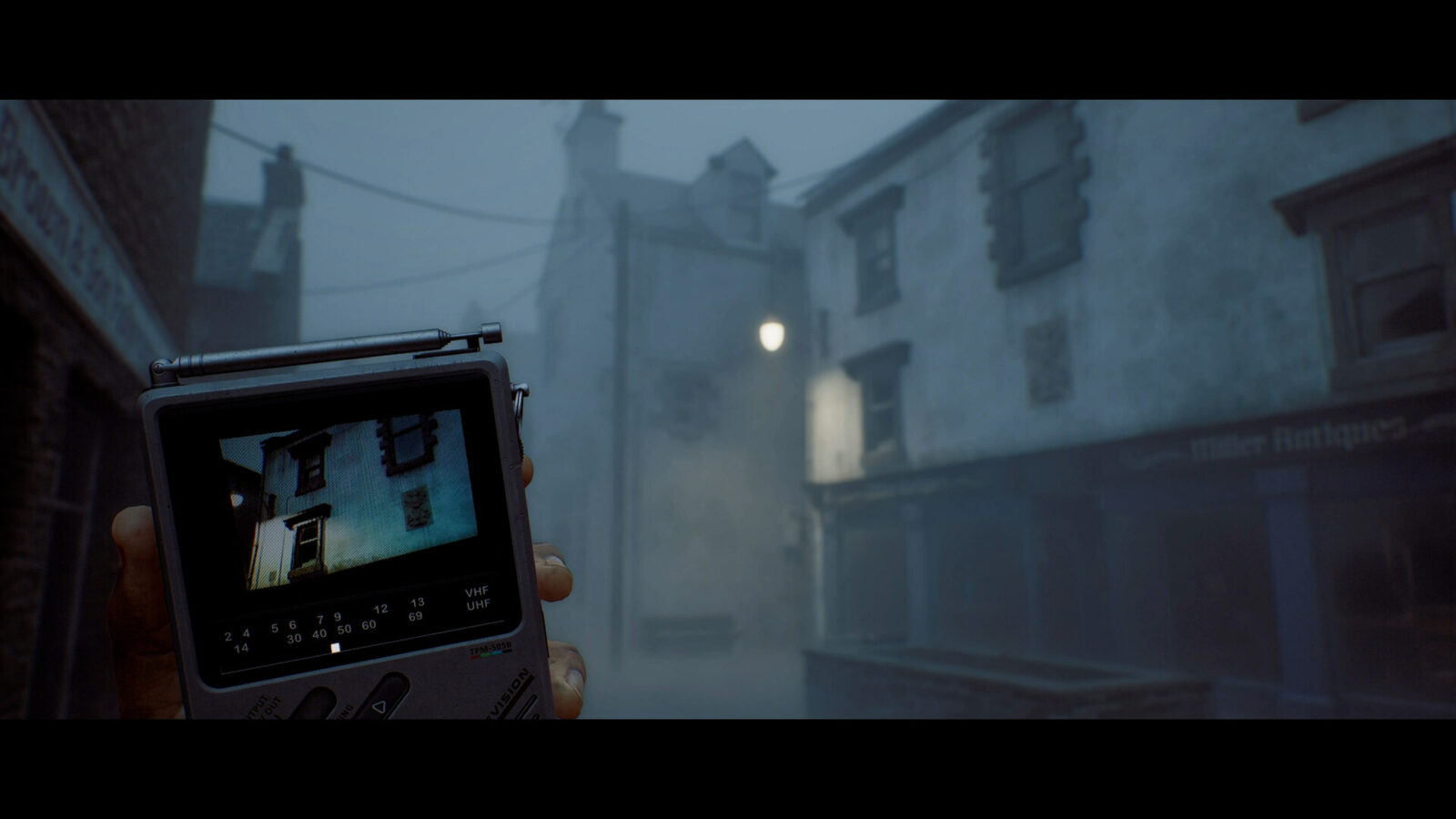
There is, however, an obvious trade-off. Horror depends heavily on uncertainty, and a device capable of warning you about threats through walls inevitably removes some of it. Townfall’s early hours therefore appear stronger at generating sustained anxiety than delivering frequent outright shocks. Later sequences find ways around that problem, including circumstances where the CRTV isn’t available, allowing enemies to become unpredictable again.
That contradiction is fascinating. The CRTV is simultaneously one of Townfall’s most distinctive mechanics and something its horror occasionally needs to escape from. It doesn’t ruin the tension, because knowing a monster is nearby and safely getting past it are very different things, but the game becomes more immediately frightening when your technological security blanket disappears.
The real stars might be a pile of obsolete electronics
Where Townfall becomes particularly distinctive is in its puzzles. Screen Burn Games uses the mid-’90s setting as more than set dressing, filling St. Amelia with computers, projectors, printers, cassette equipment and other wonderfully chunky technology that players physically interact with.
The CRTV contributes here too. Strange video transmissions can provide visual clues to locations, encouraging players to examine their surroundings instead of obediently chasing a waypoint. Elsewhere, puzzles can involve manipulating period hardware, loading disks into computers or entering information into devices rather than simply collecting another suspiciously ornate key.
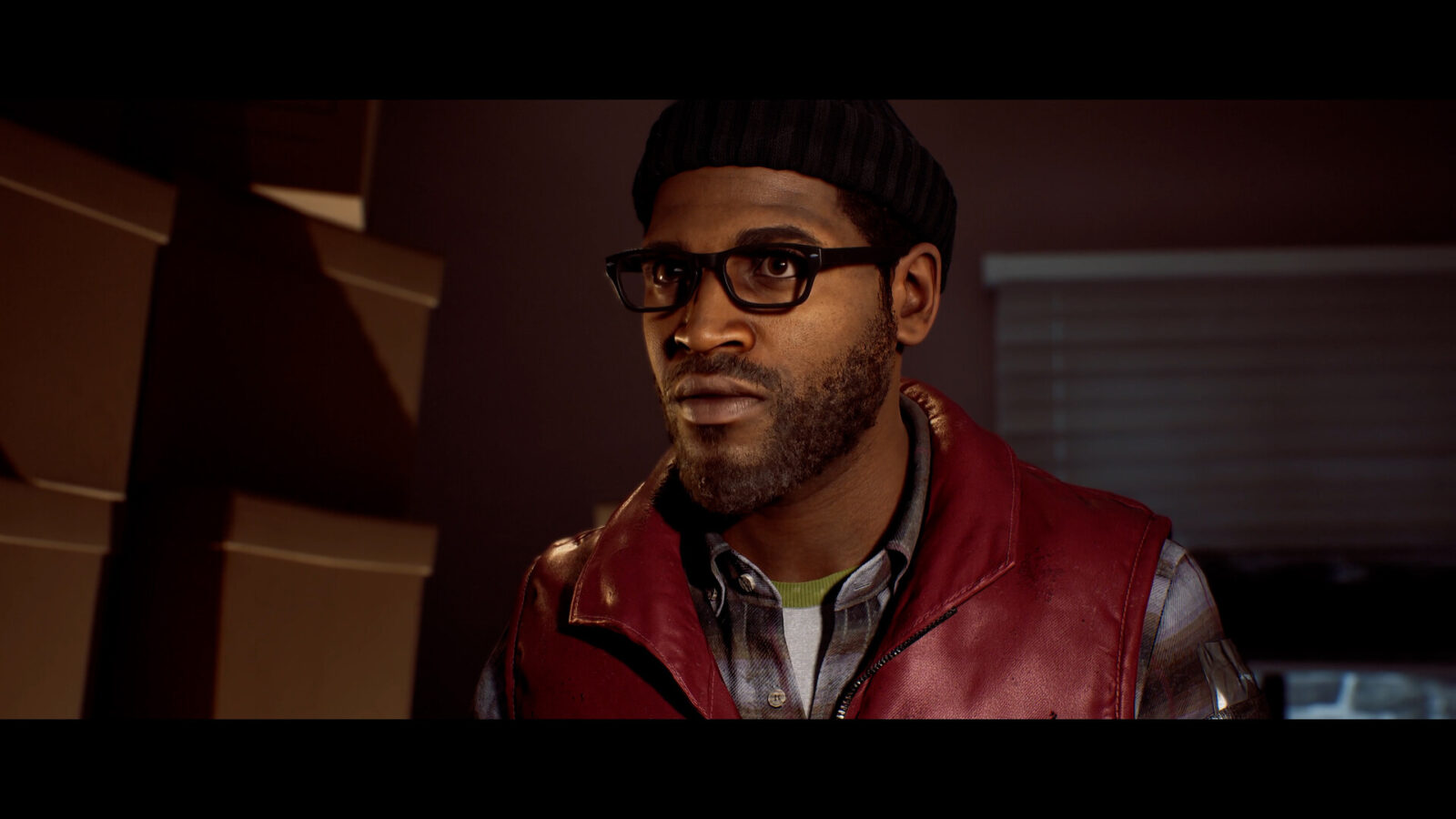
That tactile quality gives puzzle solving personality. Townfall isn’t merely asking you to discover the correct number; it often makes the process of interacting with the machine part of the experience. One particularly surreal use of a microcassette recorder can alter the state of a house across different moments in time, transforming a mundane piece of technology into the foundation for an environmental puzzle.
Most importantly, the puzzles generally place their necessary clues within the environment and expect observation rather than clairvoyance. Some situations even discourage brute-forcing solutions through mechanical consequences for incorrect answers. An optional hint system is available for anyone who would rather preserve their remaining brain cells.
There is reportedly at least one late-game contraption capable of pushing that difficulty considerably further, but overall this sounds like the right philosophy for Silent Hill puzzles: make me stop, inspect, interpret and eventually enjoy that tiny burst of undeserved genius when everything clicks.
Survival without fighting the inventory screen
Townfall also avoids making inventory capacity an additional enemy. Rather than heavily restricting everything Simon carries, it primarily limits immediate equipment such as throwable objects and melee weapons while allowing ammunition and medical supplies to accumulate without the same aggressive slot management. Scarcity still keeps those resources valuable.
Crafting exists but remains restrained. Alcohol can improve bandages, while Simon’s ever-present IV setup has a practical purpose beyond being an exceptionally unpleasant fashion accessory: filling an IV bag with restorative fluid provides an automatic revival with some health restored after being downed.
That revival mechanic could easily have weakened the stakes, but it makes sense alongside Townfall’s exploration-heavy structure. A limited safety net encourages players to venture deeper into dangerous areas instead of repeatedly retreating to save after every scrap of progress. There are circumstances where reviving directly beside an enemy can produce an immediate second death, however, showing the system isn’t completely immune to survival-horror cruelty.
The broader design philosophy is refreshingly focused. Townfall still cares about resources, but it wants the difficult decisions to happen while navigating hostile spaces rather than while staring at a backpack and wondering whether three bullets occupy more existential mass than a bandage.
A Silent Hill willing to find its own identity
Perhaps the most encouraging thing about Silent Hill: Townfall is that it doesn’t seem interested in winning approval by endlessly pointing at Silent Hill’s past.
The familiar foundations remain. There’s psychological horror, grotesque symbolism, vulnerable combat, distorted environments, limited resources and a protagonist carrying enough emotional damage to qualify as traditional Silent Hill luggage. But Townfall builds around those foundations with first-person exploration, stealth, enemy-frequency tracking and an unusually strong fixation on analogue and early digital technology.
That combination gives St. Amelia an identity of its own.
The approximately 13-hour story described in the supplied material also suggests enough room to develop its mystery without stretching its central mechanics indefinitely. More importantly, Townfall appears to understand that Silent Hill doesn’t need to reproduce one specific combat system, camera perspective or location to remain Silent Hill.
It needs discomfort. It needs ambiguity. It needs mundane places that gradually become impossible to trust.
Townfall seems to have plenty of all three.
Verdict
Silent Hill: Townfall succeeds by returning to survival horror’s vulnerability without simply returning to Silent Hill’s old blueprint. Its first-person perspective makes St. Amelia feel claustrophobic, its stealth systems encourage thoughtful encounters rather than routine extermination, and the CRTV gives enemy detection a tactile identity that fits beautifully with the game’s wider obsession with 1990s technology.
That same CRTV is also Townfall’s most noticeable compromise. Being able to detect nearby threats inevitably reduces some of the uncertainty that makes horror effective, particularly earlier in the game, and Townfall apparently becomes scarier when circumstances take that advantage away. Combat, meanwhile, is intentionally awkward rather than empowering, so anyone looking for another action-heavy horror game should adjust expectations accordingly.
The puzzles are arguably the more exciting achievement. By making obsolete electronics part of both its world and puzzle language, Townfall finds an identity beyond familiar fog, rust and psychological trauma. Combined with a compelling mystery built around Simon, St. Amelia and themes extending into corporate and environmental wrongdoing, it gives this Silent Hill spin-off a reason to exist beyond the logo on the box.
For players who want methodical exploration, meaningful resource pressure, stealth and substantial environmental puzzles from their survival horror, Silent Hill: Townfall looks like a confident and appropriately uncomfortable evolution of the series formula. It may not constantly terrify, but it understands something arguably more important: dread doesn’t disappear just because you know the monster is there.