
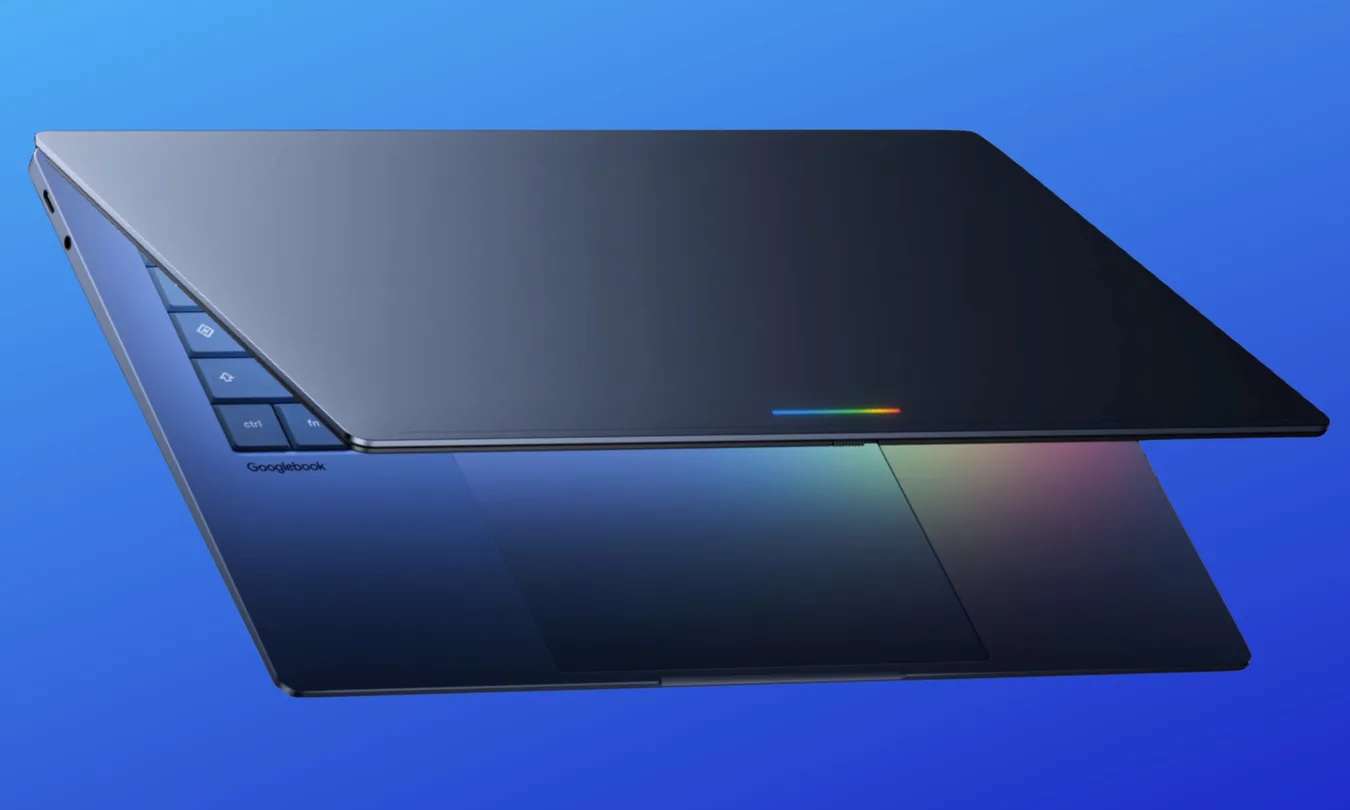
The Asus Googlebook is shaping up to be one of the stranger Chromebook experiments we’ve seen in a while, with leaked images offering an early look at a laptop that appears to put Google’s AI ambitions front and centre.
The images show an Asus-built Chromebook carrying prominent Google branding, including a large illuminated “G” logo on the lid. That alone makes the machine stand apart from the usual Chromebook formula, where the hardware manufacturer’s identity typically takes priority and Google’s involvement is communicated through comparatively subtle Chrome branding.
Its design suggests Google may be taking a more direct role in defining how this particular Chromebook looks and feels. Asus remains attached to the hardware, but the Googlebook name and oversized Google logo make it resemble a Google-led device rather than another conventional Asus Chromebook.
Another notable detail is a dedicated G key on the keyboard. While the supplied material does not establish its exact functionality, its presence points toward tighter integration with Google services, potentially giving users quicker access to AI or other Google features. Until Google or Asus formally explains the key, however, its purpose remains an open question.
The timing would make sense. Google has been steadily weaving Gemini into its products, and ChromeOS is an obvious place to push those capabilities further. A laptop designed specifically around Google’s software and AI services could provide a more controlled showcase than relying exclusively on the broad range of Chromebooks produced by hardware partners.
There is an interesting historical parallel here as well. Google has previously sold its own premium Chromebook hardware, most notably through the Chromebook Pixel line and later the Pixelbook family. Those machines attempted to demonstrate what ChromeOS could look like on higher-end hardware, although Google eventually stepped away from making Pixelbook laptops.
The Googlebook could represent a different approach: working with an established PC manufacturer such as Asus while giving Google significantly more influence over the identity and experience of the finished product.
For now, the leaked images raise considerably more questions than they answer. Pricing, specifications, display details, processors, availability and even the precise role of that dedicated G key remain unclear from the supplied information.
If the Googlebook does reach the market, the most interesting part may not be its glowing logo. It will be whether Google is preparing to treat Chromebooks as another major platform for Gemini — and how much influence it wants over the hardware delivering that experience.