
Nintendo has adjusted the release date of its live-action Legend of Zelda movie for the second time, now scheduling it for April 30, 2027, a week earlier than the previous May 7 target. Shigeru Miyamoto, the series creator, shared the update on X, noting that the production team is aiming to deliver the film sooner while acknowledging the wait remains under a year.
The change follows an earlier shift: the project was first set for March 27, 2027, before being pushed back roughly six weeks. Such adjustments have become familiar with Nintendo’s film efforts. The original Super Mario Bros. Movie also saw delays, while its sequel was later moved forward. These moves keep audiences and theater operators guessing, reflecting the unpredictable realities of coordinating large-scale productions involving multiple partners.
Nintendo announced the Zelda adaptation in 2023 alongside Sony Pictures Entertainment. Miyamoto and longtime Hollywood producer Avi Arad are overseeing the project, which Miyamoto has described as something he had been developing for years. Wes Ball, known for directing the Maze Runner trilogy and Kingdom of the Planet of the Apes, is at the helm. Ball has indicated he wants the film to feel grounded and realistic rather than dependent on motion-capture heavy visuals, a choice that could help differentiate it from typical video game adaptations.
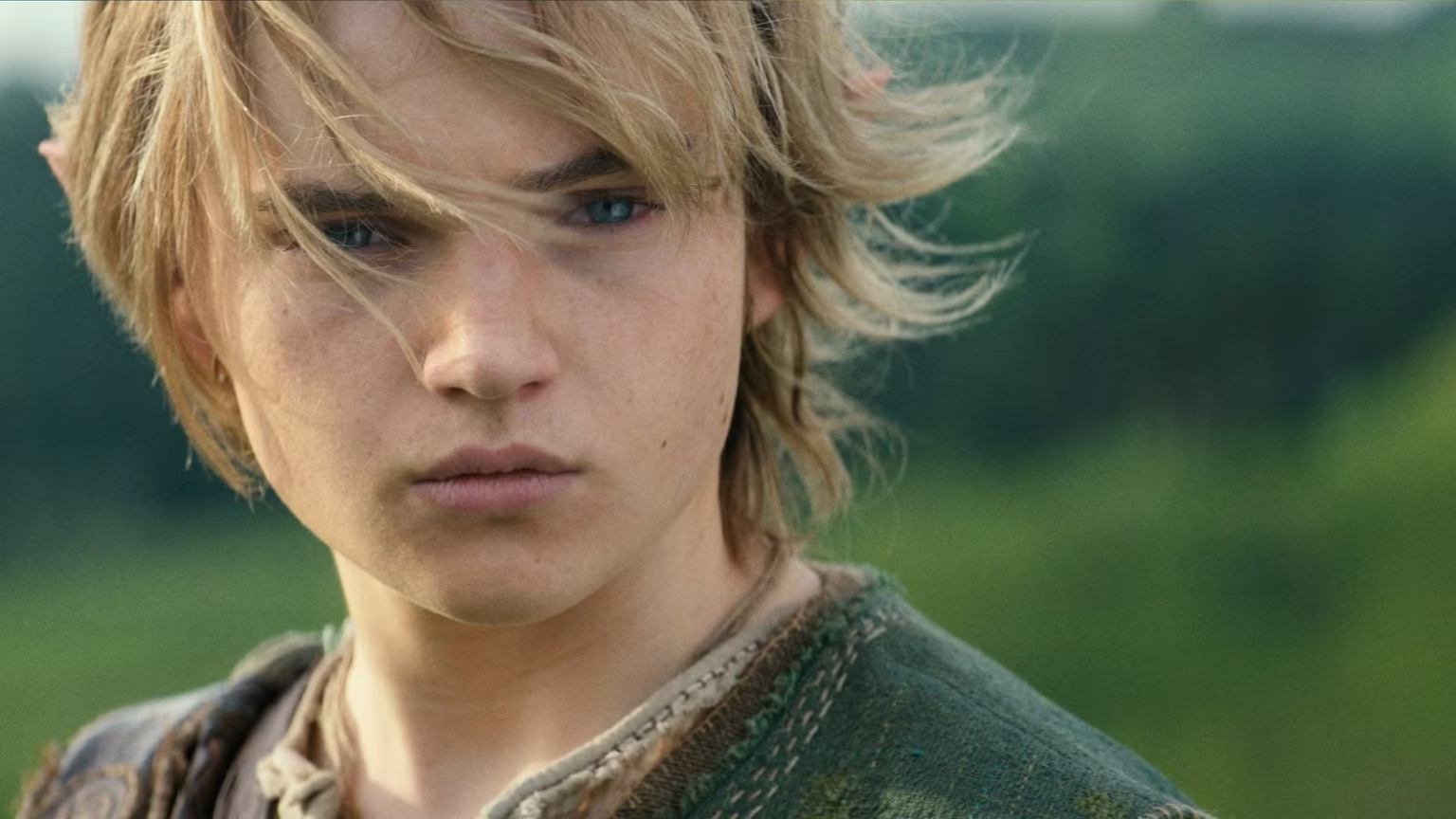
The cast includes Bo Bragason as Princess Zelda and Benjamin Evan Ainsworth as Link. Bragason appeared in the Disney+ series Renegade Nell, while Ainsworth has credits in The Haunting of Bly Manor, the live-action Pinocchio remake, and The Sandman. Details on the story remain limited, leaving room for speculation about how the expansive Zelda lore will translate to a single theatrical runtime.
Nintendo’s broader push into film continues steadily. The Super Mario Galaxy Movie from its partnership with Illumination is currently in theaters and has crossed $940 million globally. Rumors also point to a Nintendo Switch 2 remake of The Legend of Zelda: Ocarina of Time possibly arriving in 2026, alongside another planned Illumination collaboration for 2028. These efforts show the company treating its intellectual properties as multi-platform entertainment assets rather than game-only franchises, a strategy that began gaining traction after the first Mario movie’s commercial success.
Yet the repeated date changes for Zelda raise practical questions. While understandable in complex productions, they can disrupt marketing campaigns, theater bookings, and fan expectations. The film arrives in a crowded fantasy landscape where live-action adaptations often struggle to capture the magic of their source material without falling into familiar visual effects pitfalls. Ball’s emphasis on realism may help, but expectations remain tempered given the challenges of adapting a non-linear, exploration-driven game series.
For now, the project moves forward with modest momentum. Whether the final result honors the Zelda legacy or simply serves as another corporate extension will become clearer closer to release. In the meantime, Nintendo continues balancing its core gaming business with these ambitious Hollywood ventures.