
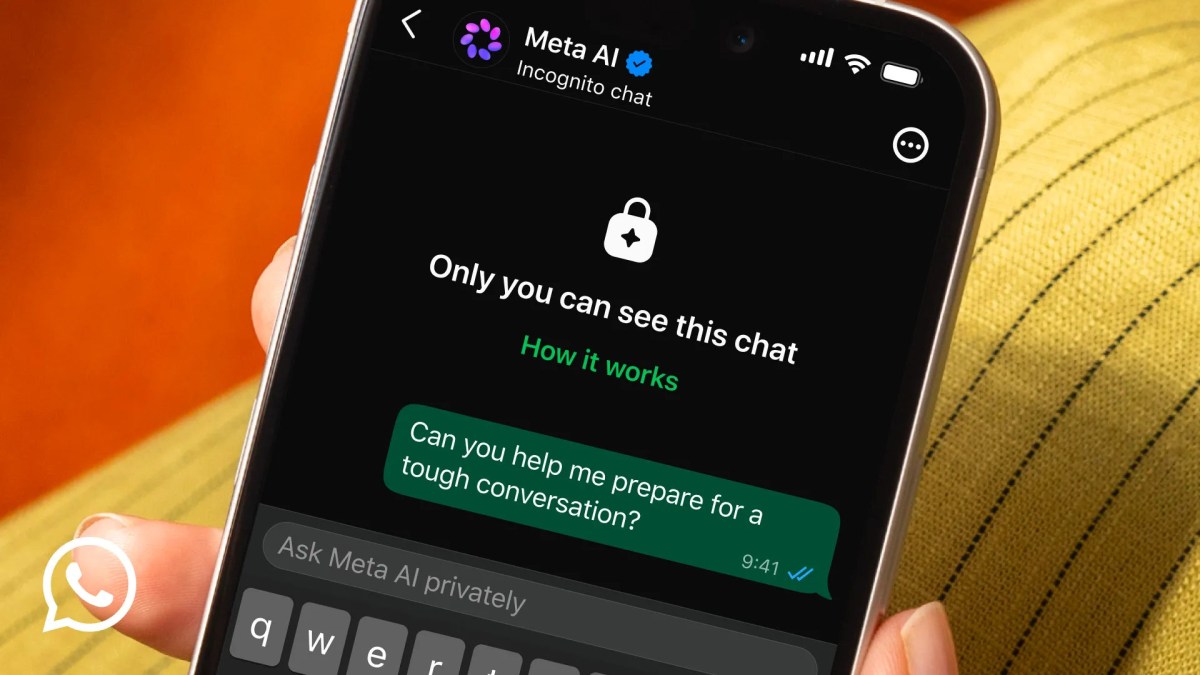
WhatsApp is adding a new layer of privacy to its conversations with Meta AI through incognito chats, which the company describes as fully private exchanges that even Meta cannot access. Launched on May 13, 2026, these chats are positioned as truly isolated interactions: messages are not saved by default, they disappear after use, and processing happens in a secure environment shielded from the platform’s broader systems. Meta contrasts this setup with rival AI chatbots, arguing that competitors can still view incoming questions and outgoing responses, while its incognito mode claims stronger protections.
The feature reflects ongoing efforts by messaging apps to integrate AI without compromising user trust. WhatsApp already offers end-to-end encryption for standard chats, but introducing an AI assistant has raised understandable questions about data handling. By framing incognito chats as inaccessible to Meta itself, the company aims to address those concerns head-on. In practice, users can start these private sessions directly with the Meta AI bot, keeping sensitive queries separate from regular conversations. The temporary nature of the messages reduces the risk of long-term storage, though users should remain aware that no digital privacy guarantee is absolute.
Coming in the next few months is an extension called Side Chat with Private Processing. This would let users get AI assistance within an existing conversation—pulling context from the main thread—while keeping the AI’s input isolated and protected. The idea is to provide helpful suggestions or summaries without exposing the full discussion or interrupting the flow, a practical response to how people already juggle multiple tasks in messaging apps. It could prove useful for quick research, translation, or idea generation during group chats, but it also highlights the growing entanglement of AI into everyday communication.
Meta’s push comes amid broader industry scrutiny of AI privacy practices. Past incidents involving data usage for training models have left many users skeptical, regardless of current assurances. While the technical architecture may deliver on its promises, trust depends on independent verification and transparent auditing—areas where big tech companies have mixed records. The incognito label itself echoes browser modes that offer limited protection, reminding users that convenience and privacy often exist in tension. For those in regions with strict data regulations or cultural emphasis on discretion, these features may feel like a welcome step, yet they do not eliminate reliance on Meta’s infrastructure.
Overall, the update strengthens WhatsApp’s AI offerings without forcing them into every conversation. It acknowledges that users want smart tools alongside real safeguards, rather than trading one for the other. Whether the private processing lives up to its billing will shape how widely it gets adopted. In a landscape where messaging apps increasingly double as productivity hubs, features like these could become standard, provided companies balance innovation with verifiable accountability rather than marketing claims alone.