
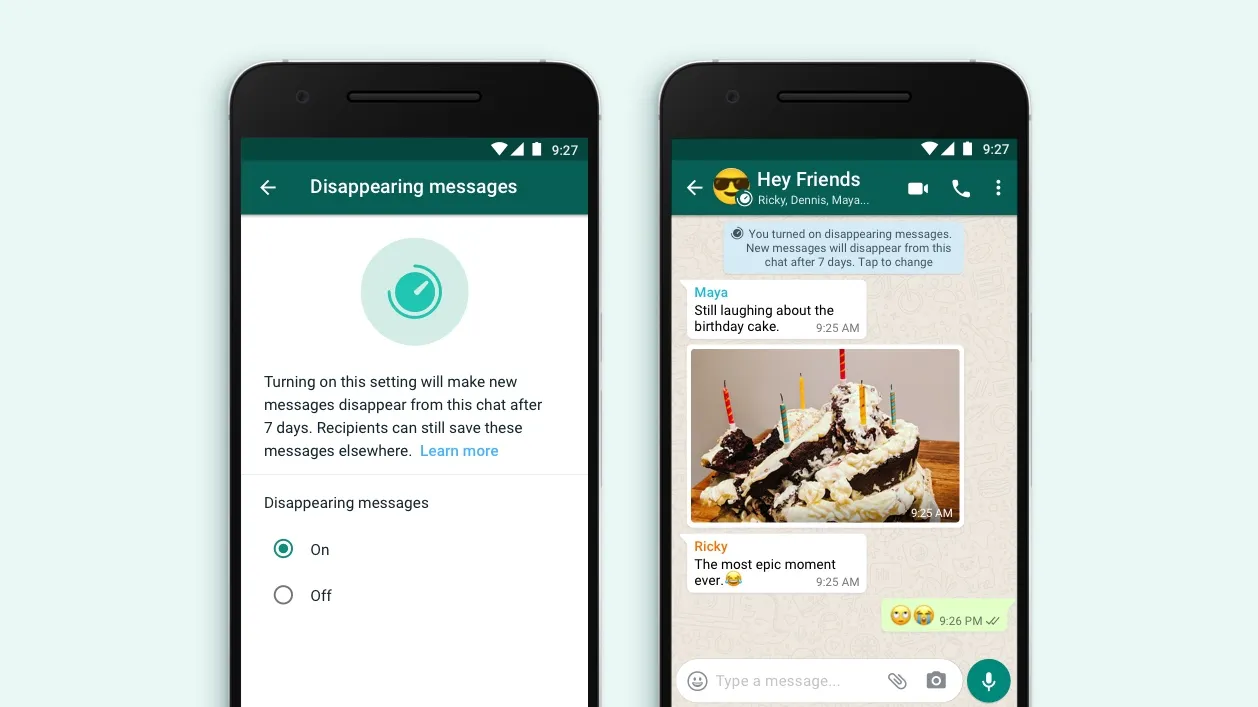
WhatsApp is testing a new version of disappearing messages that behaves far more like temporary communication and less like a basic countdown timer. Instead of deleting messages based solely on when they were sent, the platform is experimenting with an “After Reading” system that starts the timer only after the recipient actually opens the message.
The change may sound minor, but it addresses a long-standing flaw in disappearing message systems across messaging apps. Under WhatsApp’s current setup, messages vanish after a fixed period — 24 hours, 7 days, or 90 days — regardless of whether the recipient has seen them. In practice, that often means a message can expire before anyone even reads it, especially across different time zones or inactive chats.
The new feature, first spotted in the latest iOS beta build, shifts the logic toward something more intentional. Once enabled, the countdown begins only when the recipient opens the message. Users can reportedly choose between timers of five minutes, one hour, or 12 hours after the message is viewed. If the recipient never opens the message at all, WhatsApp automatically deletes it after 24 hours anyway.
That approach makes disappearing messages feel closer to how people naturally expect temporary conversations to work. Snapchat popularized the idea years ago, but most messaging platforms have since adopted simplified timer systems that prioritize technical consistency over actual user behavior. WhatsApp’s “After Reading” feature appears aimed at correcting that disconnect.
There is, however, an interesting asymmetry built into the system. On the sender’s side, the message reportedly disappears five minutes after sending no matter what. On the recipient’s side, the countdown only starts after opening the message. That means the sender loses access quickly, while the recipient may still have additional viewing time later depending on when they read it. The design likely reflects WhatsApp’s attempt to balance privacy with practicality, though it also introduces some confusing edge cases that may not be immediately obvious to users.
The feature remains optional and disabled by default, which is important given how aggressively messaging platforms sometimes force new behaviors into conversations. Users will apparently be able to enable it on a per-chat basis instead of applying it universally across all conversations. That flexibility matters because disappearing messages are often context-dependent. A casual group chat and a sensitive work conversation rarely need the same privacy rules.
The timing of this rollout also reflects Meta’s broader push toward more ephemeral communication tools. Messaging platforms increasingly treat permanence as a liability rather than a default. WhatsApp recently introduced an Incognito Chat mode for Meta AI interactions, where chats disappear as soon as users close the window. Instagram, meanwhile, continues experimenting with temporary sharing tools and vanishing content formats across its ecosystem.
Still, disappearing messages remain more about convenience and surface-level privacy than true security. Screenshots, forwarded content, and external captures remain unavoidable limitations on every platform. Features like “After Reading” mostly refine how temporary messaging feels rather than fundamentally changing what it protects.
Even so, WhatsApp’s updated disappearing message system feels more aligned with real communication habits than the timer model it replaces. In a messaging landscape crowded with privacy marketing and increasingly complicated AI integrations, practical usability improvements may end up mattering more than headline-grabbing features.