
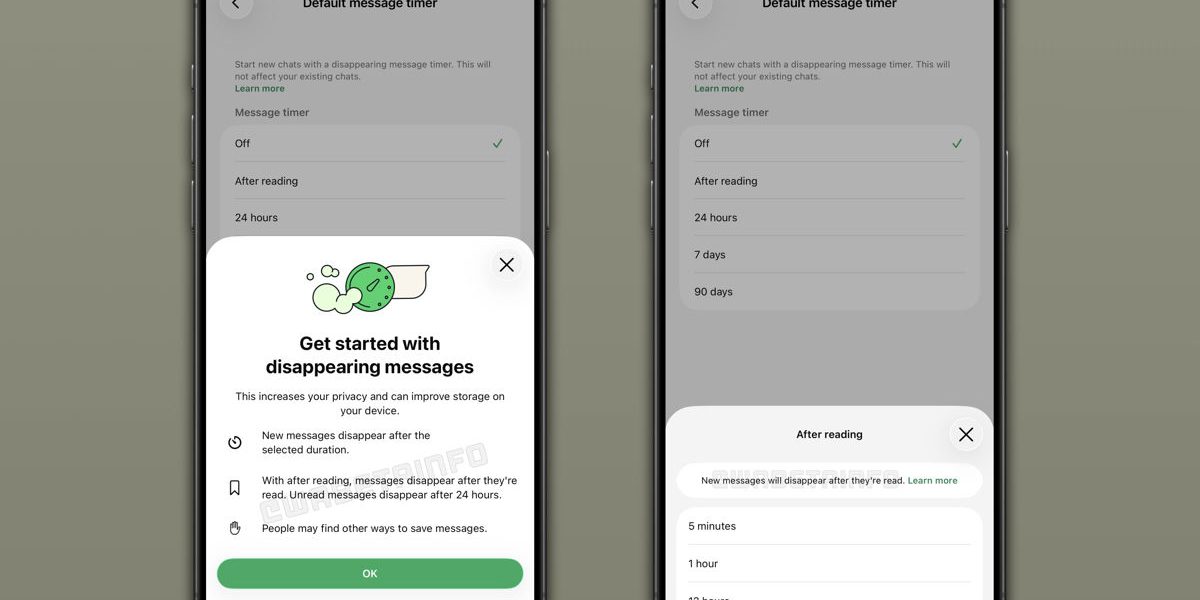
WhatsApp is refining its disappearing messages feature with a practical update aimed at addressing one of its long-standing limitations. The change, currently in testing on iOS, adjusts when the deletion timer begins so that messages remain visible until the recipient actually reads them rather than disappearing based solely on when they were sent.
The existing system has always started the countdown the moment a message leaves your device. That created frustration in real-world use. Someone could receive a sensitive note, get distracted, and never open it before the timer expired. The new “After reading” option changes that behavior. Once enabled, the clock only starts after the other person opens the message. It gives users more control over how long private information stays accessible without forcing an all-or-nothing approach.
The feature offers three shorter durations once the message is read: five minutes, one hour, or 12 hours. These sit alongside the standard disappearing message timers of 24 hours, seven days, and 90 days. If the recipient never opens the chat, the message will still delete after 24 hours as a safety net. The setting applies on a per-chat basis, so you can activate it for specific conversations without affecting others. It remains off by default, preserving the current experience for existing threads.
This update arrives through the latest iOS beta, version 26.19.10.72, available via TestFlight. A broader rollout is expected in the coming weeks, though WhatsApp has not confirmed an exact timeline for stable release. It continues the app’s gradual expansion of privacy-focused tools, including enhanced chat privacy controls and options to prevent media from automatically saving in protected conversations.
For many users, the adjustment feels like a sensible evolution rather than a major reinvention. Disappearing messages have been available for years, but timing issues limited their reliability for time-sensitive or confidential exchanges. By tying deletion to actual viewing, WhatsApp reduces accidental data loss while still offering the self-destruct functionality that appeals to privacy-conscious users. That balance matters in an era when messaging apps handle everything from casual banter to sensitive business details.
Of course, no feature is perfect. Recipients could still take screenshots before the timer kicks in, and the system relies on both parties staying within the app’s ecosystem. The shorter post-read timers also suit quick exchanges more than extended discussions. Still, the tweak demonstrates WhatsApp’s willingness to iterate on core features based on how people actually use them rather than theoretical ideals.
The broader context shows Meta steadily layering privacy improvements into the platform amid ongoing scrutiny over data practices. Features like this help address practical user pain points without overhauling the entire experience. For iOS users especially, the TestFlight availability means early access is possible for those willing to test beta software.
Overall, the update represents a thoughtful refinement. It won’t transform how everyone uses WhatsApp, but it removes a clear annoyance for those who rely on disappearing messages for more than casual chats. Expect the option to appear in the stable version soon, giving users one more tool for managing digital ephemera in their daily conversations.