
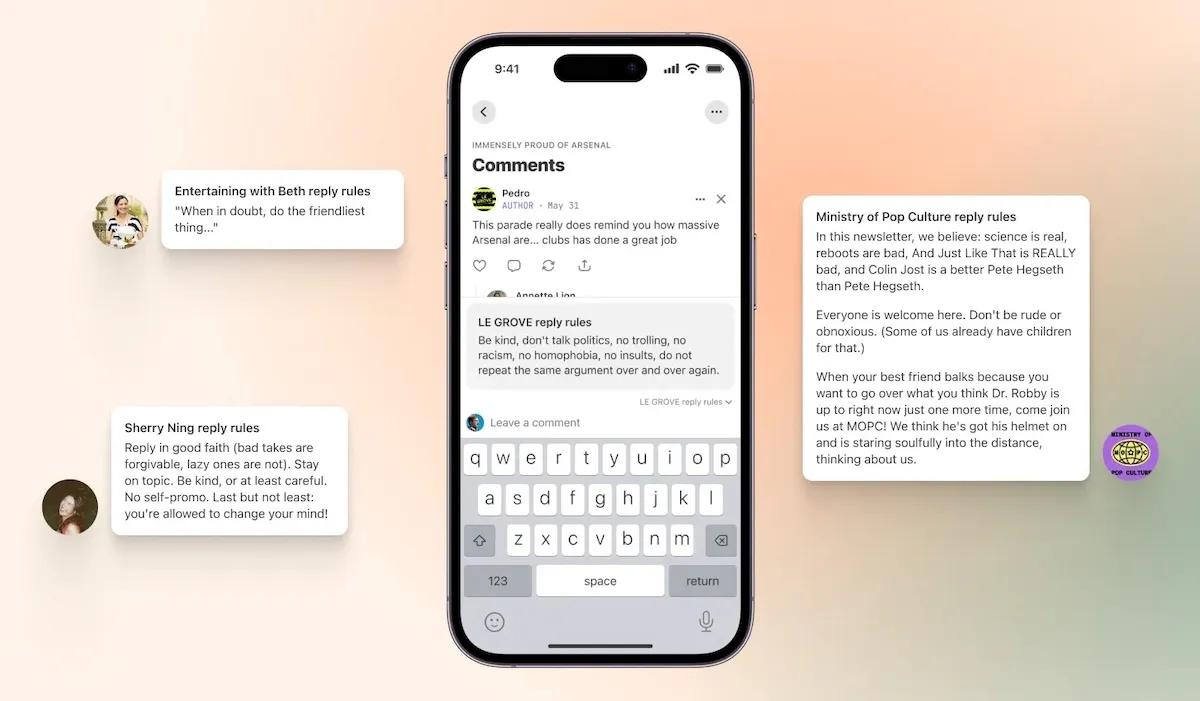
Substack has introduced a new tool called Reply Rules, giving newsletter creators more direct influence over audience interactions on their content. The feature allows writers to set custom expectations for comments on posts, Notes, or Chat sections, ranging from practical restrictions like limiting AI-generated responses or profanity to more whimsical requirements such as replies composed exclusively in haiku form.
The system relies on machine learning that observes creator behaviors, including when they hide certain replies, to automatically filter future comments that appear inconsistent with those preferences. Writers retain full access to hidden responses and can restore them at any time, preserving a degree of manual oversight. For now, the capability is limited to English-language publications, reflecting the platform’s gradual rollout of moderation enhancements.
This development aligns with Substack’s longstanding emphasis on decentralized control, where individual creators bear primary responsibility for managing their communities rather than depending on centralized platform enforcement. Existing options already include locking comment threads, deleting individual responses, and banning or suspending users. Reply Rules potentially eases the workload of constant monitoring, which has long frustrated independent writers balancing content production with audience engagement. Yet it stops short of solving deeper structural issues in online discourse.
Substack’s approach stands in contrast to more interventionist platforms that have faced accusations of both over-censorship and under-moderation. The company has drawn repeated criticism for its relatively hands-off stance, particularly regarding far-right newsletters that critics say exploit the model’s tolerance to amplify polarizing or harmful content. In its announcement, Substack reiterated a commitment to enabling “cultures of many varieties” to thrive, acknowledging the inherent trade-offs while highlighting its revenue-sharing structure that ties platform earnings directly to creator success. This philosophy has helped Substack carve a niche among writers seeking independence from algorithmic feeds and corporate gatekeepers, but it also invites ongoing scrutiny about where meaningful boundaries should lie.
The timing of Reply Rules fits a broader pattern of incremental platform updates this year. Substack has added a built-in recording studio for pre-producing video content and a companion TV app that lets subscribers view posts and livestreams on larger screens. These moves suggest an effort to evolve beyond text-centric newsletters into a more versatile media ecosystem, even as core challenges around community health persist.
In many ways, the feature represents a pragmatic response to the realities of digital publishing, where creators often serve as both artists and moderators. Social media’s history is littered with failed moderation experiments, from early forums plagued by trolls to modern networks struggling with scale and bias. Substack’s bet on empowering individuals rather than imposing top-down rules may appeal to its audience of independent voices, but it risks uneven application across publications of varying sizes and influence. Success will likely hinge on whether the tool genuinely reduces friction without creating new forms of exclusion or echo chambers.
For writers navigating fragmented attention economies, tools that reclaim some agency over conversations hold clear value. Still, they underscore a persistent tension: as platforms grow, the line between healthy discourse and unchecked rhetoric remains difficult to draw consistently.