
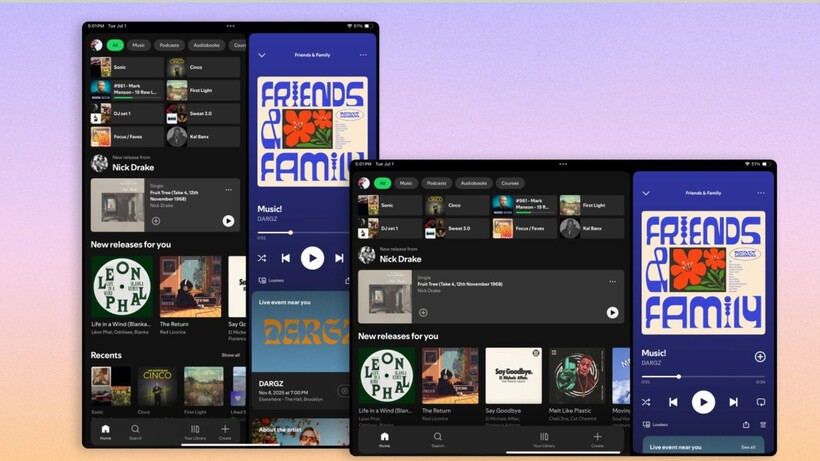
Spotify is updating its iPad app with a layout that finally makes better use of the tablet’s larger screen instead of simply stretching the phone version across it. The changes, now rolling out to iPad and Android tablets, introduce a few practical adjustments that should feel more natural for users who listen or watch on bigger displays.
The most noticeable addition is parallel browsing. One side of the screen can keep playing music, a podcast, or video while the other side lets you browse playlists, albums, or recommendations. It is a modest but welcome shift that mirrors how many people actually use tablets, treating them as multitasking devices rather than oversized phones. A collapsible sidebar adapts to your needs, staying compact for quick jumps or expanding when you want to explore your library in more detail. This flexibility addresses one of the long-standing frustrations with Spotify on tablets, where navigation often felt cramped or borrowed directly from the mobile experience.
The app also handles screen rotation more intelligently. Instead of just resizing elements awkwardly, it now reconfigures the layout properly between portrait and landscape, giving a more balanced view in either orientation. Spotify has kept the familiar bottom navigation bar unchanged, which helps the update feel like a refinement rather than a jarring redesign. For video content, including podcasts that offer a visual component, there is now a more prominent “Switch to Video” option, making it easier to move between audio and on-screen viewing without digging through menus.
These tweaks arrive at a time when tablets occupy an awkward middle ground for many streaming services. They are more capable than phones yet lack the full desktop interface most power users prefer on laptops or computers. For years Spotify treated tablets as something of an afterthought, delivering an experience that sat uncomfortably between its phone and desktop apps. This update does not overhaul the entire platform or introduce groundbreaking new features, but it does narrow that gap and makes the tablet version feel more intentional.
Spotify says the goal is greater consistency across the more than 2,000 device types it now supports, from phones and tablets to TVs, cars, and wearables. That is an ambitious scope, and tailoring interfaces for each screen size remains an ongoing challenge. The changes reflect a wider industry trend in which streaming apps are slowly adapting to the reality that users consume content on everything from pocket-sized screens to living-room displays, often switching between them in the same session.
For regular iPad users, the update should make daily listening sessions smoother and less compromised. It will not transform the core Spotify experience or suddenly make the service stand out in areas where it already lags, such as audio quality options for hi-res listeners or algorithmic discovery compared with some rivals. Still, it is a sensible step toward treating tablets with the respect they deserve rather than as scaled-up phones.
The rollout is gradual, so not every user will see the new layout immediately. Those who spend significant time with Spotify on an iPad or Android tablet are likely to notice the difference most.