
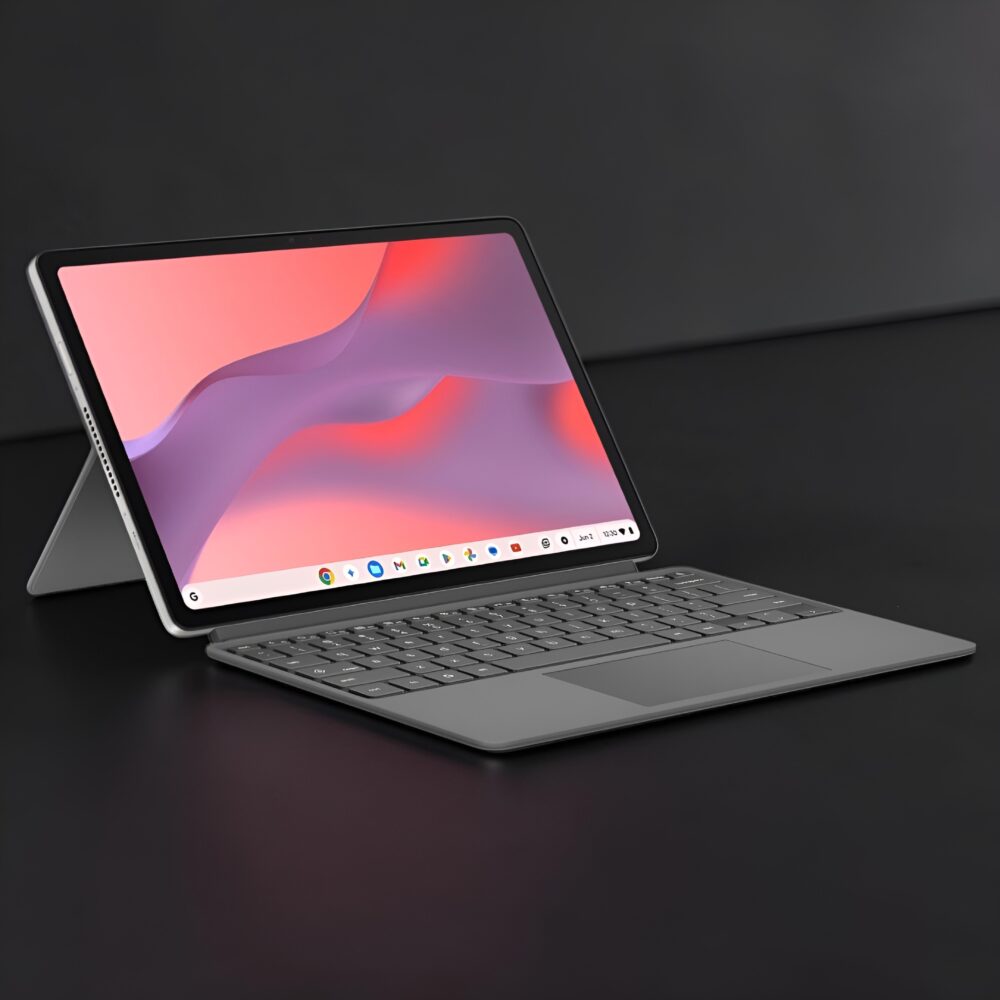
ASUS has introduced the Chromebook CM32 Detachable, a 2-in-1 device aimed at users who need straightforward mobile productivity across sectors like education, healthcare, retail, and general office work. The model follows a familiar convertible formula: a detachable keyboard lets it switch between laptop and tablet modes, supported by a handful of optional accessories including a magnetic stand and a wireless-charging USI 2.0 stylus.
At its core the CM32 relies on an Arm-based MediaTek Kompanio 540 processor, paired with up to 8 GB of LPDDR5X memory and 128 GB of storage. These specifications are adequate for everyday ChromeOS tasks such as web browsing, document editing, video calls, and light media consumption, though they stop short of challenging higher-end Windows or macOS convertibles in demanding workloads. Connectivity includes Wi-Fi 7, Bluetooth 5.4, a USB-C port, and a pogo-pin interface for the keyboard, which is available in white or dark grey. Battery life is quoted at up to 13 hours, a respectable figure for a lightweight detachable that should comfortably cover a full day of mixed use.
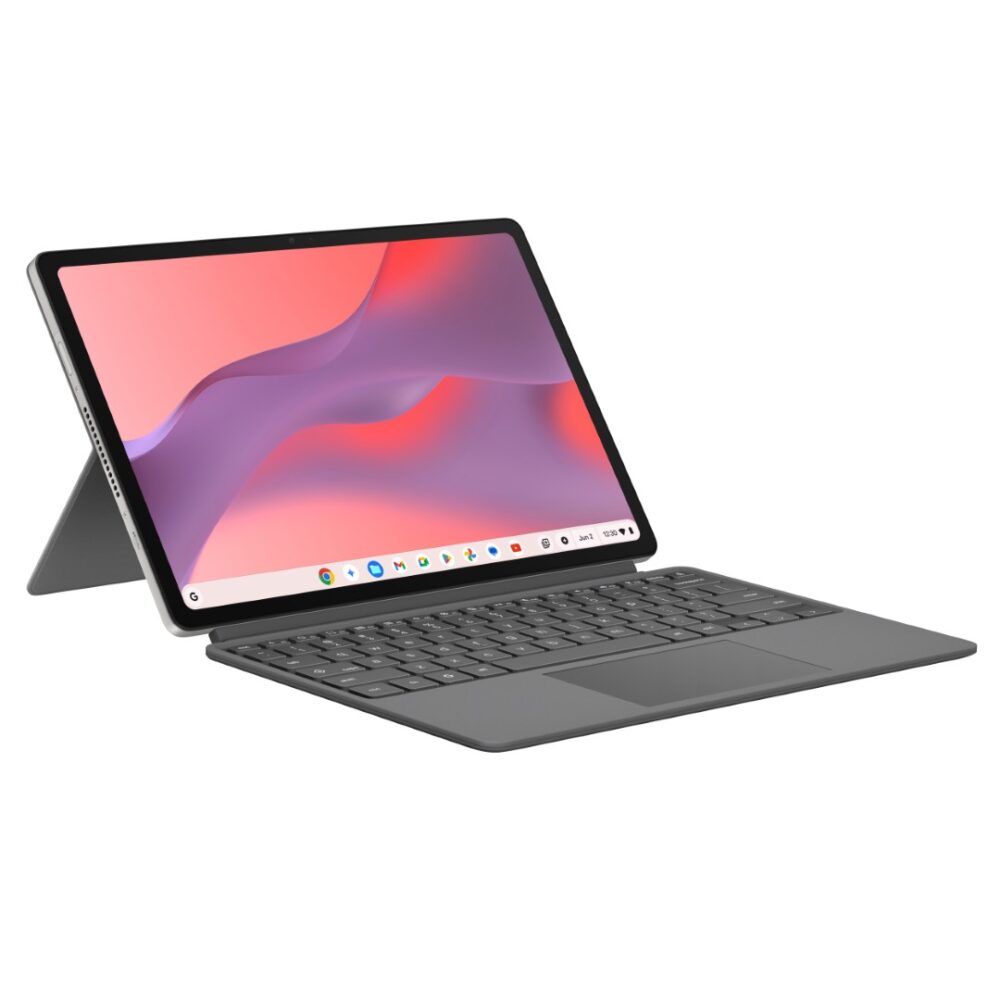
The 12.1-inch touchscreen offers a 2.5K resolution, 600 nits peak brightness, and a 120 Hz refresh rate. That combination should deliver reasonably crisp and fluid visuals, especially outdoors or in brighter rooms, while Corning Gorilla Glass 3 with an anti-fingerprint coating adds a layer of everyday protection. The panel also carries TÜV Rheinland eye-care certification. Audio comes via Dolby Atmos tuning, which is a modest upgrade over basic laptop speakers but unlikely to impress serious listeners. Cameras are functional 5 MP units on both front and rear—serviceable for video conferencing and quick snapshots, yet nothing that stands out in 2026.
Durability receives noticeable attention. The chassis meets US MIL-STD 810H standards, and buyers can opt for a stain-resistant leatherette stand or an impact shield. In environments where devices get frequent handling—classrooms, hospital wards, or shop floors—this emphasis on resilience makes practical sense. Weight and portability are kept in check, though exact figures were not disclosed in the announcement.
ChromeOS remains the platform’s strongest asset, with automatic updates, built-in security tied to a Google account, and access to the full Play Store ecosystem. ASUS is bundling a three-month trial of Google AI Pro, which includes Gemini tools and 2 TB of cloud storage. While useful for some users, the promotional tie-in highlights how much of the experience now depends on Google’s subscription services rather than the hardware itself.
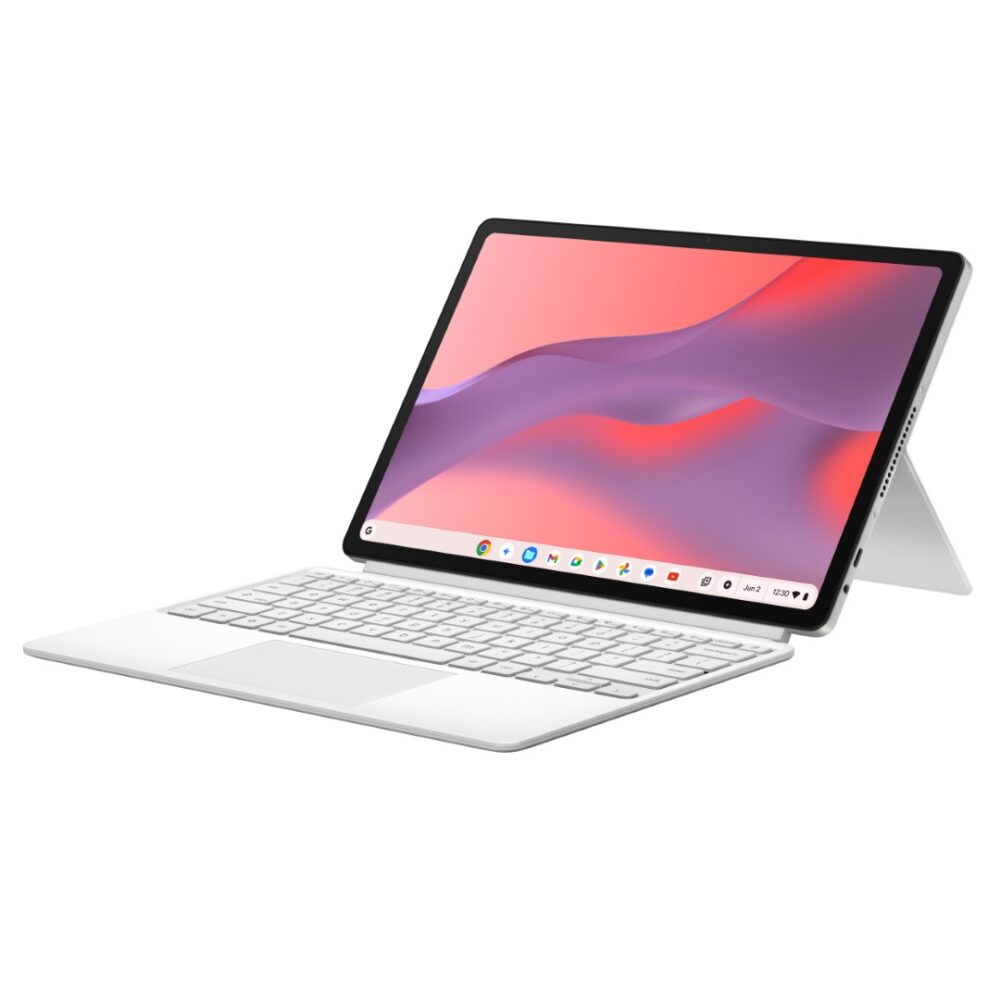
The Chromebook CM32 Detachable will reach GCC markets in July 2026. Pricing details have not been released, but positioning suggests it will sit in the accessible segment of the detachable market, competing against other ChromeOS convertibles rather than premium Windows detachables.
In a broader context, this launch reflects the continuing maturation of Arm-based Chromebooks. Earlier generations struggled with app compatibility and performance consistency; recent MediaTek chips have narrowed that gap for typical productivity use. Still, the category faces the same long-standing questions: how much real-world advantage a detachable form factor delivers versus a traditional clamshell or a straightforward tablet, and whether the added moving parts justify the durability claims over time.