
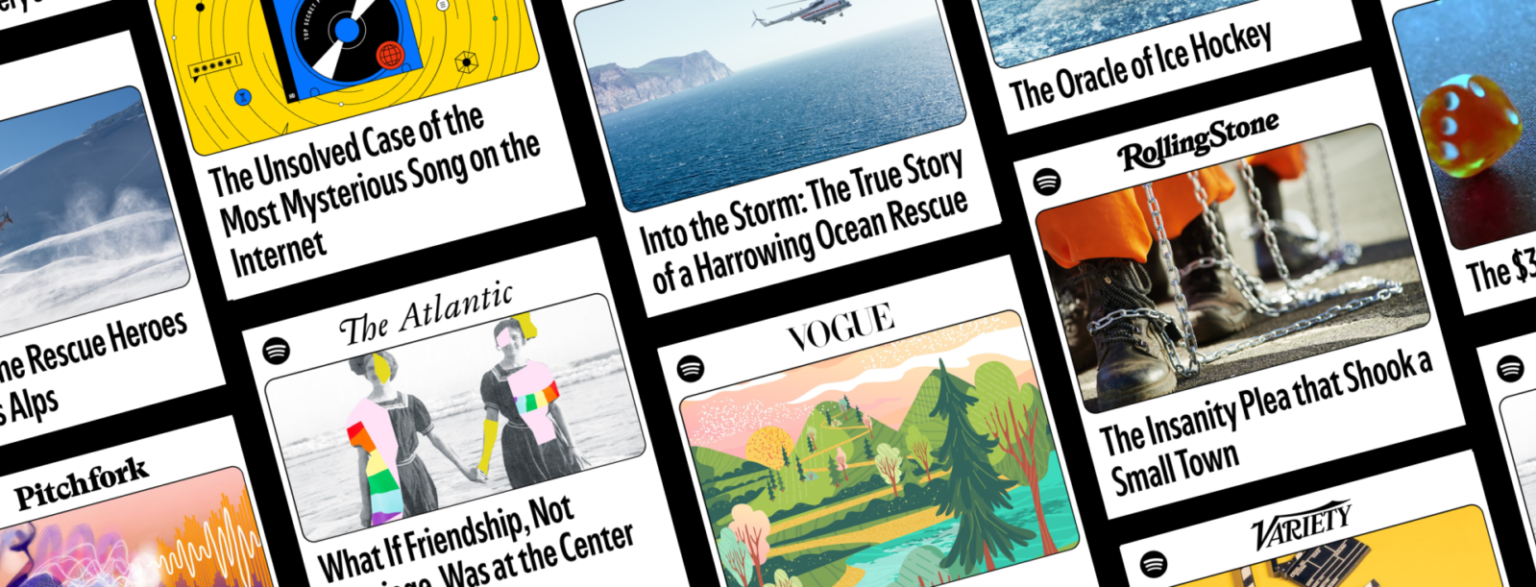
Spotify is expanding its audio ambitions by adding narrated versions of long-form magazine articles to its platform. Starting today, the service offers over 650 English-language pieces from titles including Rolling Stone, The Atlantic, Vogue, Variety, Billboard, GQ, Wired, Vanity Fair, and Pitchfork. Premium subscribers can access them as part of their existing 15 hours of monthly audiobook listening time, while free users have the option to buy individual articles for $1.99 each.
The narrated articles were produced internally by Spotify’s audiobooks team and use a combination of human and digital voices, with AI-generated sections clearly labeled. This move fits into the company’s broader effort to position itself as a central hub for all kinds of audio content, extending beyond music into podcasts and books. By introducing shorter-form material, Spotify hopes to ease listeners into longer experiences and gradually increase engagement with its audiobook offerings.
In practice, this reflects a pragmatic business strategy. Spotify has invested heavily in audiobooks in recent years, providing top-up hours for subscribers and standalone plans like the $9.99 Audiobook Access and $11.99 Audiobooks+ tiers. The addition of magazine content could help address the challenge of building consistent listening habits in a crowded market where attention spans vary widely. Yet it also raises familiar questions about the role of synthetic narration in journalism. While labeling AI portions is a positive step for transparency, digital voices still often lack the nuance and emotional depth that skilled human narrators bring to complex stories.
Spotify’s timing aligns with its recent wave of audio-related announcements. The company has pushed into AI-generated podcasts, tools for authors to create audiobooks, and features like AI covers and remixes. These developments show a clear pattern: leveraging artificial intelligence to scale content production and personalize the listening experience. For users, the appeal lies in convenience—turning a saved article into something you can absorb while commuting, exercising, or doing household tasks. For Spotify, it represents another avenue to boost retention and monetization in an industry where music streaming margins remain thin.
This evolution echoes broader shifts in media consumption. Print publications have struggled for years with declining ad revenue and reader attention, pushing many toward audio formats as a way to reconnect with audiences. Spotify’s entry adds competitive pressure on established players like Audible and Apple, which have long dominated the audiobook space. However, success will depend on execution. Listeners have grown more discerning about quality, especially when it comes to serious journalism from outlets like The Atlantic or Wired. If the narration feels robotic or the selection feels too narrow, adoption may remain limited to casual use.
Overall, Spotify’s narrated magazine articles represent a logical extension of its audio strategy rather than a transformative leap. It acknowledges that many people prefer listening over reading in daily life, but it also highlights ongoing tensions around AI’s role in content creation and the platform’s increasing reliance on paid features to drive revenue. As audio consumption continues to fragment across services, the real test will be whether these smaller steps meaningfully deepen user engagement or simply add to the growing list of options without solving deeper challenges in discovery and satisfaction.