
Spotify turns 20 this week, and the streaming service has released its definitive all-time charts based on global listening data through April 2026. The lists reveal not just commercial winners but the contours of a music and audio culture reshaped by on-demand access over two decades. What stands out is how a handful of artists and tracks have accumulated billions of streams, reflecting both genuine popularity and the platform’s algorithmic amplification.
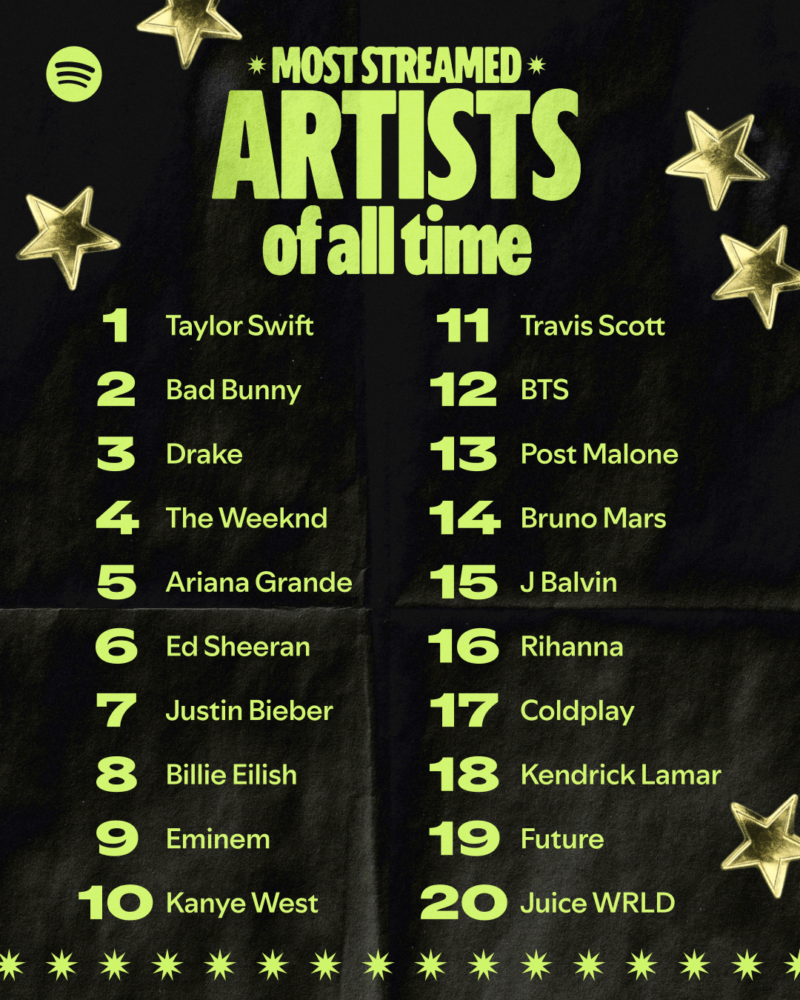
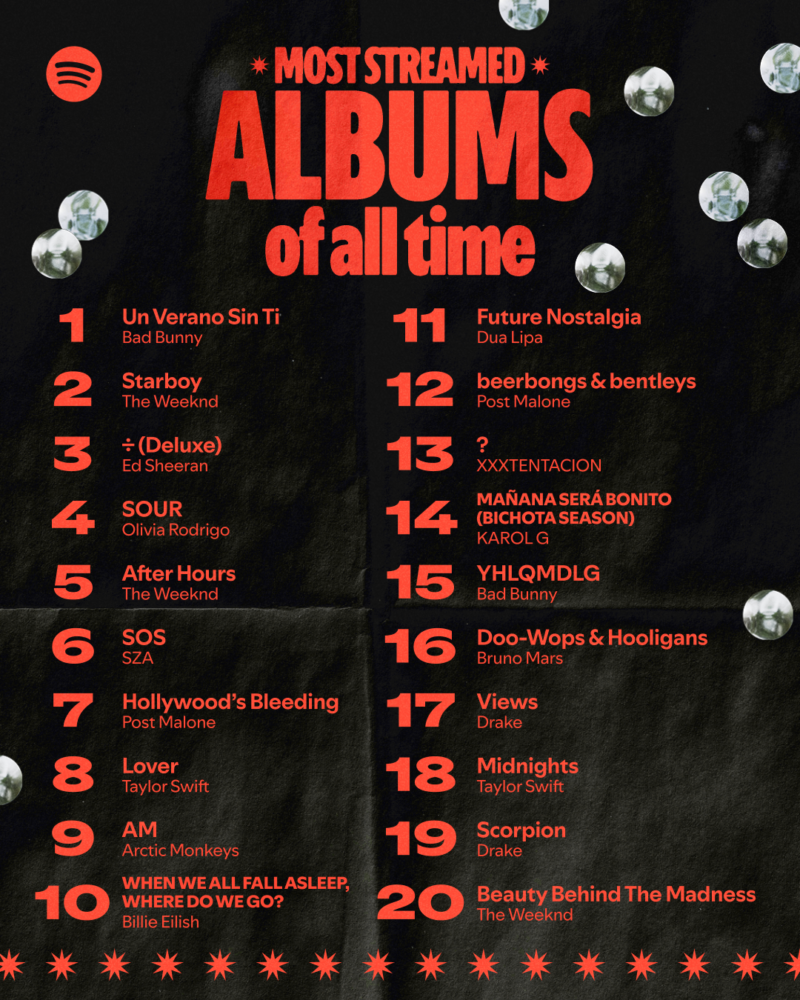
Taylor Swift leads the most-streamed artists, followed by Bad Bunny, Drake, The Weeknd, and Ariana Grande. The ranking mixes pop heavyweights with Latin stars and hip-hop figures, showing broader global reach than the industry’s pre-streaming era. Albums tell a similar story: Bad Bunny’s Un Verano Sin Ti sits at number one, with The Weeknd’s Starboy and Ed Sheeran’s ÷ (Deluxe) close behind. Taylor Swift appears multiple times with Lover and Midnights, while breakout releases like Olivia Rodrigo’s SOUR and Billie Eilish’s WHEN WE ALL FALL ASLEEP, WHERE DO WE GO? demonstrate how younger artists can dominate quickly in the streaming age.
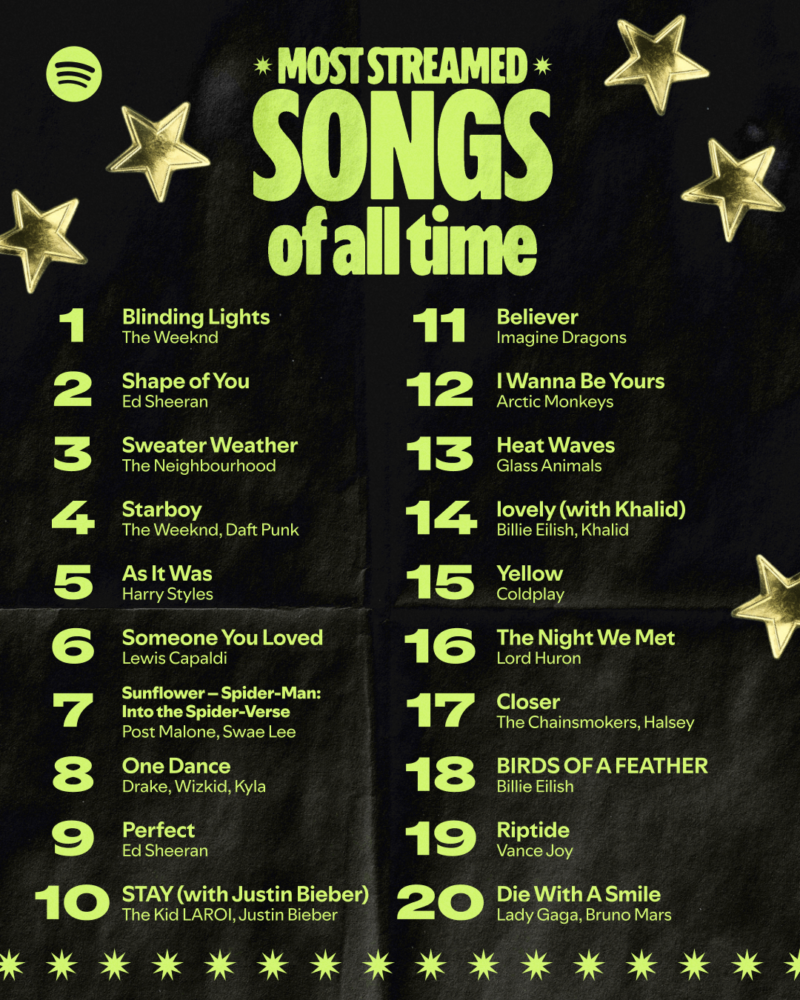
On the songs side, The Weeknd’s “Blinding Lights” remains the most streamed track ever, a durable hit that outlasted many flash-in-the-pan viral moments. Ed Sheeran’s “Shape of You,” The Neighbourhood’s “Sweater Weather,” and Harry Styles’ “As It Was” fill out the top tier. These are familiar radio-friendly records that found new life through playlists and repeat listening. The endurance of older tracks like Coldplay’s “Yellow,” Vance Joy’s “Riptide,” and Lord Huron’s “The Night We Met” suggests listeners still return to comfort songs amid an endless release calendar. Newer entries, such as Billie Eilish’s “BIRDS OF A FEATHER” and Lady Gaga and Bruno Mars’ “Die With A Smile,” show the charts continue to evolve.
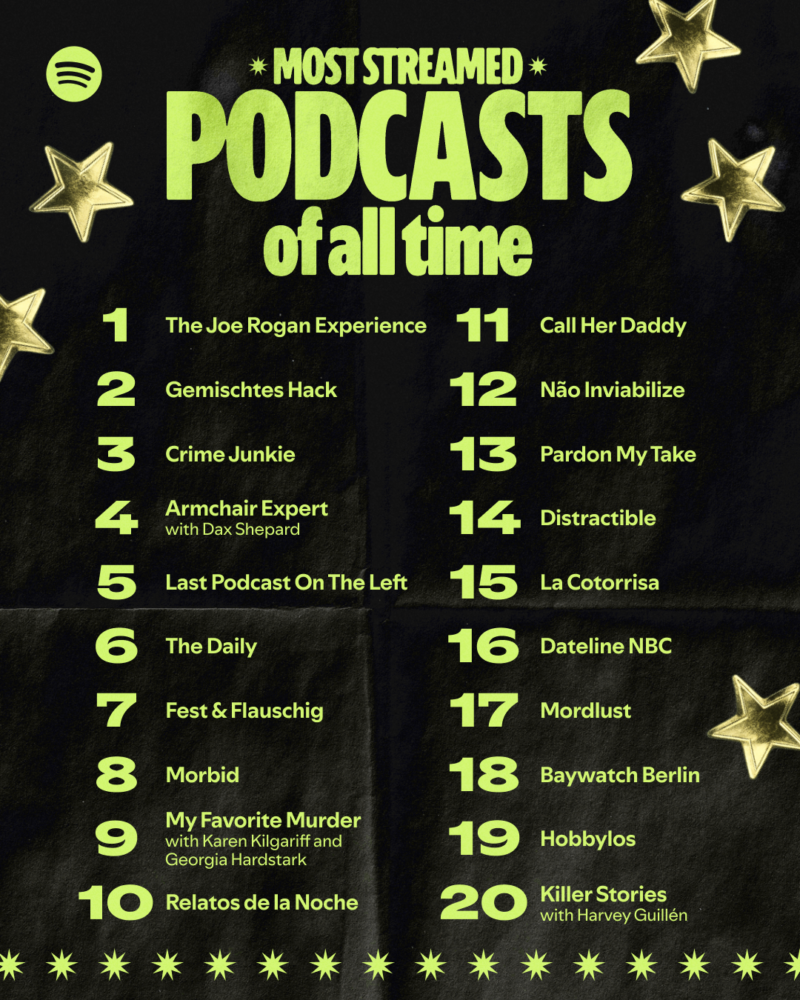
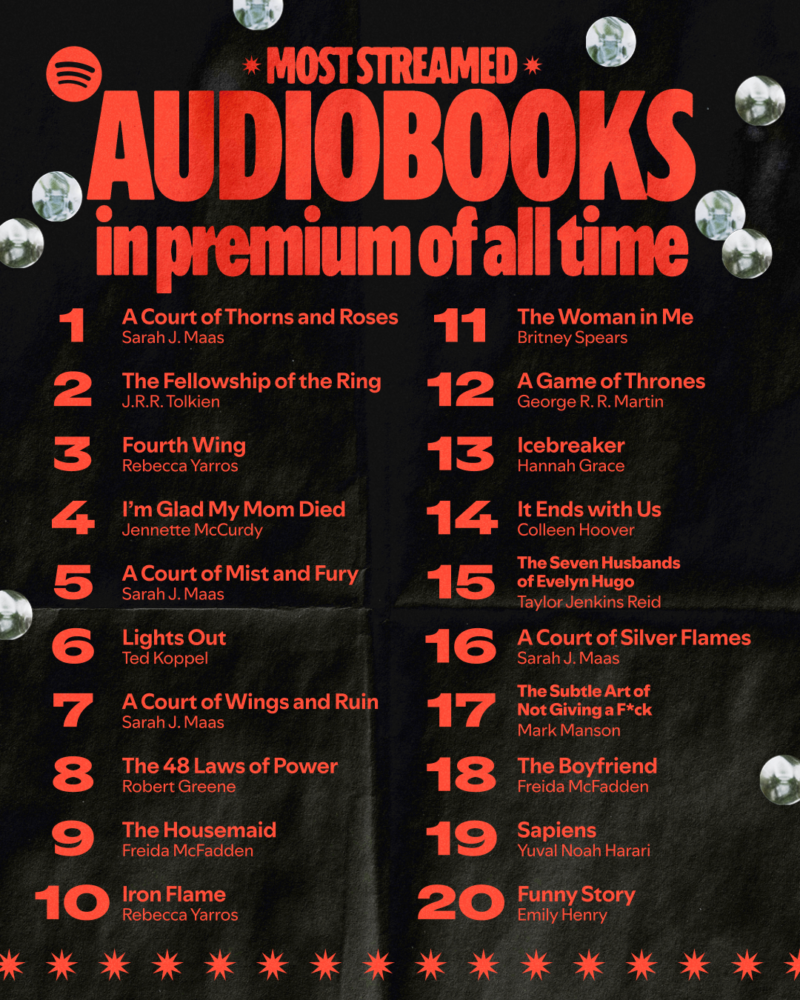
Podcasts and audiobooks add another dimension. The Joe Rogan Experience tops the podcast list by a wide margin, underscoring the pull of long-form conversation in a short-attention culture. True-crime favorites like Crime Junkie and My Favorite Murder sit alongside regional hits from Germany, Mexico, and Brazil, illustrating Spotify’s international expansion. In audiobooks, Sarah J. Maas’s A Court of Thorns and Roses series dominates, joined by fantasy staples like The Fellowship of the Ring and contemporary hits including Fourth Wing and It Ends with Us. Non-fiction such as The 48 Laws of Power and Sapiens also rank high, pointing to self-improvement and big-idea listening as steady categories.
Twenty years on, these numbers highlight streaming’s transformation of the industry. The shift from ownership to access democratized discovery for some while concentrating rewards among a smaller group of consistent performers. Algorithmic playlists helped certain songs rack up plays but also raised questions about fair compensation and cultural homogenization. Spotify’s data captures real listener behavior, yet it also reflects the platform’s own design choices—how recommendations, mood playlists, and personalized feeds steer habits more than pure organic choice ever could.
The anniversary lists serve as a time capsule of what resonated across borders and generations. They show a more fragmented yet interconnected audio world than the one that existed when Spotify launched in 2006, even if power still tilts toward proven stars and familiar sounds. In an era of constant new releases, the tracks and creators that endure reveal as much about audience loyalty as they do about industry mechanics.