

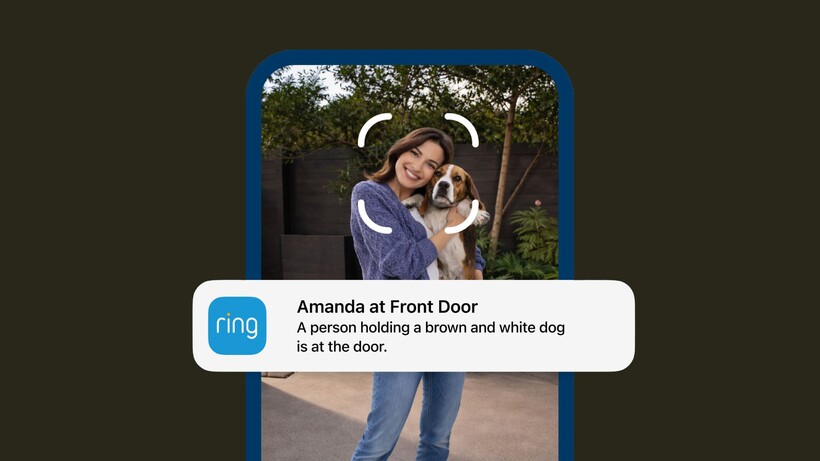
Ring has introduced a new software feature called Familiar Faces for its video doorbells and cameras, aimed at making motion alerts more useful by adding names to detected people instead of generic warnings. Rather than a vague “person detected” message, the system can now notify users with something like “Mum at front door,” helping households quickly understand who is outside without constantly checking the app.
The feature works with 2K, 4K and select HD Ring devices in the UK and is entirely opt-in. Once turned on, the camera begins recognising faces and lets users build a personal directory of up to 50 individuals, such as family members, regular visitors, dog walkers or babysitters. Notifications can then be customised, including the ability to mute alerts for people who appear often. Unlabelled faces are automatically cleared after 30 days to keep the library manageable, while named profiles show up in the timeline, notifications and shared accounts.
Setup happens directly in the Ring app, either from recent event history or a dedicated face library. The process is relatively straightforward, though it does rely on users manually labelling faces over time. In busy homes, where standard motion alerts can quickly turn into background noise, this added context could reduce unnecessary interruptions and make the system feel slightly more intuitive. Knowing a child has returned from school or spotting an unexpected visitor becomes faster and less tedious.
Privacy remains a key consideration with any facial recognition tool. Ring has made the feature off by default, stores face data encrypted within the user’s account, and includes in-app reminders to seek consent where appropriate. Users retain full control, with options to edit, merge or delete profiles at any time. Still, the reliance on cloud processing and a required Ring Protect subscription, including Pro or Pro Intelligence plans, means the convenience comes with ongoing costs and continued dependence on the company’s servers. Past concerns around Ring’s data-sharing practices with law enforcement highlight why some users remain cautious about adding more personal biometric information to the ecosystem.
This is not a hardware breakthrough but a modest software adjustment that builds on years of incremental improvements in home security cameras. Similar named-person features have appeared in competing systems from Google Nest and others, though implementation details and privacy safeguards vary. For households already invested in Ring’s ecosystem, Familiar Faces may ease daily friction. For others weighing privacy against convenience, it serves as another reminder that modern smart cameras collect and process increasingly intimate data in exchange for slightly smarter alerts.
The rollout began via the app on 17 April 2026.