
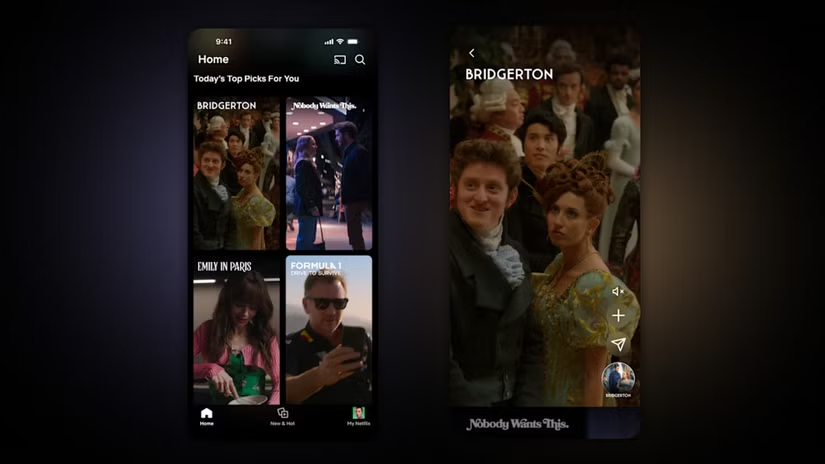
Netflix is updating its mobile app with a vertical video discovery feed that will greet users as the default interface upon opening. The change, set to complete its rollout by the end of April 2026, shifts the experience closer to scrolling through TikTok, Instagram Reels, or YouTube Shorts, where previews play in a full-screen vertical format. Rather than a traditional menu or grid of thumbnails, subscribers will now encounter suggested shows and films through auto-playing video clips that fill the phone screen.
The move follows nearly a year of testing and was confirmed in Netflix’s recent shareholder letter. In it, the company described the redesign as a way to better showcase its expanding catalog and allow members to engage on their own terms. Visually and behaviorally, it mirrors the short-form video formats that dominate platforms popular with users under 30. YouTube expanded its Shorts feature to compete with TikTok, and now Netflix is adopting a similar phone-first approach for its own content. Disney+ has already introduced vertical video elements, including opportunities for user-generated clips tied to its library, raising questions about whether Netflix might eventually head in that direction as well.
This development reflects a broader blurring of lines between traditional streaming and social media. Streaming services have long studied the success of creator-driven platforms like YouTube, which combines user content, advertising, and subscriptions in a flexible model that generates significant revenue while keeping production costs low for much of its catalog. Netflix built its reputation on high-quality original series and films delivered on demand, but the industry faces ongoing pressure to control costs and attract younger audiences who spend more time on social apps than on linear TV or curated streaming menus.
The company is not starting from scratch in borrowing social elements. Netflix has hosted live fan events, cast reunions, and interactive features for reality shows, while competitors like Hulu, Disney+, and Prime Video have tested watch parties that let groups stream together in real time. Profile sharing and recommendation tools already exist across platforms. Television has always carried a social dimension, from living-room viewing to water-cooler conversations and early internet forums in the 1990s. The current push simply formalizes that instinct within the apps themselves.
Still, the shift invites scrutiny. While vertical feeds may improve discovery and session length, they risk prioritizing quick, algorithm-driven engagement over deliberate viewing of longer-form storytelling—the very content that distinguished Netflix during the first decade of the streaming boom. The platform’s strength has been commissioning ambitious series like Stranger Things or Squid Game, not competing directly with bite-sized clips. If the new interface proves successful at drawing in Gen Z users, it could accelerate further experiments with short-form and user-generated material, potentially diluting focus on the polished originals that justified subscription prices in the first place.
For now, the update represents an incremental but telling adaptation. Streaming services are no longer just distributors of television; they are competing for attention in an ecosystem shaped by social media habits. How well Netflix balances this mobile redesign with its core promise of quality long-form entertainment will help determine whether the change strengthens its position or simply adds another layer of noise.