
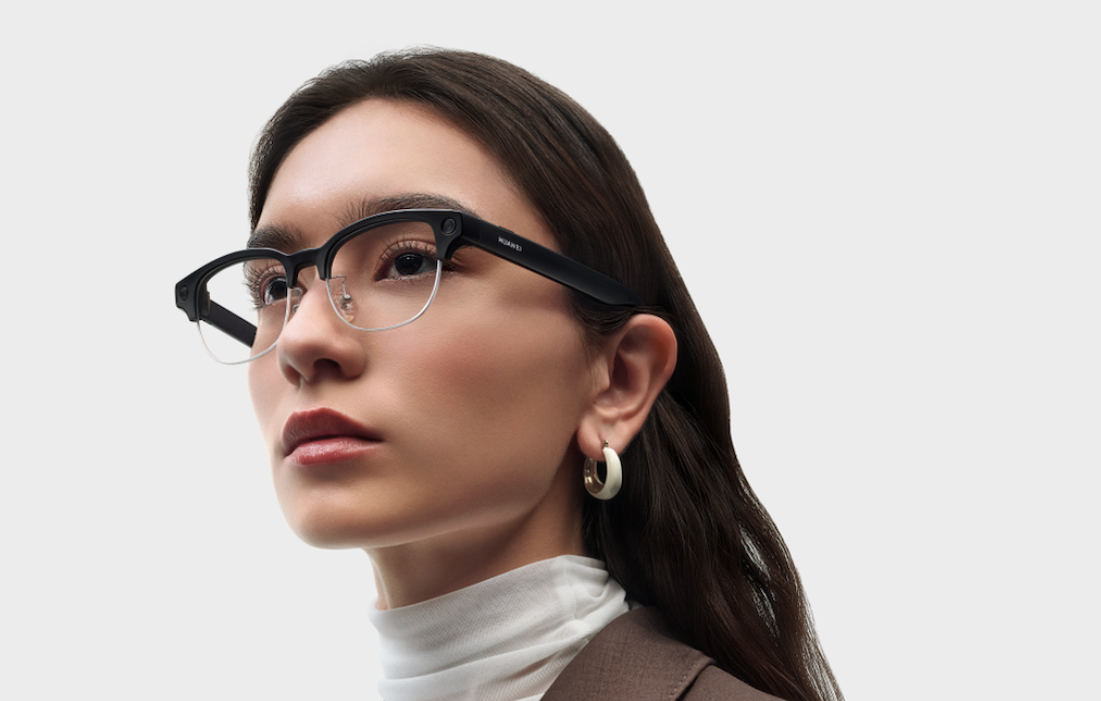
Huawei has unveiled a new pair of ai-powered smart glasses at its recent pura series launch event, stepping further into the wearable tech space with its own in-house hardware.
The device, simply named huawei ai glasses, was introduced by he gang, ceo of huawei terminal bg, who wore them onstage during the presentation. Available in three colors—titanium silver gray, shimmering silver, and modern black—the glasses come in both round and square frame options. Pricing starts at 2,499 yuan, roughly $367, for the titanium silver gray and modern black models, while the shimmering silver version costs 2,899 yuan, or about $425. Pre-orders opened on april 20, with official sales beginning april 25.
In terms of design, the glasses aim to feel more like ordinary eyewear than bulky gadgets. They weigh just 35.5 grams overall, with temples measuring 6.25 mm thick, thanks to new lightweight materials and precision assembly methods. Huawei based the fit on data from over 300,000 asian head shapes, resulting in what it describes as a “golden triangle” structure for better balance. The frames also feature a self-developed titanium alloy hinge system that the company claims improves stability by 21 percent over competing designs, along with fine mechanical details like a 0.65 mm effective amplitude and a 120 square millimeter vibration area.
At the core is a huawei-developed ai chip, which the company says enables near-instant voice response times, voice wake-up, and a one-click ai shortcut. Key functions include “see the world” capabilities through the xiaoyi assistant and an alipay “look and pay” integration for quick transactions. On the imaging side, the glasses house a 1/2.8-inch image sensor supporting ai raw multi-frame fusion, ai-assisted composition correction, and first-person perspective live streaming. A companion huawei glasses app handles pairing, smart audio broadcasting, automatic content import, and integration with other huawei devices.
Battery life is rated for up to 12 hours of general use, including around eight hours of voice calls and nine hours of continuous music playback. While these figures sound respectable on paper, real-world performance will likely vary depending on how heavily users lean on the ai features and camera functions.
This launch arrives at a time when smart glasses have struggled to move beyond niche appeal. Earlier attempts, from google glass to more recent models by meta and others, have often faced criticism over privacy concerns, limited usefulness in daily life, and designs that still feel noticeably tech-heavy. Huawei’s emphasis on lighter weight, regional fit data, and an in-house ai chip shows an effort to address some of those past shortcomings, yet questions remain about whether the features—such as voice assistants and quick payments—will prove compelling enough to justify the cost for most people, especially outside huawei’s ecosystem.
The glasses also highlight the company’s continued push into wearables amid broader challenges in the global smartphone market, where trade restrictions have forced greater reliance on domestic innovation and self-developed components.
In the end, the huawei ai glasses represent a polished incremental step rather than a radical breakthrough. They may appeal to users already invested in huawei’s ecosystem who value the seamless integration and lightweight build, but broader adoption will depend on whether the ai experiences deliver consistent value beyond the initial novelty.