

In a move that few expected, Google has released a major update to Snapseed for iPhone and iPad, marking the photo editing app’s first substantial overhaul in years. Version 3.0 introduces a completely redesigned user interface, new tools, and workflow improvements—signaling a renewed interest in a product many had assumed was quietly discontinued.
Snapseed 3.0.0 arrives after a period of near dormancy. The app last saw notable iOS updates in 2021, followed by minor maintenance patches in 2023 and 2024. Given the absence of new features and the app’s fully local processing model—requiring no cloud infrastructure—it seemed Snapseed was on autopilot, left to fade out quietly. Today’s update reverses that assumption.
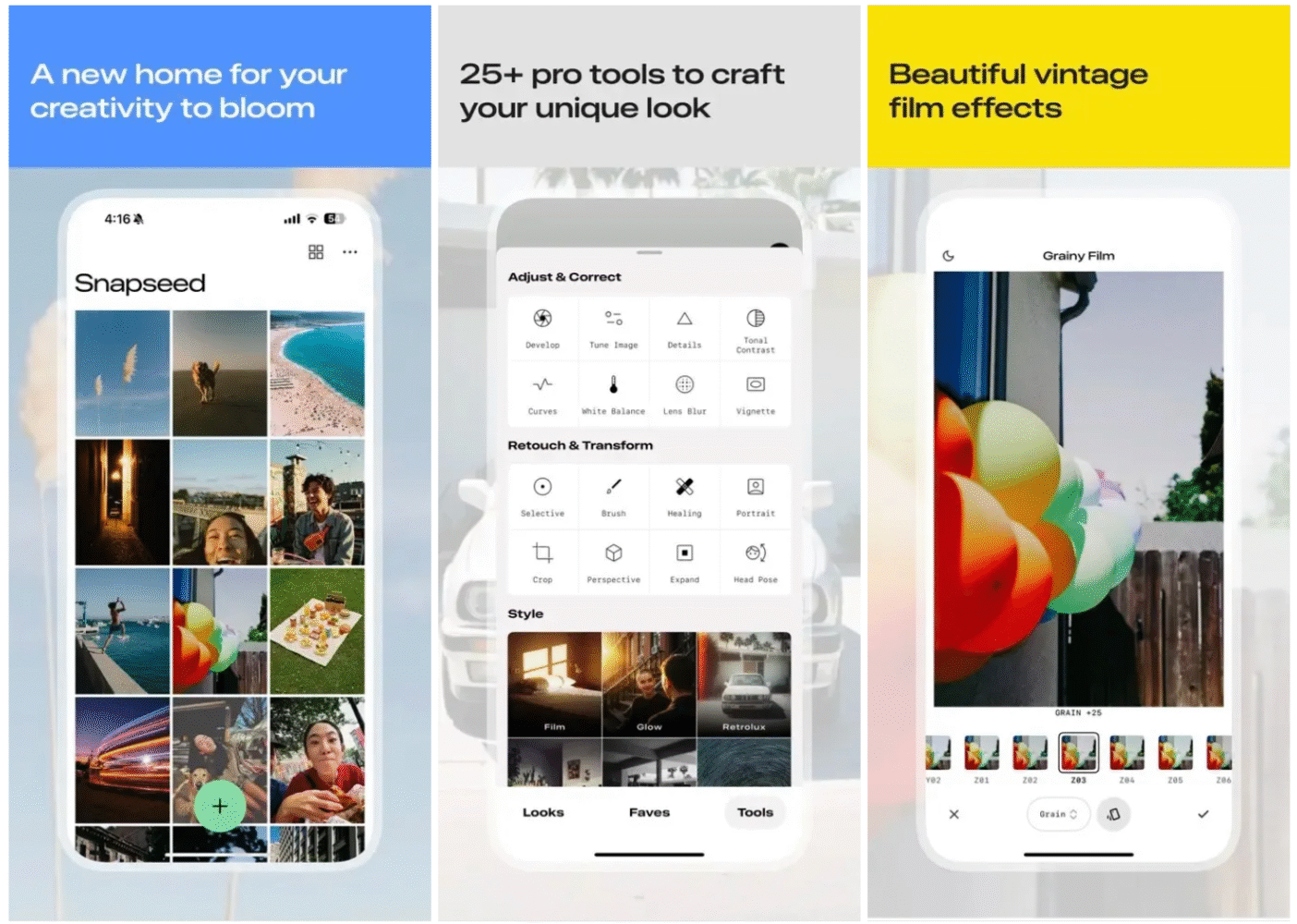
The new interface reflects modern mobile design trends, featuring a cleaner layout and a floating action button (FAB) that lets users start editing with a single tap. Edited photos now appear in a grid view for easier management. The editor itself has been split into three main tabs: Looks, Faves, and Tools. Notably, the new Faves section allows users to save frequently used tools for quick access—improving efficiency for repeat edits.
Snapseed’s toolset remains expansive, with categories spanning correction, transformation, stylization, and creative enhancements. Users can access familiar tools like Curves, Healing, Lens Blur, and Portrait, alongside creative effects like Retrolux, Noir, and Double Exposure. The update also introduces a new “Film” style filter under the Style tab.
Control remains intuitive, preserving Snapseed’s hallmark gesture-based input. Left/right swipes adjust values, while some tools still allow vertical swiping to toggle between options. An arc-based controller has been added for finer adjustment, bringing a more tactile feel to the editing process.
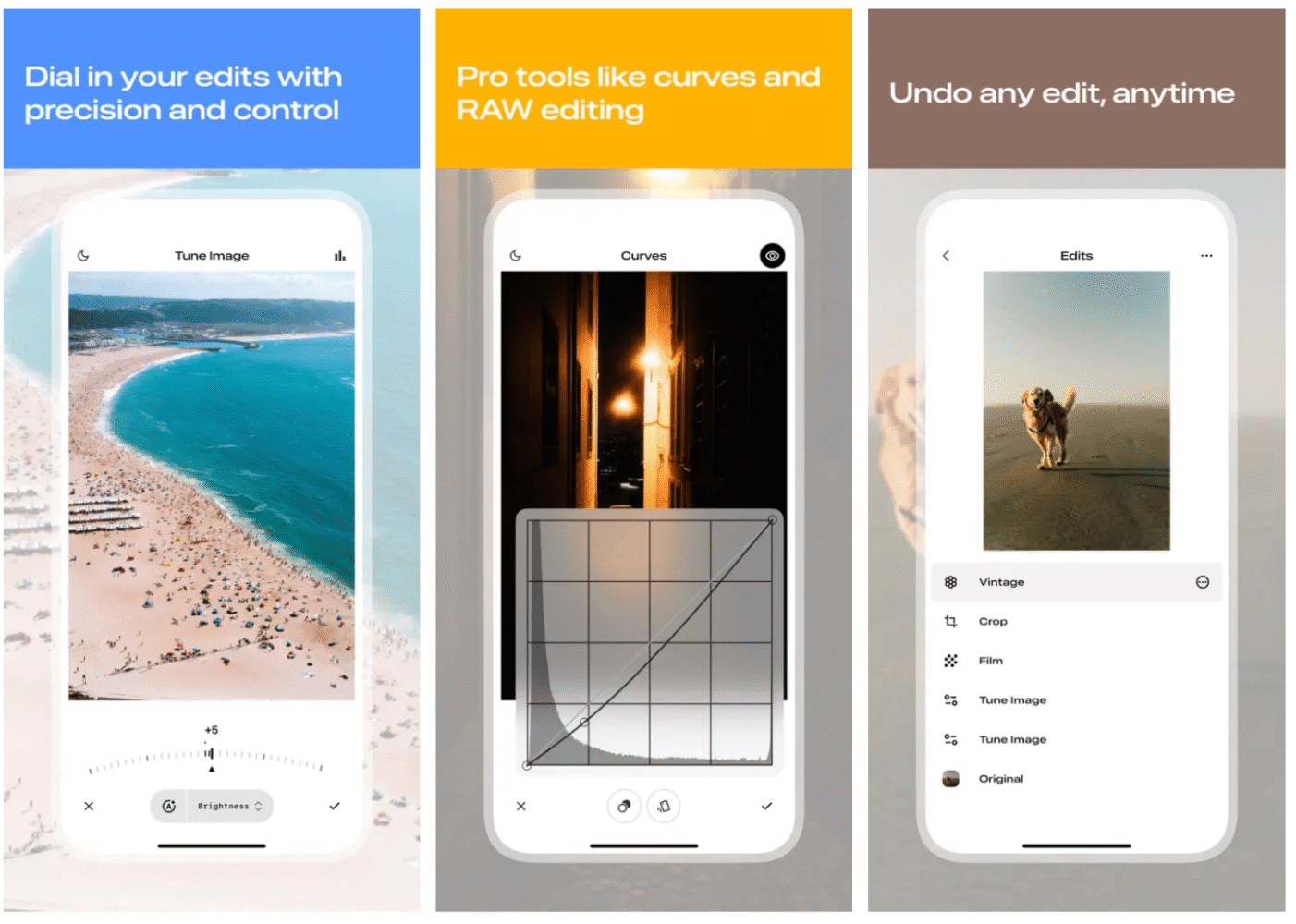
Exporting images has been moved to the top-right corner, simplifying the interface and leaving more screen space for image previews and editing tools. While the update is currently exclusive to iOS, Google teased additional developments with a “more to come” note—raising hopes for a similar overhaul on Android.
Snapseed’s revival may catch many by surprise, particularly as Google has shifted focus in recent years toward AI-driven editing in Google Photos. But the app’s dedicated base—many of whom prefer non-cloud-based editing workflows—may see this as a welcome return to form. Originally developed by Nik Software and later acquired by Google, Snapseed has long been praised for combining advanced features with a minimalist interface.
Whether this signals a broader comeback or simply a refreshed farewell remains to be seen. But for now, Snapseed 3.0 marks a rare instance of a tech giant reviving, rather than retiring, a once-stagnant product.