
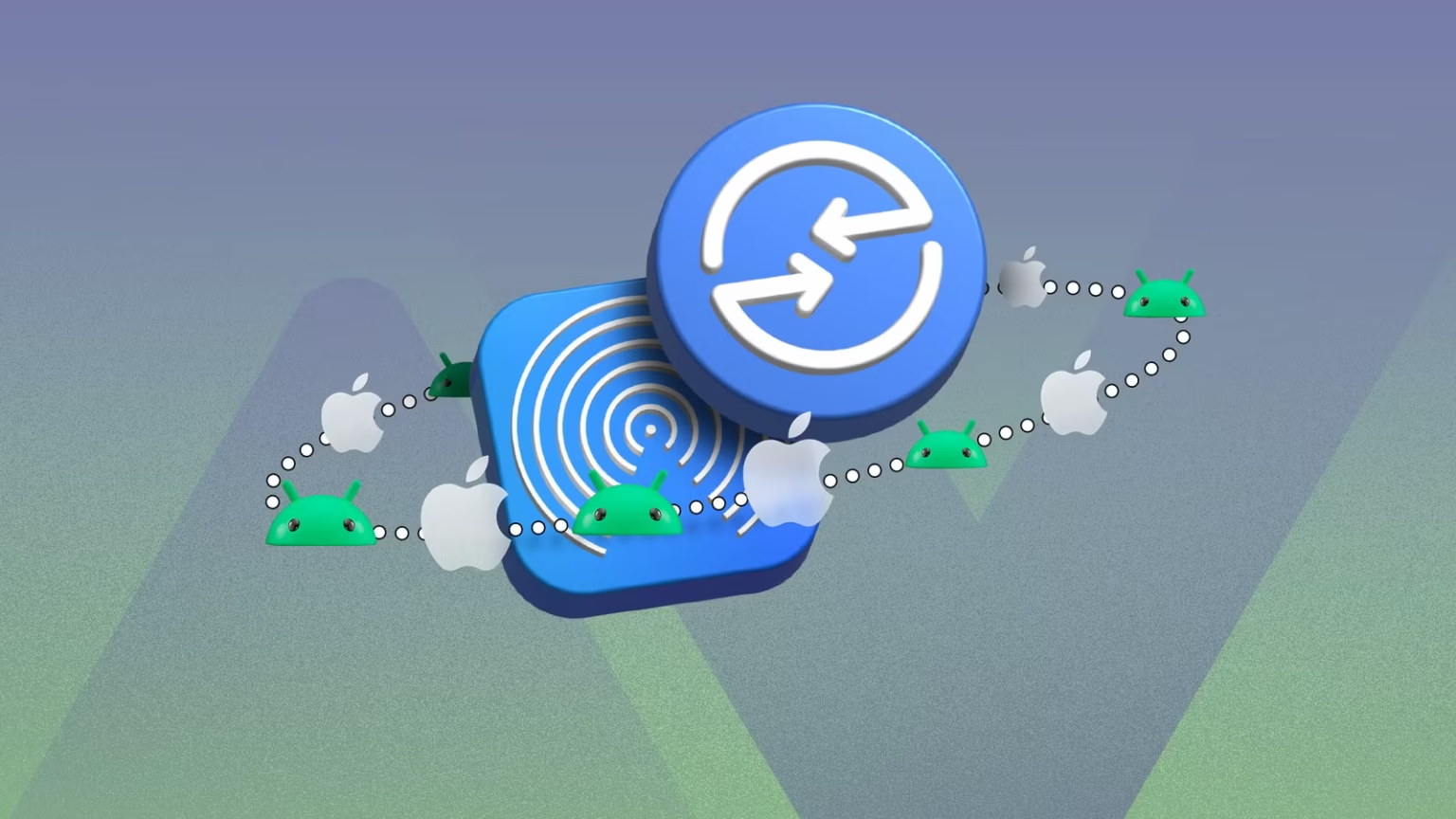
Google has confirmed that AirDrop-style file sharing between Android devices and Apple hardware will soon extend beyond a single phone lineup, with broader Android support now planned. The announcement follows months of uncertainty after interoperability between Android and Apple devices first appeared in late 2025 in a limited form.
That initial breakthrough came when Apple’s AirDrop system was made compatible with Android’s Quick Share feature, allowing files to be exchanged between iPhones and certain Android devices for the first time. However, the feature launched exclusively on Google’s Pixel 10 series, leaving most Android users unable to take advantage of it. At the time, Google described the limitation as temporary, but offered no timeline for expansion.
Speaking at a recent press briefing, Android Vice President of Engineering Eric Kay confirmed that AirDrop interoperability is now being prepared for the wider Android ecosystem. According to Kay, the company’s initial focus was ensuring compatibility not just with iPhones, but also with iPads and MacBooks, before moving on to broader hardware support. With that groundwork complete, Google is now working with device partners to roll the feature out more widely, with announcements expected later this year.
AirDrop has long been one of Apple’s most widely used convenience features, offering fast, wireless file transfers across its devices with minimal setup. Android alternatives have existed for years, but none achieved the same level of ubiquity or simplicity until Quick Share was introduced as a unified solution across Android devices. Even then, the two systems operated in parallel, reinforcing the separation between Apple’s and Google’s ecosystems.
The November 2025 interoperability update marked a notable shift in that relationship. For the first time, users could transfer files directly between Android and Apple devices without relying on cloud services, messaging apps, or third-party tools. While its Pixel-only limitation drew criticism, the underlying implementation suggested broader ambitions. Developers quickly noticed that the feature was not hardwired into Pixel-exclusive software and instead functioned as a standalone app with a Google Play Store listing.
Additional signals emerged soon after. Hardware partners such as Qualcomm and Nothing publicly acknowledged they were preparing their own devices to support the same functionality, further indicating that the Pixel exclusivity was not intended to be permanent. These developments pointed to a phased rollout rather than a closed experiment.
Despite the confirmation, details remain limited. Google has not announced a specific release date, nor has it clarified whether older Android devices will be supported or if hardware requirements will apply. The company has also not specified whether all Android manufacturers will enable the feature at launch or whether adoption will vary by brand and region.
Even with those uncertainties, the move represents a continued easing of long-standing platform barriers. By enabling direct file sharing between Android and Apple devices, Google and Apple are acknowledging changing user expectations around cross-platform compatibility. While it does not erase the broader competitive divide between the two companies, it does reduce one of the most persistent points of friction for everyday users.
For Android users outside the Pixel ecosystem, the confirmation brings long-awaited clarity. The remaining question is no longer whether AirDrop-style sharing will arrive, but how quickly it will become available across the diverse range of Android devices already in use.