
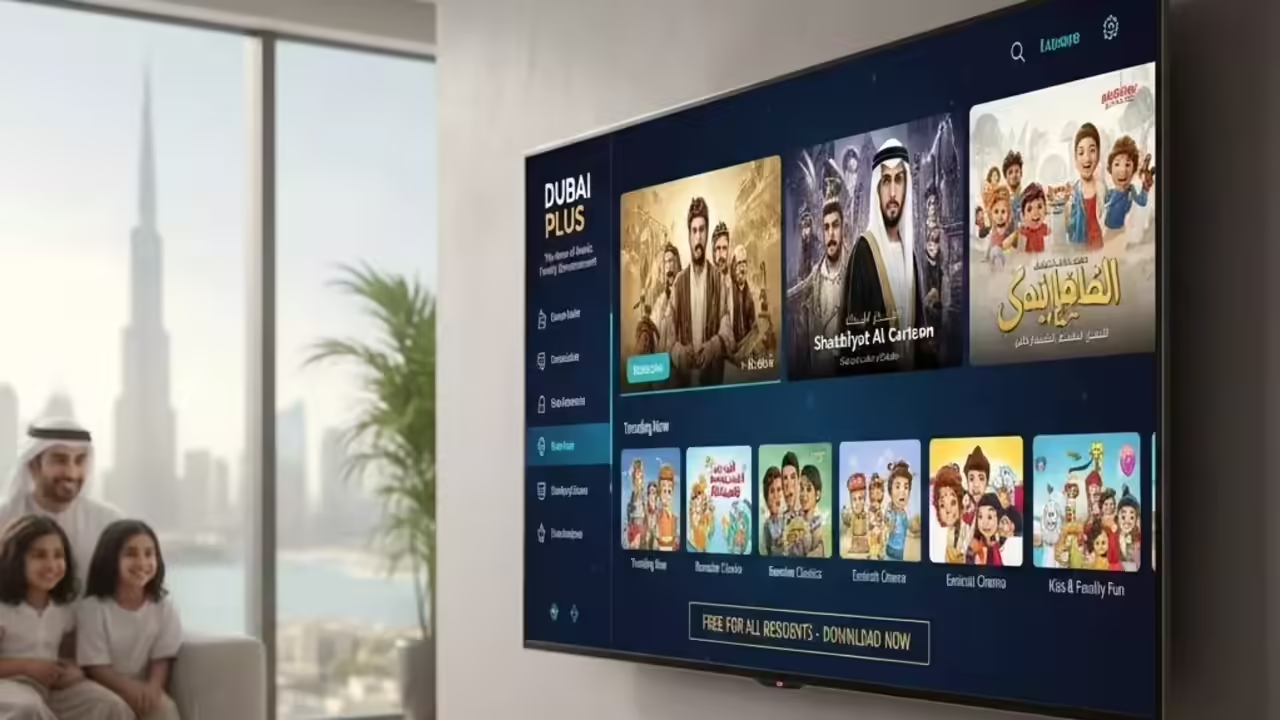
Dubai Media Incorporated has launched Dubai+, a new digital streaming platform positioned as a family-oriented destination for on-demand and live content across the UAE and the wider Middle East. Announced on 29 January 2026 at a press conference in Dubai, the platform forms part of a broader effort to reposition public-sector media assets for a digital-first environment shaped by changing viewing habits and growing competition from global streaming services.
The launch was carried out under the direction of Sheikh Ahmed bin Mohammed bin Rashid Al Maktoum, Chairman of the Dubai Media Council, and reflects the council’s ongoing role in steering policy and long-term strategy for the emirate’s media sector. Speaking at the event, Mona Ghanem Al Marri, Vice Chairperson and Managing Director of the Dubai Media Council and Director General of the Government of Dubai Media Office, described Dubai+ as part of a wider institutional push to strengthen the media ecosystem, improve competitiveness, and align public media with international digital standards.
Rather than positioning the platform as a direct challenger to global entertainment brands, Dubai Media framed Dubai+ as a complementary service with a strong regional focus. The platform aggregates local Emirati productions, Arab series, and licensed international films, with an emphasis on content classification, parental controls, and audience transparency. At launch, Dubai+ offers more than 20 exclusive series, six original productions developed specifically for the platform, and a catalogue of over 170 international films. A dedicated sports section includes coverage of 12 live championships, alongside major events hosted in Dubai.
Mohamed AlMulla, Chief Executive Officer of Dubai Media Incorporated, said the platform reflects an internal shift toward building an integrated digital media operation rather than operating individual broadcast channels in isolation. He noted that Dubai+ is intended to evolve in phases, with additional content, features, and partnerships planned as audience behaviour and demand become clearer.
From a technical standpoint, Dubai Media stated that the platform was developed following extensive infrastructure upgrades and testing, with the aim of delivering stable performance and a user experience comparable to established international services. While such claims are common at launch, the platform’s long-term credibility will depend on consistent delivery, discoverability, and the relevance of its programming slate.
Salem Balyouha, Chief Executive Officer of Media Content at Dubai Media Incorporated, highlighted family safety and regional representation as defining pillars of the service. He also positioned Dubai+ as a vehicle for supporting local producers and emerging creative talent, offering a domestic outlet for projects that may struggle to find space on international platforms.
In practical terms, Dubai+ represents an attempt to modernise state-backed media distribution while retaining editorial oversight and cultural priorities. Its success will likely hinge on whether it can balance public-service objectives with the expectations of audiences accustomed to highly personalised, algorithm-driven platforms. As Dubai continues to position itself as a regional content hub, Dubai+ becomes both a test case and a signal of how public media institutions in the region intend to operate in an increasingly competitive digital landscape.