

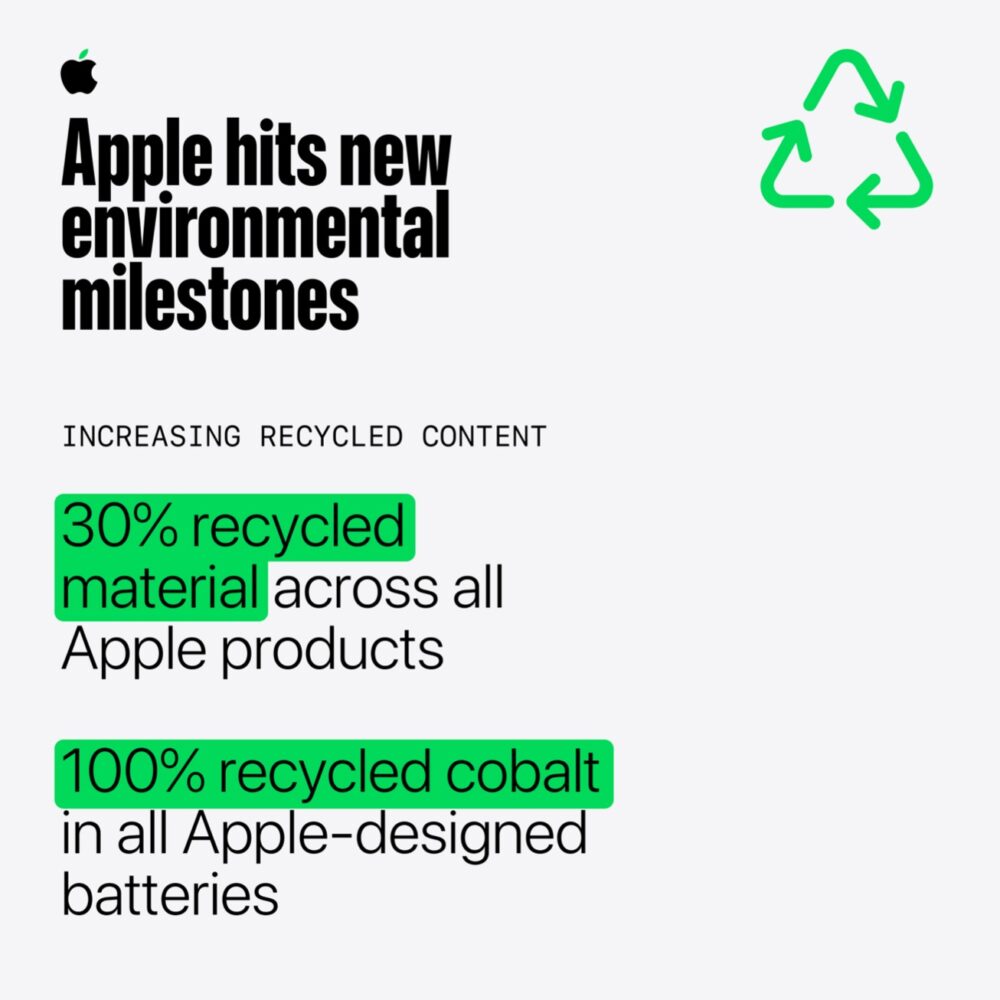
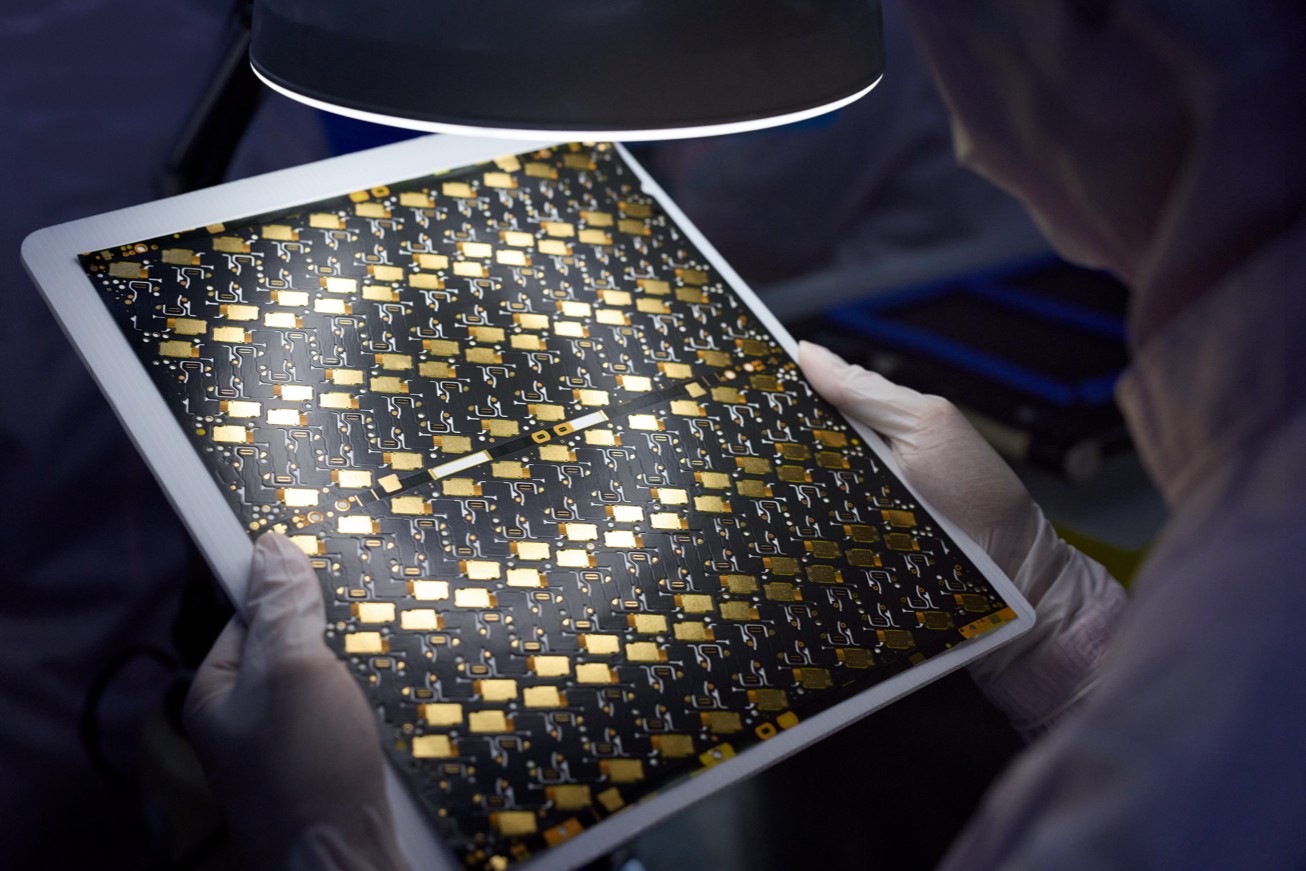
Apple has released its latest environmental progress report covering operations and supply chain activities through 2025, outlining incremental advances in recycled material use, packaging design, water management, waste handling, and renewable energy procurement. The company stated that 30 percent of the materials, by weight, in products shipped last year came from recycled sources, representing its highest recorded share to date. This average includes notable component-level achievements: 100 percent recycled cobalt in all Apple-designed batteries, 100 percent recycled rare earth elements in magnets, and 100 percent recycled gold plating and tin soldering in printed circuit boards. One newly introduced device, the MacBook Neo, reached 60 percent recycled content overall, supported by a more material-efficient aluminum forming process that reportedly uses half the raw material of traditional machining methods.
These figures build on years of targeted efforts to shift away from virgin resources in high-value components. Yet the 30 percent overall average across the full product lineup still indicates that the majority of materials remain sourced from primary extraction, a reality shaped by the technical and economic difficulties of scaling recycled inputs for complex electronics. Global e-waste volumes continue to grow rapidly, with formal recycling rates hovering around 20 to 22 percent in recent years, underscoring that in-house material recovery improvements address only part of a much larger systemic issue.
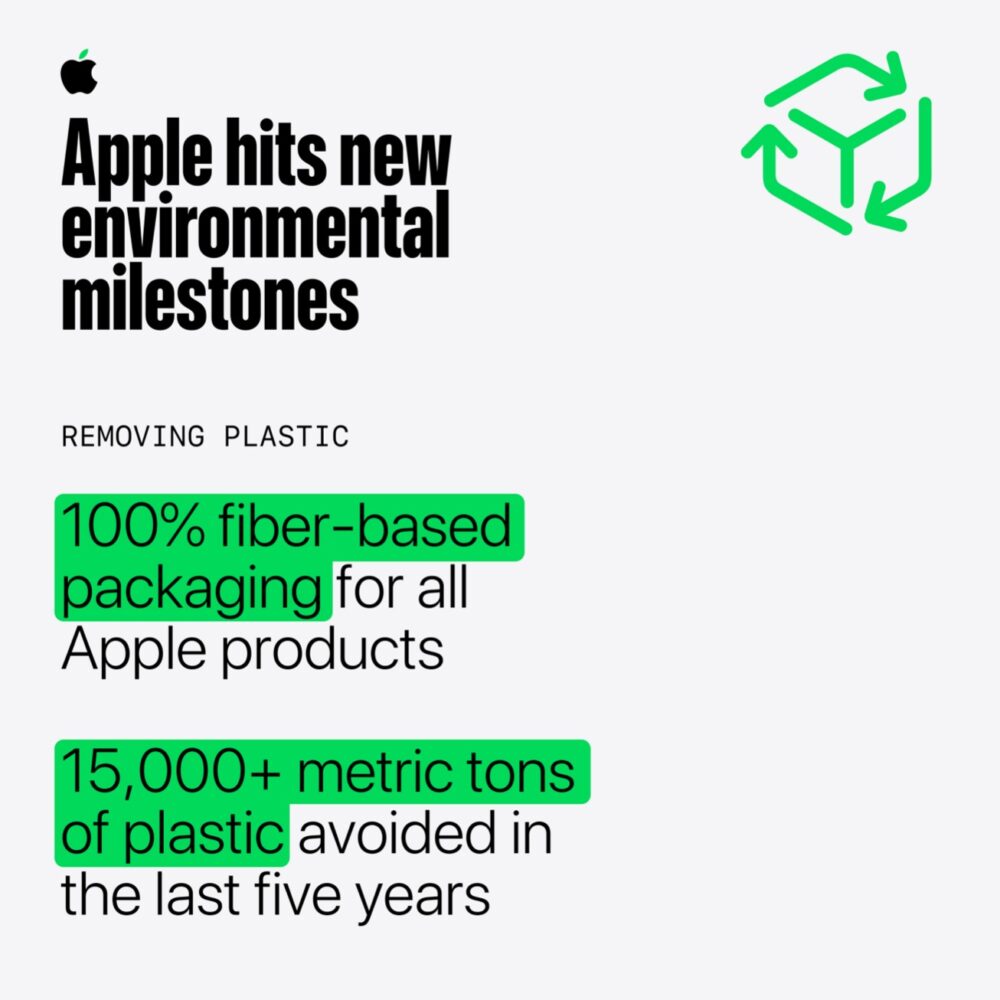
On the packaging side, Apple completed its transition to 100 percent fiber-based materials, meeting a self-set 2025 target to eliminate plastic. Over the preceding five years, this change is said to have avoided more than 15,000 metric tons of plastic waste, roughly equivalent to 500 million standard water bottles. Fiber-based packaging tends to be more straightforward to recycle in municipal systems than mixed plastics, though success still depends heavily on local infrastructure and consumer habits that differ significantly by market.
In recycling technology, the company introduced Cora, a new processing line at its Advanced Recovery Center in California. It employs precision shredding and advanced sensors aimed at achieving higher material recovery rates than typical industry baselines. This is paired with A.R.I.S., a machine-learning system running on standard hardware to sort electronic scrap more effectively. These tools extend earlier efforts like the Daisy disassembly robot, yet broader challenges persist: rare earth elements and other critical materials remain difficult and costly to recover at scale due to their integration in small quantities within complex assemblies, limited collection networks, and economic incentives that often favor mining new supplies.
Water-related initiatives produced substantial reported savings. Apple and its suppliers conserved 17 billion gallons of fresh water in 2025, a volume equivalent to filling more than 25,000 Olympic-size swimming pools. The company replenished more than half the water withdrawn for its own global facilities through watershed projects, with all eight Apple-owned data centers earning certification under the Alliance for Water Stewardship standard. For the MacBook Neo, an updated anodization process now reuses 70 percent of water in a closed-loop system. The longer-term aim is to replenish 100 percent of operational water use by 2030, an ambitious target in an industry where manufacturing remains water-intensive. Effectiveness will ultimately be judged by measurable improvements in local water basins rather than volumetric accounting alone.
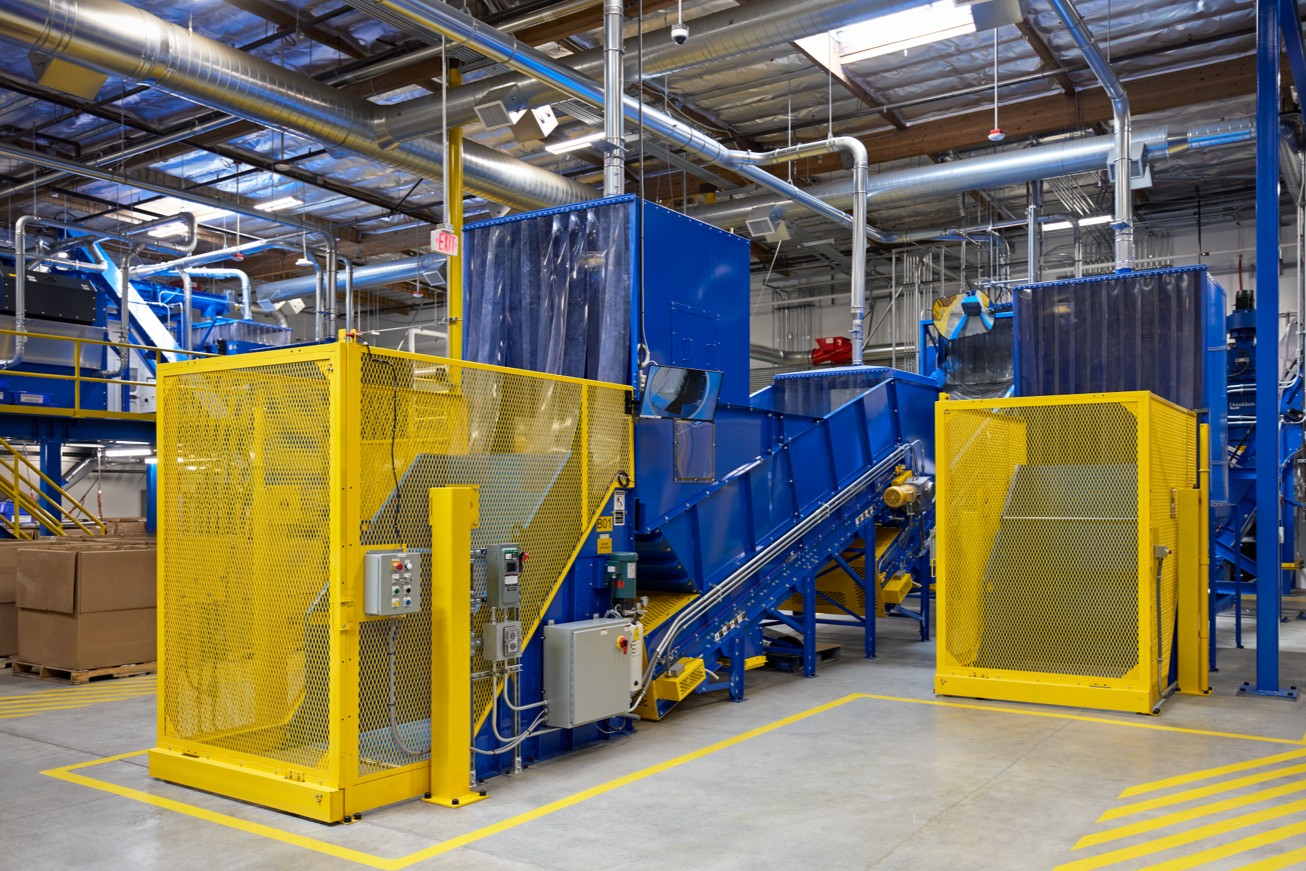
Waste management efforts yielded a 75 percent diversion rate across Apple’s global facilities through recycling, composting, and reduction programs. Several sites, including flagship retail stores and data centers, surpassed 90 percent diversion and secured zero-waste certifications. Suppliers redirected more than 600,000 metric tons of waste from landfills, while final assembly locations for major product lines maintained zero-waste-to-landfill status under third-party verification. These outcomes reflect disciplined operational controls, though they apply primarily to controlled corporate and supplier sites rather than the diffuse end-of-life phase of millions of consumer devices.
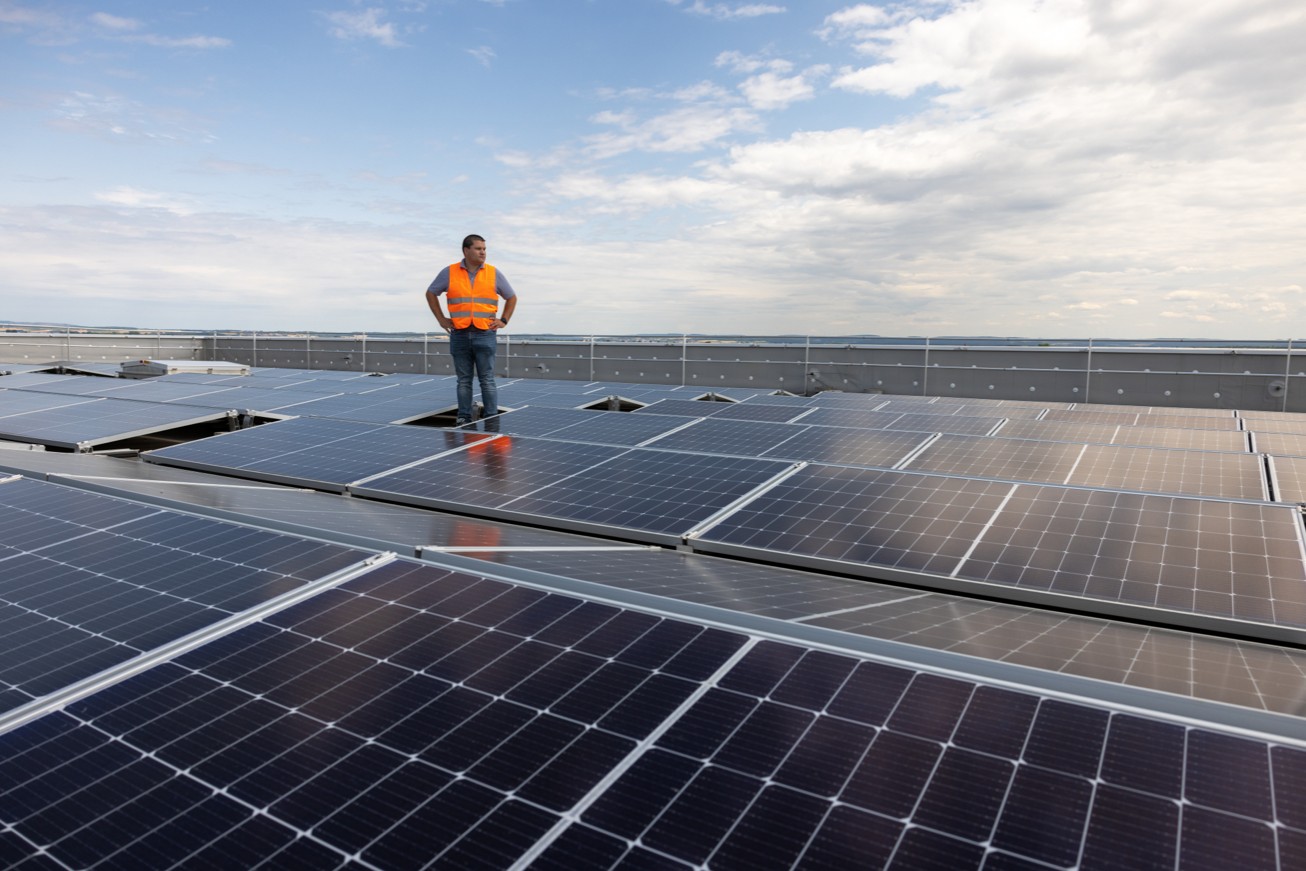
Renewable energy procurement expanded notably. Direct suppliers secured more than 20 gigawatts of clean power last year, generating enough electricity to supply over 3.4 million average U.S. households annually. Apple itself added 1.8 gigawatts to ensure its offices, stores, and data centers run on 100 percent renewable electricity. Greenhouse gas emissions for 2025 remained more than 60 percent below 2015 levels, holding steady despite business growth. These steps feed into the Apple 2030 objective of achieving carbon neutrality across the entire value chain, including manufacturing, transportation, product use, and end-of-life management, with remaining emissions to be balanced through credits and offsets.
Viewed in context, the reported progress represents methodical refinement rather than a fundamental break from established manufacturing models. The electronics sector as a whole still grapples with low collection rates for end-of-life devices, supply chain opacity, and the persistent reliance on virgin critical minerals. Apple’s in-house innovations and supplier requirements can exert influence, but genuine transformation will require wider industry collaboration, stronger policy frameworks, and improved economics for circular material flows. The metrics nevertheless offer a more transparent accounting than many competitors provide, illustrating how scale can be leveraged to nudge incremental change in resource use and energy sourcing.