
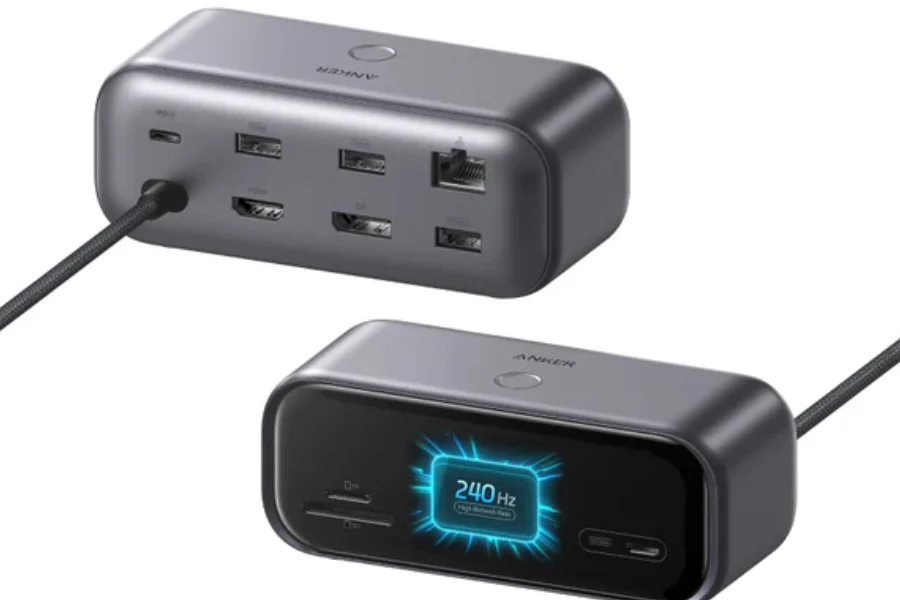
Anker has introduced a 10-in-1 USB-C hub equipped with a small built-in display, adding a monitoring element to what is typically a straightforward connectivity accessory. Set for release in Japan this fall 2026, the device carries a price tag of ¥16,990, equivalent to around $110. It comes in dark gray and silver finishes and positions itself as a more informative alternative to conventional USB-C docking solutions.
The hub connects to a laptop through a single USB-C cable and expands functionality with ten ports in total. On the front panel, users find a 10Gbps USB-C data port alongside full-size SD and microSD card readers. The rear offers more substantial options for power users: a 100W USB-C charging input, one 10Gbps USB-A port, two 5Gbps USB-A ports, an HDMI 2.1 output, a DisplayPort 1.4 connection, and a Gigabit Ethernet port. Both video outputs support 4K resolution at up to 144Hz, which should handle most modern display needs without issue.
What distinguishes this model is the integrated screen on the hub itself. This compact display operates at a 240Hz refresh rate and provides real-time data on connected devices, such as power draw, data transfer activity, and port status. Anker pairs it with a companion app for deeper insights. While the high refresh rate creates exceptionally smooth visuals for a status readout, it feels excessive for displaying metrics that change relatively slowly. A standard 60Hz panel would likely suffice here, raising questions about whether the premium specification justifies any added cost or complexity in manufacturing.
Measuring approximately 130 × 56 × 50mm and weighing 300 grams, the hub leans more toward a stationary desk accessory than a portable solution. The “Nano” branding in its name appears somewhat optimistic given its actual dimensions, as many competing hubs manage similar port counts in noticeably smaller packages. This design choice suggests Anker prioritized functionality and the novelty display over maximum portability, which may limit its appeal for travelers or users with minimal desk space.
USB-C hubs have evolved considerably since the early days of basic adapters that simply added a few ports. Today’s market offers everything from minimalist dongles to full-featured docks with power delivery and multiple video outputs. Anker’s addition of an onboard screen represents an interesting experiment in making the accessory more interactive, yet it also highlights a broader trend of layering features onto products that were once valued for simplicity. In practice, many users might find traditional software monitoring tools on their laptops adequate without needing a dedicated hardware display.
At $110, the hub sits at a mid-to-premium point for this category. It delivers solid connectivity on paper, particularly for users who frequently manage multiple peripherals and external displays. However, the inclusion of a high-refresh monitoring screen invites scrutiny over whether it solves a genuine problem or simply adds a marketable differentiator. Early adopters in creative or technical fields may appreciate the at-a-glance feedback, while others could view it as an unnecessary flourish on an already capable product.
Overall, Anker’s latest USB-C hub demonstrates continued refinement in docking solutions, balancing expanded ports with a unique monitoring twist. Its success will likely depend on how well the display feature integrates into daily workflows rather than the headline specifications alone.