
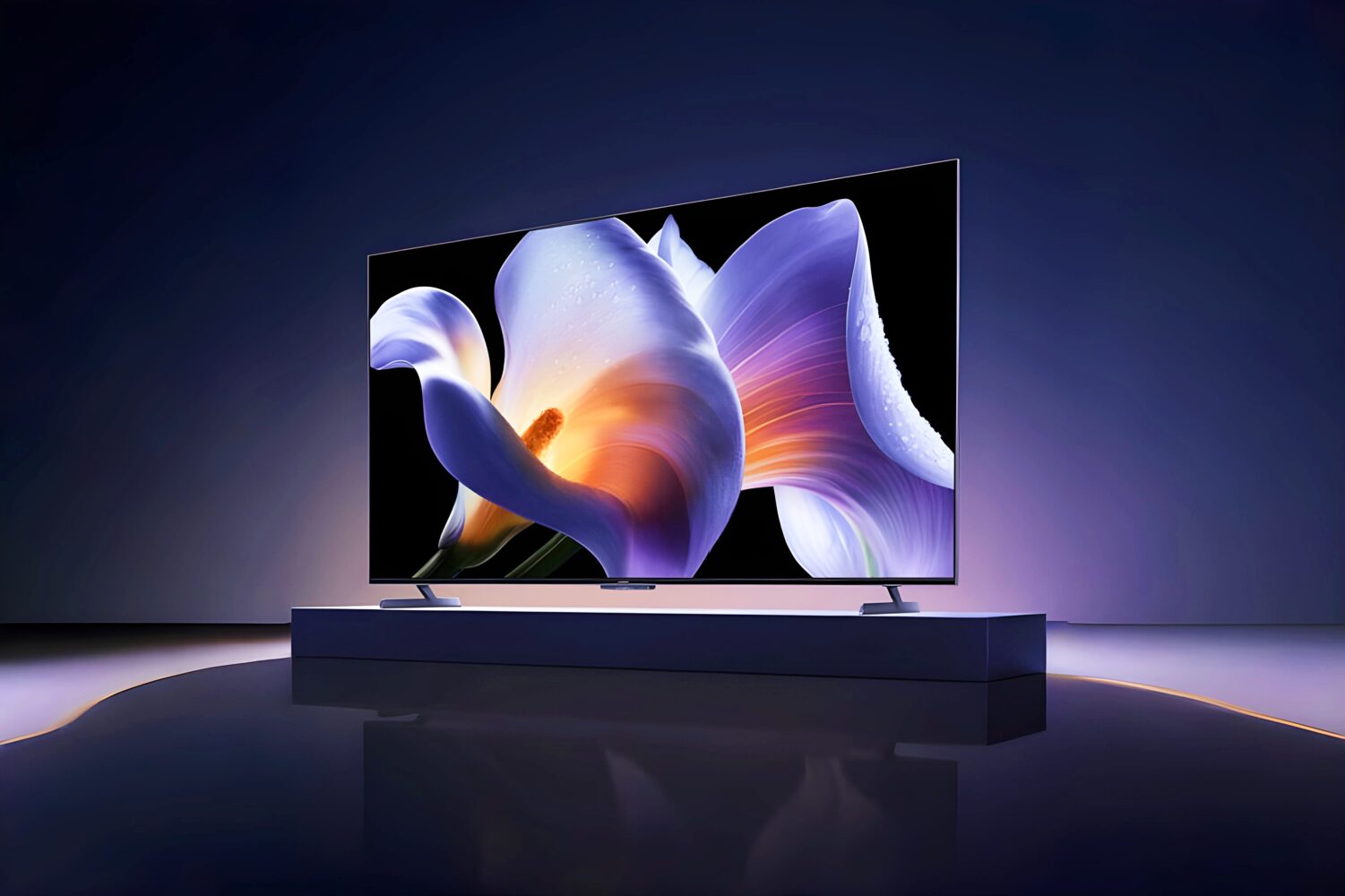
Let’s peel the marketing stickers off and talk like curious engineers for a minute.
Because QLED, OLED, and Mini-LED aren’t just “better versions” of each other. They’re three totally different philosophies for how light escapes a panel and smacks your eyeballs. And once you understand how each one makes light, the choice stops feeling like black magic and starts feeling like physics.
A TV is just a very sophisticated flashlight pretending to be art.
The question is: how precisely can it control that light?
OLED: Pixel-Level Sorcery and True Blacks
OLED is the elegant, slightly smug genius of the group. Each pixel is self-emissive, meaning it produces its own light. No backlight. No middle layer. No negotiation. If a pixel needs to be black, it literally turns off. Zero light. Not “dim.” Not “almost dark.” Off, like space.
That one detail is why OLED still feels like wizardry. Black levels are truly black, contrast is effectively infinite, and there’s no blooming or halos around bright objects. Subtitles float cleanly on a dark scene. Stars in a night sky look like pinpricks of light rather than white smudges. Movies suddenly look like they belong in a cinema instead of a living room.
Viewing angles are also fantastic because there’s no backlight filtering through liquid crystals. The image stays consistent even when you’re sprawled sideways on the couch like a tired raccoon. Response times are ridiculously fast too, which makes motion look crisp and gaming feel snappy.
The trade-off is brightness. OLED can’t blast photons at your face the same way LED-based TVs can. In a sun-drenched room at noon, it can look a bit muted. There’s also the long-term burn-in concern with static elements like news tickers or game HUDs. Modern panels do a lot of clever pixel-shifting and dimming tricks to prevent it, so it’s rare for normal mixed use, but it’s still a physical limitation of the tech. Organic materials age. Biology always collects its tax.
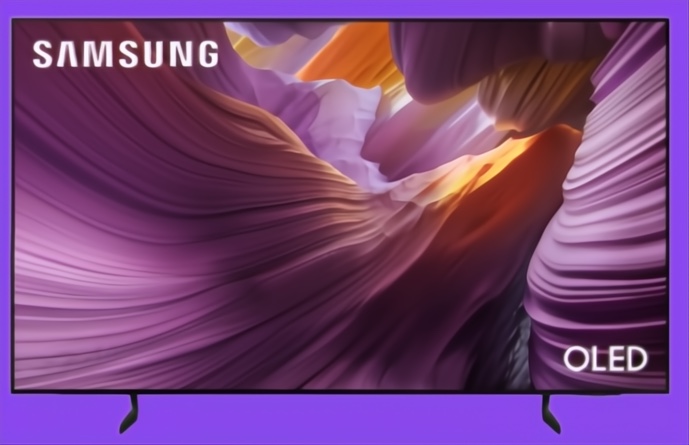
SAMSUNG 65″ OLED TV
QLED: Quantum Dots and Brute-Force Brightness
Then there’s QLED, which sounds futuristic but is actually a very fancy evolution of the classic LED LCD TV. At heart, it still uses a backlight behind the entire screen. The “Q” stands for quantum dots, which are tiny particles that make colors brighter and more accurate. Think of them as color enhancers rather than a whole new display species.
What you get is brightness. Lots of it. Blinding, stadium-floodlight brightness. QLED TVs thrive in bright rooms where sunlight is bouncing off everything. Sports, daytime TV, cartoons, news channels with neon graphics — they all pop. Colors look punchy and saturated, and big screen sizes tend to be cheaper than OLED.
But because there’s always a backlight shining through the panel, black is never truly black. The TV is constantly trying to block light rather than simply turning it off. That leads to grayish blacks and sometimes blooming around bright objects on dark backgrounds. It’s not terrible, just less precise. You can feel the compromise if you watch a lot of dark, cinematic content.
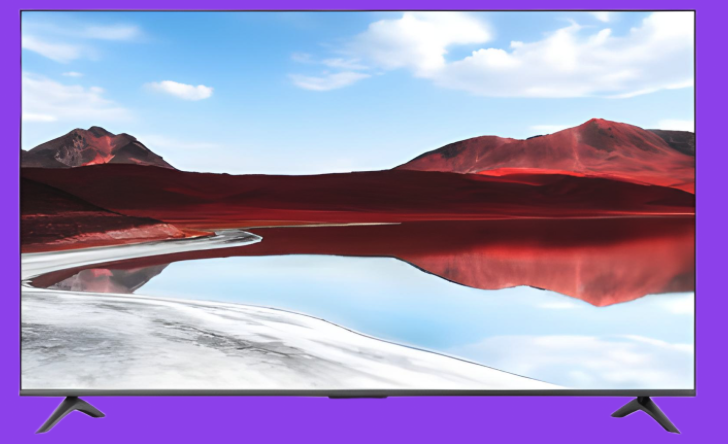
XIAOMI TV A Pro 75″
Mini-LED: Thousands of Tiny Suns Behind Your Screen
Mini-LED is where engineers basically said, “Fine, what if we just throw a ridiculous number of tiny LEDs at the problem?” Instead of a few dozen or a few hundred backlight zones like older LCDs, Mini-LED packs in thousands. That means the backlight can dim and brighten much more precisely across the screen.
It’s still not pixel-level control like OLED, but it’s a huge improvement over traditional LED and QLED. Blacks get deeper, contrast gets stronger, and HDR highlights get extremely bright. Explosions, sunlight, reflections — they have that punch that makes HDR feel dramatic instead of subtle. In many cases, Mini-LED can actually get brighter than OLED while coming surprisingly close in contrast.
This makes it a bit of a hybrid personality. It keeps the brute-force brightness of LED while fixing many of its weaknesses. For bright living rooms, big screens, or mixed use like sports, gaming, and movies, Mini-LED often feels like the most practical “do everything well” option. You might still notice occasional halos in tough scenes, but it’s far less obvious than older tech.
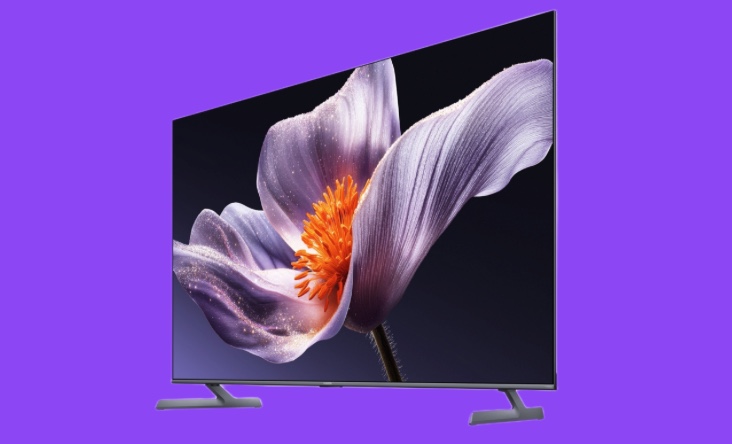
XIAOMI TV S Pro Mini LED 65″ 2026
So… Which One Should You Actually Buy?
So which one is actually better? The annoying but honest answer is: it depends entirely on your room and habits.
If you mostly watch movies at night with the lights dimmed and you care about that cinematic, “inky black” look, OLED is still king. It’s the one that makes you pause a scene just to admire how pretty it looks. For film nerds and contrast obsessives, it’s hard to go back.
If your living room is bright most of the day, with sunlight blasting through windows, OLED can feel like it’s fighting nature. In that case, Mini-LED or QLED will look more vibrant and easier to see. Mini-LED, in particular, hits a sweet spot by offering both strong brightness and much better contrast than regular QLED.
If budget is tight and you want the biggest screen possible for the least money, QLED remains the value champ. You’ll still get a great-looking picture, just not that last 10–15% of contrast magic.
For gamers, all three modern versions can be excellent, with fast refresh rates and HDMI 2.1 support. OLED has near-instant pixel response for super clean motion, while Mini-LED can deliver brighter HDR highlights that make explosions and effects look spectacular. It’s less about input lag these days and more about whether you prefer perfect blacks or eye-searing brightness.
The Final Verdict: It’s Not Magic, It’s Physics
In the end, this whole battle is just a story about light control. OLED controls light at the pixel level, which is why it looks so pure. Mini-LED controls light at a very fine zone level, which is why it’s so versatile. QLED controls light more broadly but compensates with raw brightness and price.
So the real question isn’t “which is best?” It’s “what does your room look like at 3 p.m., and what do you watch most?”
Physics decides the winner long before the marketing department does.