
TL;DR: Lee Cronin’s The Mummy transforms the classic monster into a skin-crawling contagion nightmare packed with grotesque practical effects and zero interest in playing nice. It’s nasty, unsettling, and deeply committed to its body horror roots. Skip if you’re squeamish. Embrace if you want your horror raw and unforgettable.
Lee Cronin’s The Mummy
I walked out of the theater feeling like I’d just survived a particularly nasty case of food poisoning mixed with a fever dream about ancient Egyptian rituals gone horribly wrong. Lee Cronin’s The Mummy doesn’t just scare you. It makes your stomach do backflips while your brain tries to process exactly how much human flesh can twist before it stops looking human.
This isn’t your grandpa’s mummy movie. Forget the charming swashbuckling adventures with Brendan Fraser cracking wise while dodging rolling boulders and undead priests. Cronin, the guy who already proved he could turn a cabin in the woods into a nightmare factory with Evil Dead Rise, has taken the classic monster and dragged it kicking and screaming into pure, unfiltered body horror territory. And honestly? I’m still not sure if I loved it or if I need therapy.
The film opens with that familiar desert vibe. Sandstorms whipping across Cairo, hieroglyphs glowing ominously, and a team of archaeologists poking around where they definitely shouldn’t. But almost immediately, you realize this ride is heading somewhere way darker than treasure hunts and campy one-liners. The mummy here isn’t some bandaged lothario looking for love in the wrong century. It’s a vessel for something ancient, contagious, and deeply, deeply wrong with the human body.
What hits you first is how Cronin leans hard into the contagion angle. This isn’t just possession. It’s a full-blown supernatural infection that spreads like the world’s worst STD through saliva, touch, and sheer proximity. Imagine walking into a crowded club where everyone’s swapping more than just phone numbers, except the consequences involve your organs rearranging themselves while you’re still conscious. That’s the energy this movie is serving, and it commits to the bit with disturbing enthusiasm.
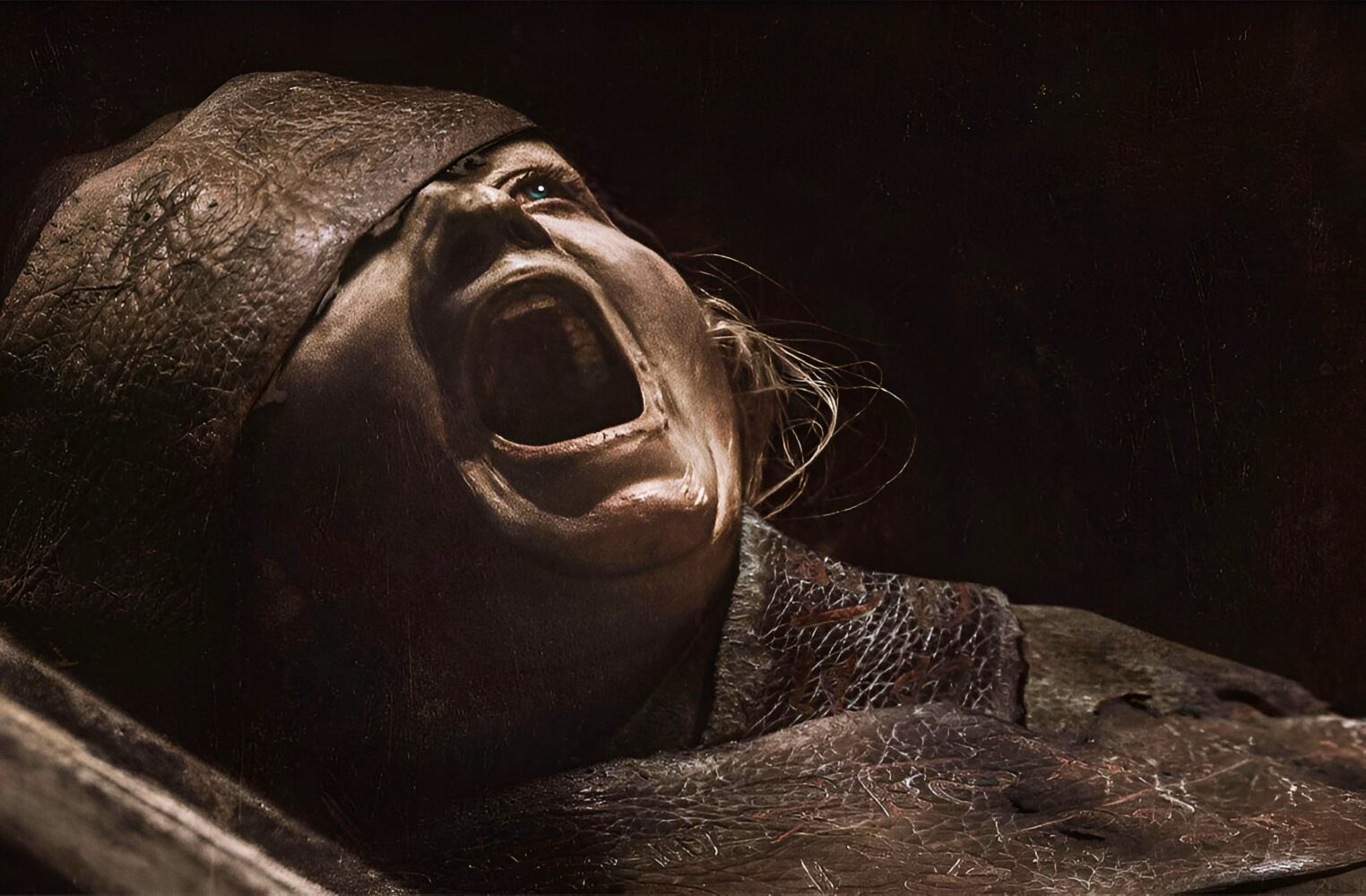
The practical effects are where this thing really shines, or should I say, squelches. Close-up shots of teeth, skin, and things that used to be teeth and skin had the entire theater shifting uncomfortably in their seats. There’s one sequence involving what I can only describe as a grotesque game of biological telephone that left me gripping the armrest like it owed me money. Cronin doesn’t rely on cheap jump scares or loud noises to get under your skin. He lets the camera linger just long enough for your brain to register exactly how unnatural everything looks, then pushes it one step further.
I caught myself doing that involuntary full-body recoil a few times. You know the one. Where your shoulders hunch up to your ears and you make that weird little “ugh” sound even though you’re trying to play it cool. The kind of reaction you usually save for when someone describes their most recent medical procedure in graphic detail at dinner. This movie pulls that out of you repeatedly, and it feels almost personal.
The performances help sell the nightmare. The cast treats this material with the kind of straight-faced commitment that makes body horror work best. No one’s winking at the camera or trying to undercut the grossness with humor. They’re all in, eyes wide, veins popping, flesh doing things flesh really shouldn’t do. The Philippine actor playing the central antagonistic force brings a magnetic creepiness that makes you forget this is supposed to be a mummy at all. At times, the creature feels less like a reanimated corpse and more like a demonic influencer spreading the world’s worst trend.
Production design deserves a shoutout too. The Egyptian elements are there, but they’ve been twisted into something more infernal than archaeological. Those scorpions aren’t just crawling around for ambiance. They’re part of a larger ecosystem of body invasion that makes you wonder if the ancient Egyptians had some really specific beef with the concept of personal boundaries. The sandstorms feel alive in a way that goes beyond special effects. They carry the weight of centuries of cursed knowledge, ready to choke the life out of anyone who gets too close to the truth.
What I appreciated most was how Cronin avoids turning this into another forgettable Blumhouse jump-scare factory. Sure, Jason Blum and James Wan are involved, which usually means slick production and reliable scares. But here, the horror feels more personal, more intimate, and way more interested in making you question your relationship with your own meat suit. It’s the difference between being startled by a cat jumping out of a closet and realizing your own reflection is starting to look a little off.
The runtime keeps things tight enough that the gross-out moments don’t overstay their welcome. Just when you think your stomach has settled, another wave of biological nightmare fuel hits. Yet somehow it never quite crosses into pure torture porn territory. There’s always this underlying sense of craftsmanship, like Cronin knows exactly how far he can push before the audience checks out completely. It’s a delicate balance, and he mostly nails it.
That said, not every element lands perfectly. Some of the possession sequences stretch on a bit long, and there are moments where the metaphor about contagion and human connection feels a tad on-the-nose. The film wants to say something about how we spread toxicity in our relationships, how ancient curses mirror modern plagues of the mind and body. Sometimes it works beautifully. Other times it feels like the script is hitting you over the head with a sarcophagus.
The sound design deserves special mention. Those wet, crunchy, squelching noises that accompany every transformation? Chef’s kiss in the most disgusting way possible. Combined with the score that blends traditional Middle Eastern instrumentation with industrial horror drones, it creates an audio landscape that gets under your skin almost as effectively as the visuals.
I’ve seen a lot of horror movies that promise to be “unsettling” but deliver the same recycled tropes. Lee Cronin’s The Mummy actually follows through. It’s the kind of film that makes you want to take a long, hot shower afterward, not because it’s particularly violent in the traditional sense, but because it makes you hyper-aware of every inch of your own body and how fragile that whole system really is.
The way it handles the mummy mythology is refreshing too. Instead of treating the creature as a singular monster to be defeated with ancient artifacts and plucky heroism, it becomes a vector for something much larger and more insidious. This curse doesn’t just affect one person. It wants to spread, to multiply, to turn the entire world into its playground of rotting flesh and broken boundaries. That shift from individual threat to pandemic horror gives the story a weight that most modern monster movies lack.
By the time the credits rolled, I felt genuinely wrung out in the best possible way. My appetite was gone, my nerves were shot, and I had this weird urge to go home and aggressively floss my teeth. That’s not something every horror film can claim. Most of them fade from memory by the time you reach the parking lot. This one sticks with you, like that one scene you wish you could unsee but know you’ll be thinking about at 3 AM.
Cronin has crafted something that feels both fresh and deeply rooted in horror tradition. It pays homage to the classics while carving out its own nasty little corner in the genre. The body horror elements will definitely appeal to fans of films like The Fly or Society, while the Egyptian setting and demonic possession vibes will scratch that itch for anyone who grew up loving the original Mummy films but wanted something meaner.
Is it perfect? No. There are pacing issues in the middle act, and some character motivations feel a bit thin when you step back and think about them. But those flaws almost work in its favor because they make the grotesque moments hit even harder. When the film is firing on all cylinders, it’s genuinely one of the most viscerally effective horror experiences I’ve had in years.
If you’re the type of person who loves horror that makes you squirm, that gets under your skin and stays there, then Lee Cronin’s The Mummy is absolutely worth your time. Just maybe skip dinner beforehand. And probably afterward too. Actually, maybe just fast for a day. Your digestive system will thank you.
This is body horror done with real commitment and craft. It’s not trying to be everyone’s cup of tea, or in this case, everyone’s deviled egg. But for those of us who appreciate horror that challenges your comfort zone and makes you confront the squishy reality of being human, it delivers in spades.