
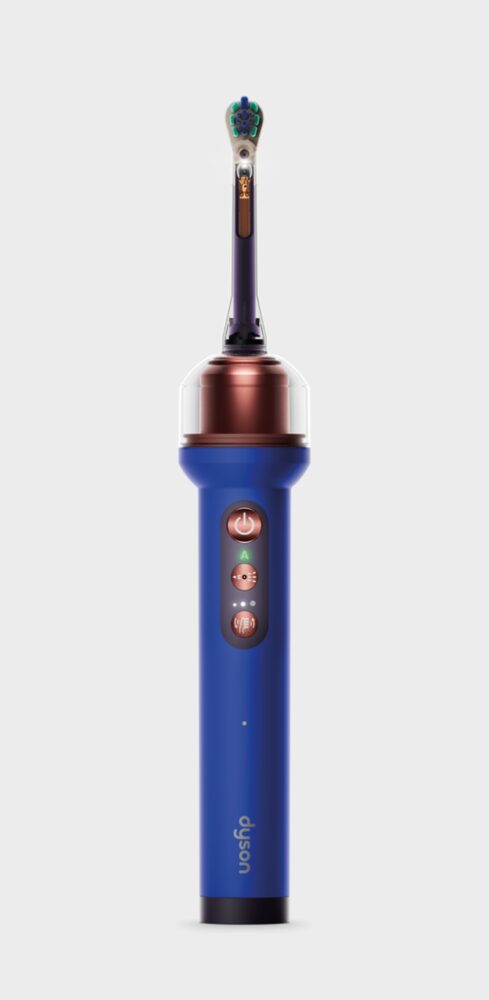
Dyson is moving into oral care with the CameraJet, an electric toothbrush that combines sonic brushing, camera-based gap detection and targeted liquid flossing in a single device. Revealed in Paris on September 1, the product marks a significant expansion for a company better known for vacuum cleaners, haircare products and air treatment hardware.
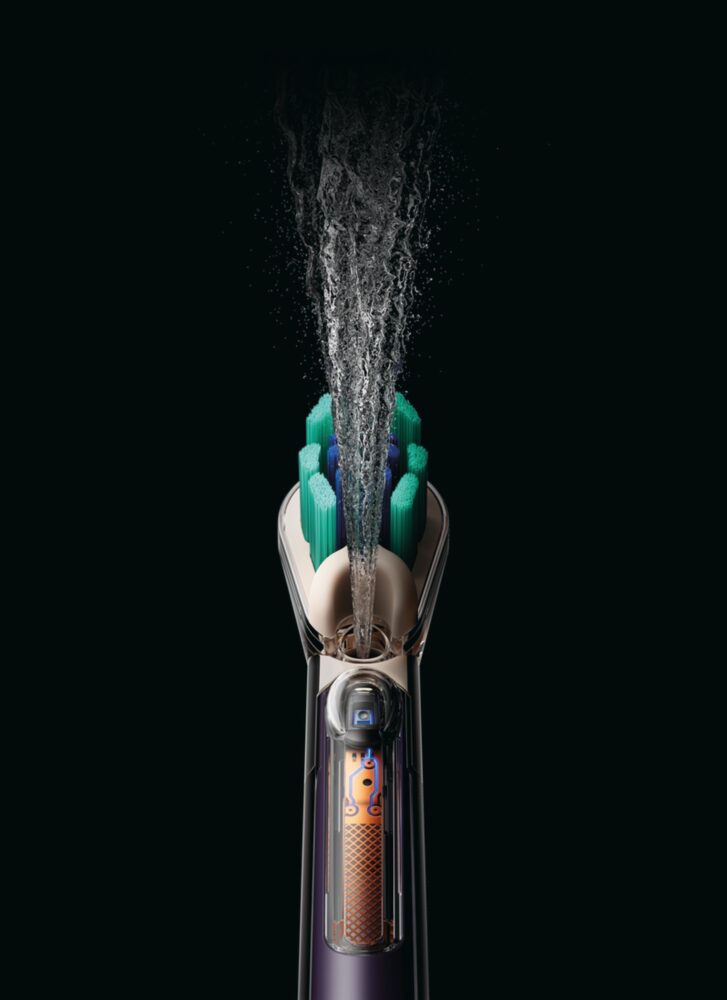
The headline feature is a 100,000-pixel macro camera built into the toothbrush. Dyson calls the underlying system Gap Optical Targeting, using machine learning to analyse 28 images per second and identify spaces between teeth as the brush moves around the mouth. When the system spots a gap, Dyson says it can trigger a targeted burst of mouthrinse within 100 milliseconds.
That effectively turns the CameraJet into a toothbrush and automated water flosser at the same time. Rather than requiring users to manually aim a separate water-flossing nozzle between individual teeth, the camera determines where the jet should fire.
Dyson says the machine-learning system was developed using 470,000 dental images, while the CameraJet’s software runs to 16 million lines of code. Those are impressive engineering numbers, although they don’t independently establish how well the system performs in everyday use.
The jet itself is also different from the narrow streams commonly found on water flossers. Dyson has developed a broader conical spray intended to sweep plaque away rather than simply punch through it. The company worked with the National University of Singapore’s Faculty of Dentistry for five years to develop a proxy plaque that engineers could use during testing.
Liquid comes from a 12.5ml mouthrinse tank built into the toothbrush. A diaphragm pump and pressure chamber are designed to maintain flow regardless of how the handle is angled, which matters when reaching behind teeth. The accompanying dock can refill the tank in three seconds while also charging the toothbrush.
Brushing hasn’t been ignored. The CameraJet uses a contoured dual-bristle head and what Dyson describes as variable sonic oscillation. Instead of maintaining one oscillation angle, the mechanism varies its movement to reduce the chance of bristles stalling against teeth. Dyson claims external testing found up to 69% greater plaque removal in hard-to-reach areas compared with premium electric toothbrushes, though the supplied announcement does not provide enough detail to independently assess that comparison.
There is plenty of connected technology too. Bluetooth and 2.4GHz Wi-Fi support integration with the MyDyson app, including live camera viewing, cleaning guidance, coverage maps and personalised feedback. Dyson says camera images aren’t recorded or uploaded to the cloud and that the camera operates only during live viewing or automatic jetting.
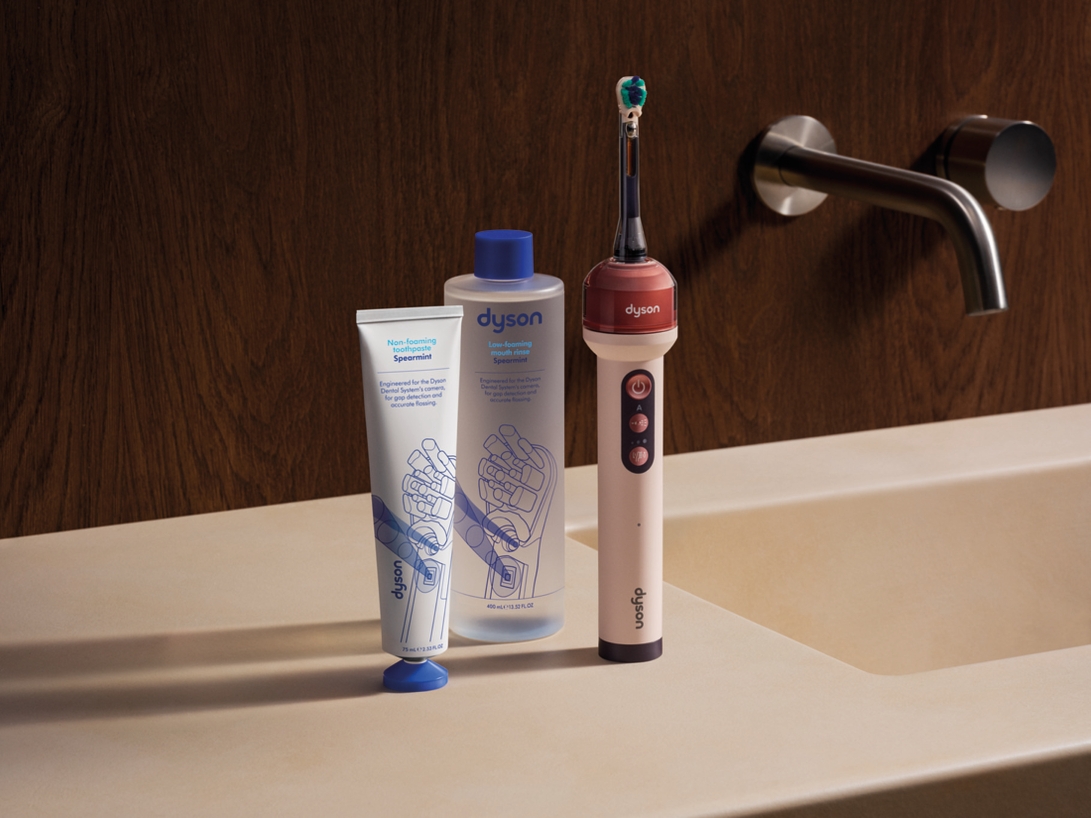
Dyson has even developed low-foaming toothpaste and mouthrinse specifically for the system, partly because excessive foam could obstruct the camera. Brush heads contain RFID tags to track usage and replacement intervals.
CameraJet is therefore less an electric toothbrush than Dyson’s attempt to consolidate brushing, flossing, rinsing and technique monitoring into one connected device. The engineering is unusually ambitious for the category; the more important questions will be how reliably its gap detection works in real mouths, how much the complete system costs and whether consumers really want a camera watching every brushing session.