
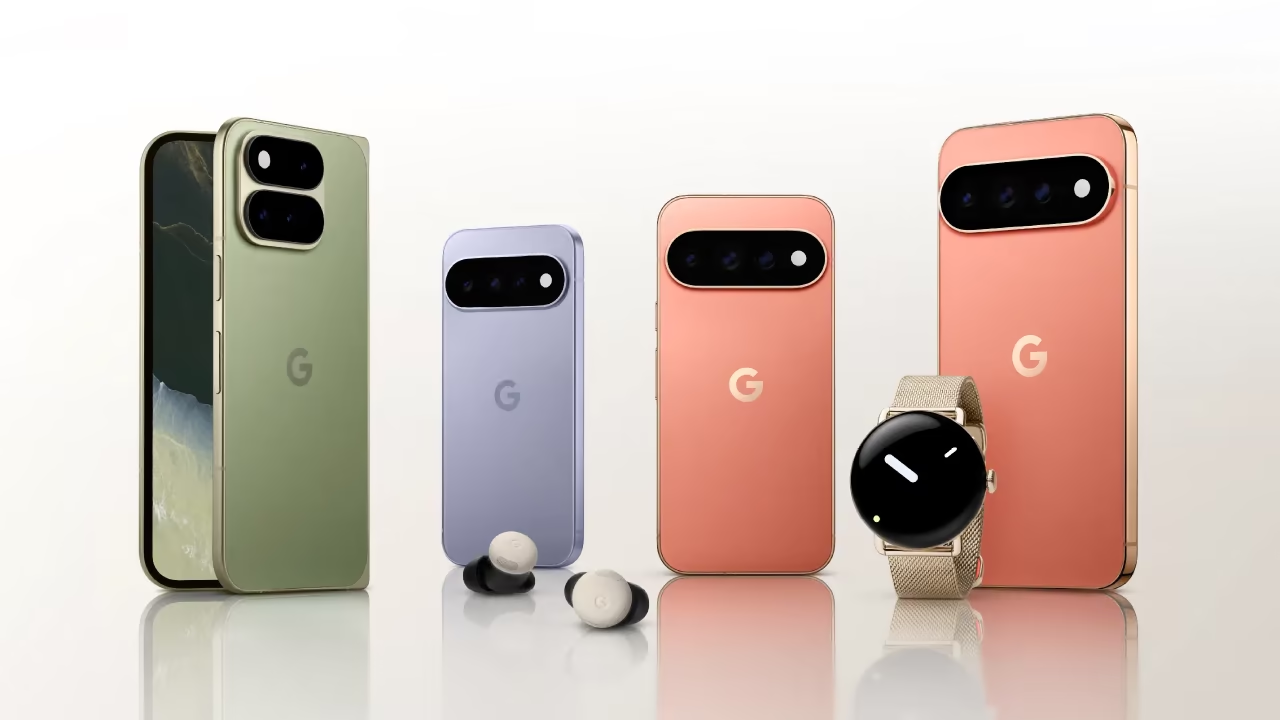
Google is expanding its hardware ecosystem for 2026 with the Pixel 11 series, Pixel Watch 5 and its first Pixel Tag tracker, putting artificial intelligence at the centre of another broad refresh. The new devices arrive as Google continues trying to turn its Gemini software advantage into a reason for consumers to stay inside the Pixel ecosystem.
The Pixel 11 range again spans four phones. The standard Pixel 11 starts at $899, with Google increasing base storage to 256GB. Hardware changes include a camera bar that is 40% thinner and a new 48-megapixel main camera sensor that Google says captures 56% more light. The Tensor G6 processor also enables up to 30x Super Zoom.
Prices climb quickly with the Pixel 11 Pro and Pixel 11 Pro XL, which start at $1,099 and $1,299 respectively. Both use Super Actua displays capable of reaching 3,600 nits and receive a tougher anti-scratch coating. Google has also added HiLight, an LED ring surrounding the camera flash that can indicate when Gemini is listening or illuminate for calls from selected contacts.
Photography remains a major part of the Pro pitch. A redesigned 48-megapixel telephoto camera is claimed to offer 30% better light sensitivity, while zoom reaches 120x through Google’s Pro Zoom system. Night Sight processing is also said to be as much as 4.5 times faster.
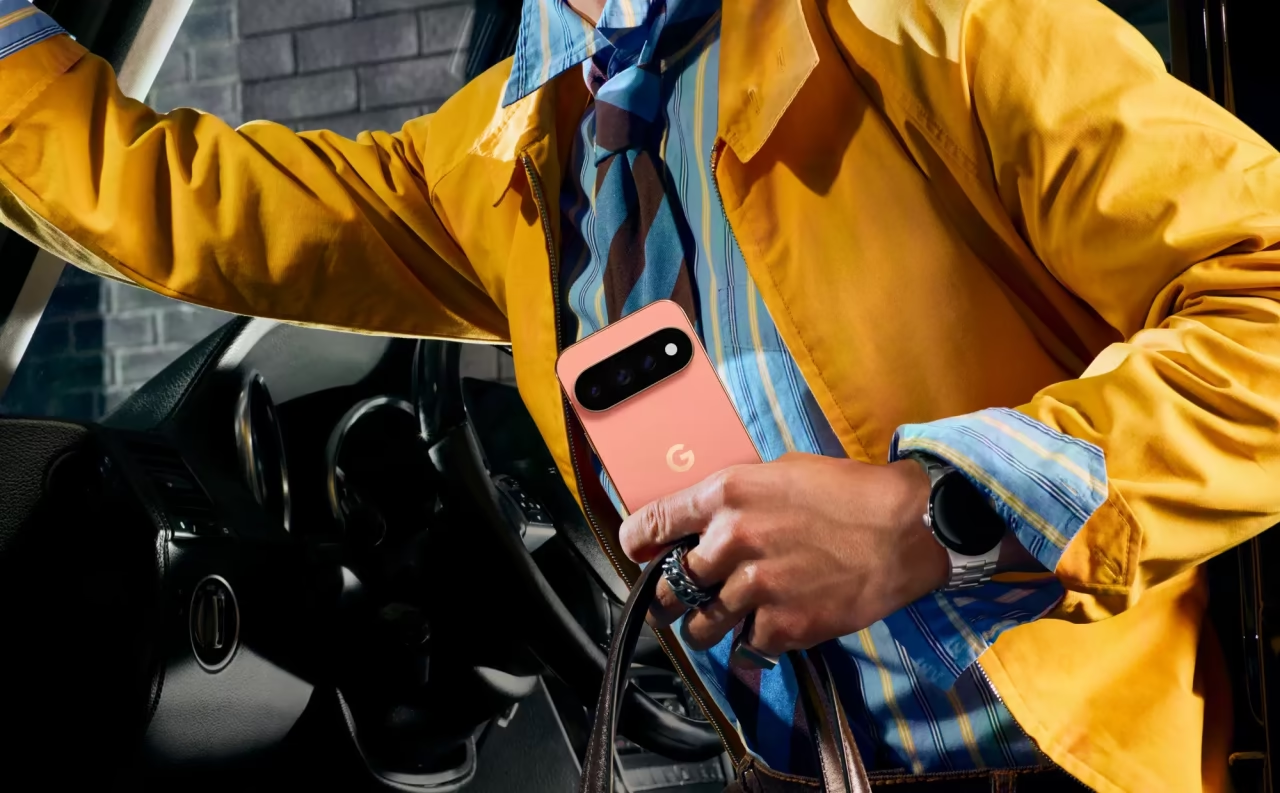
At $1,899, the Pixel 11 Pro Fold remains the most expensive member of the family. Google has reduced its weight by almost 10% and thickness by roughly 1mm compared with its predecessor. A glass-fiber composite rear panel, gearless hinge and ceramic-protected outer display are intended to improve durability. Google claims the resulting design is three times more durable than the previous generation, although that is the sort of claim that will need independent testing.
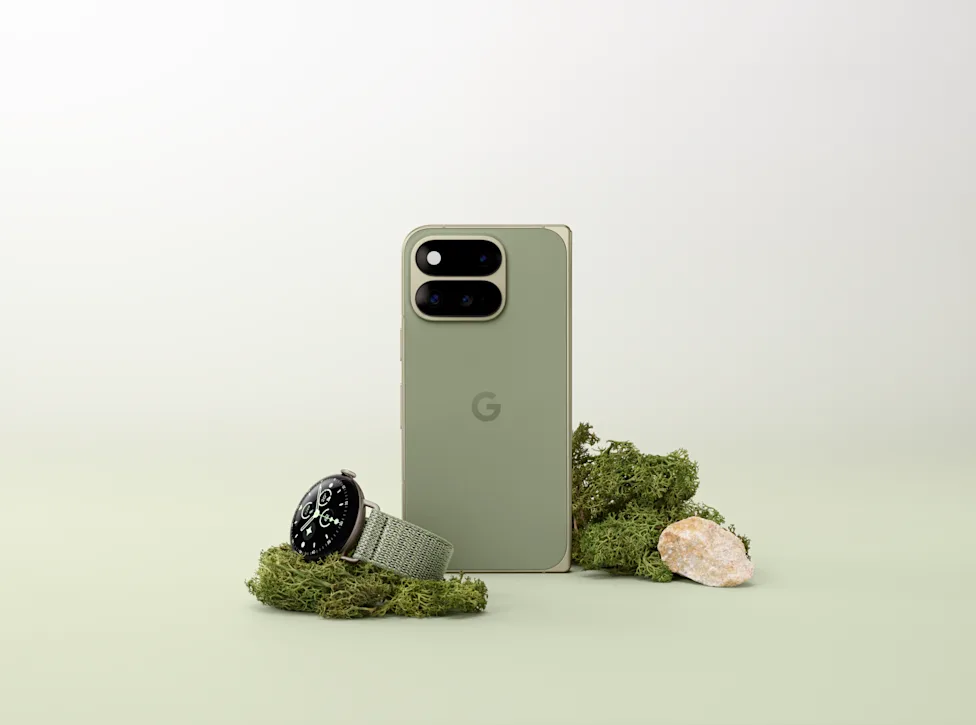
The more consequential changes may be in software. Gemini gains additional agent-style automation alongside features including Rambler voice input, Sign-to-Text for American Sign Language and Live Translate for video and podcasts. Google is also extending AI into photography with Magic Capture, while its Creator Suite adds tools such as a teleprompter, storyboard and social-media grid.
Tensor G6 is paired with a new Titan M3 security chip that introduces post-quantum protections. Google is also promising seven years of operating system, security and Pixel Drop updates across the Pixel 11 family, keeping long-term software support competitive with the best Android flagships.
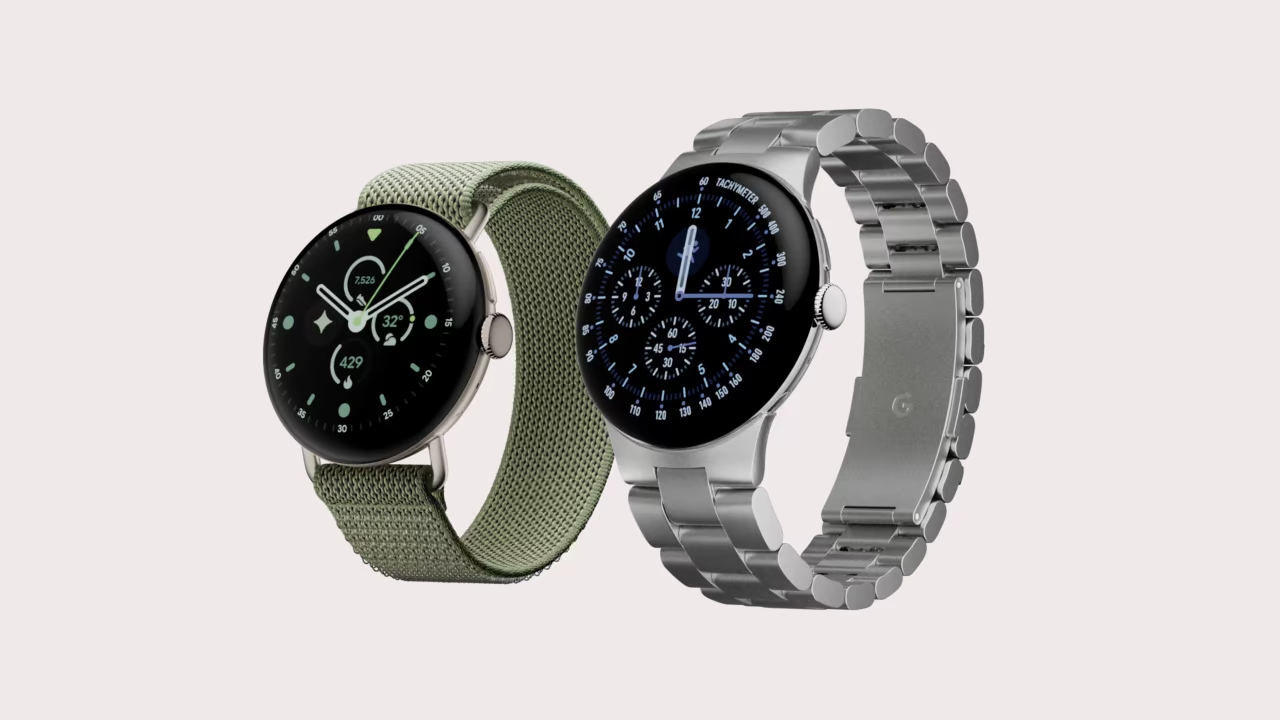
Beyond phones, the Pixel Watch 5 starts at $399 for 41mm and $429 for 45mm. It uses Qualcomm’s Snapdragon W5 Gen 2 Accelerated platform, adds 50% more RAM and is claimed to deliver 20% faster performance. New health tracking covers monthly blood pressure, insulin resistance and sleep-breathing trends, while Breathing Emergency Detection will initially launch in Europe.
Pixel Tag, meanwhile, gives Google a more direct answer to Apple’s AirTag. It costs $29 individually or $99 for four, works with Google’s Find Hub network and can be located using a Pixel Watch. Gemini voice commands through Pixel Buds can also trigger the tracker to ring. Pixel Tag arrives November 11.
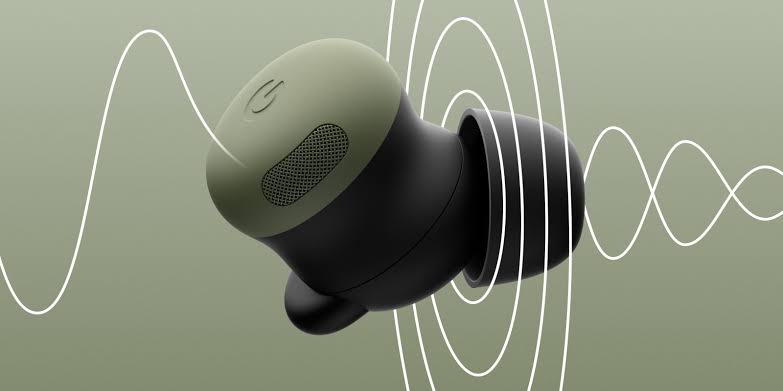
Google is also updating Pixel Buds Pro 2 with an Olive colour and Dynamic ANC through a September software update. The Pixel 11 phones and Pixel Watch 5 are available for preorder, with shipments beginning August 20.
Taken together, Google’s 2026 hardware refresh is less about dramatically reinventing the Pixel than tightening the connections between phones, wearables, earbuds, trackers and Gemini. Whether that integration proves compelling will depend increasingly on how useful those AI features feel after the launch demonstrations are over.