
TL;DR: Splatoon Raiders is a gloriously deep action RPG that turns ink, scrap, and clever Gadgets into one of the most addictive customization loops on Switch 2. Tough, creative, and endlessly replayable, it is the best campaign the series has ever had.
Splatoon Raiders
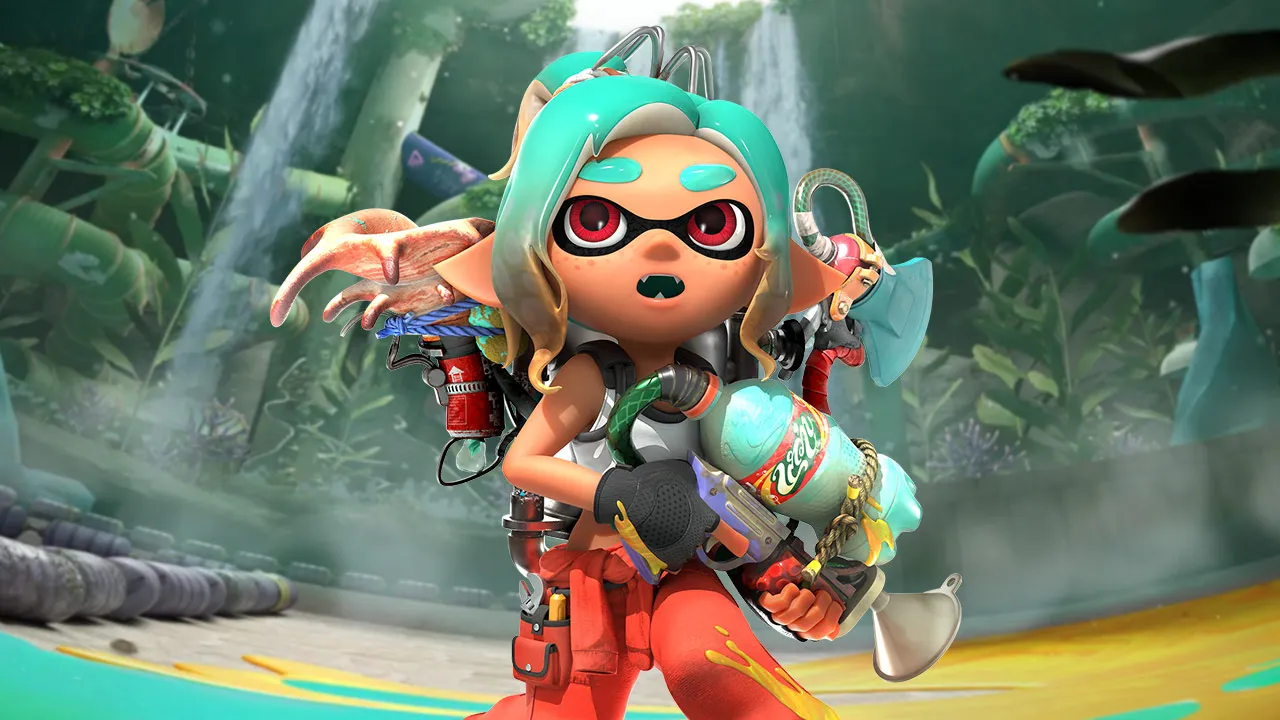
There is a particular kind of joy that hits when a series you already love decides to stop playing it safe and instead hands you a toolbox full of duct tape, broken tennis rackets, and pure chaotic possibility. That is exactly the feeling that washed over me the moment I booted up Splatoon Raiders and watched my little Mechanic Inkling slap together a Dualies set that looked like it had been rescued from a junkyard fire. The ink still flies with that same sticky, satisfying slap, the swimming still feels like sliding across liquid velvet, and the motion aiming still leaves my wrists begging for mercy after a long session. But everything else has been rebuilt from the ground up into something denser, smarter, and far more addictive than any mainline campaign this franchise has ever attempted. What we have here is not just another squid-kid adventure. It is a full-blown action RPG that treats customization like a religion and challenge like a best friend who refuses to let you coast.
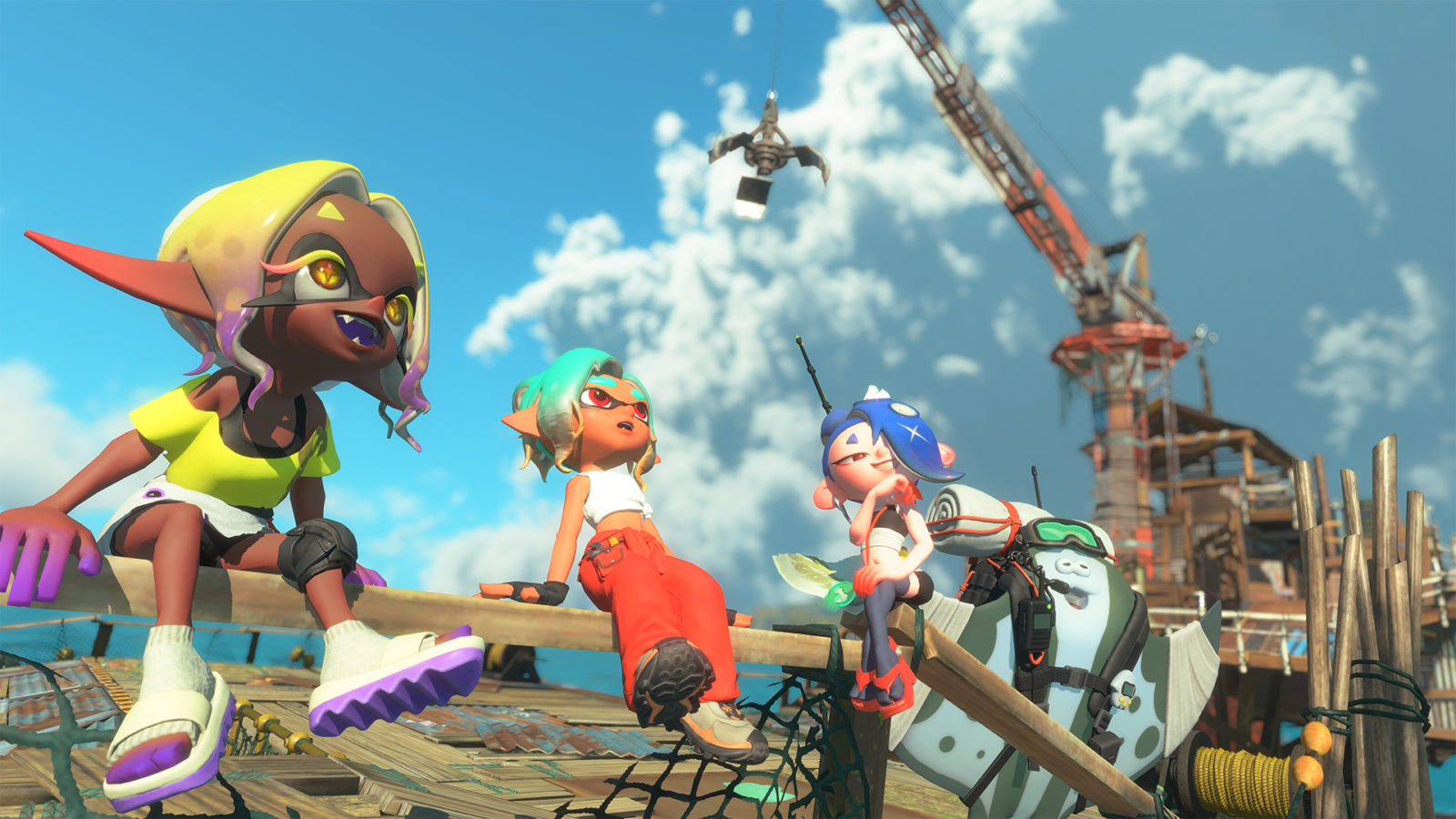
I walked into this expecting a charming side story and walked out more than forty hours later with sore thumbs, a notebook full of build ideas, and the quiet certainty that I had just played one of the most thoughtfully constructed games on the Switch 2 so far. The core fantasy is simple on paper: you are a resourceful tinkerer dropped onto the Spirhalite Islands to help three very familiar idols scrape together enough treasure to erase a mountain of debt. The execution, however, is anything but simple. Every system, every enemy encounter, every loot drop is designed to make you feel like a mad scientist who just discovered that the laws of physics are more like polite suggestions. And somehow it never stops feeling fresh.
When Trash Becomes Treasure: Building Your Perfect Disaster
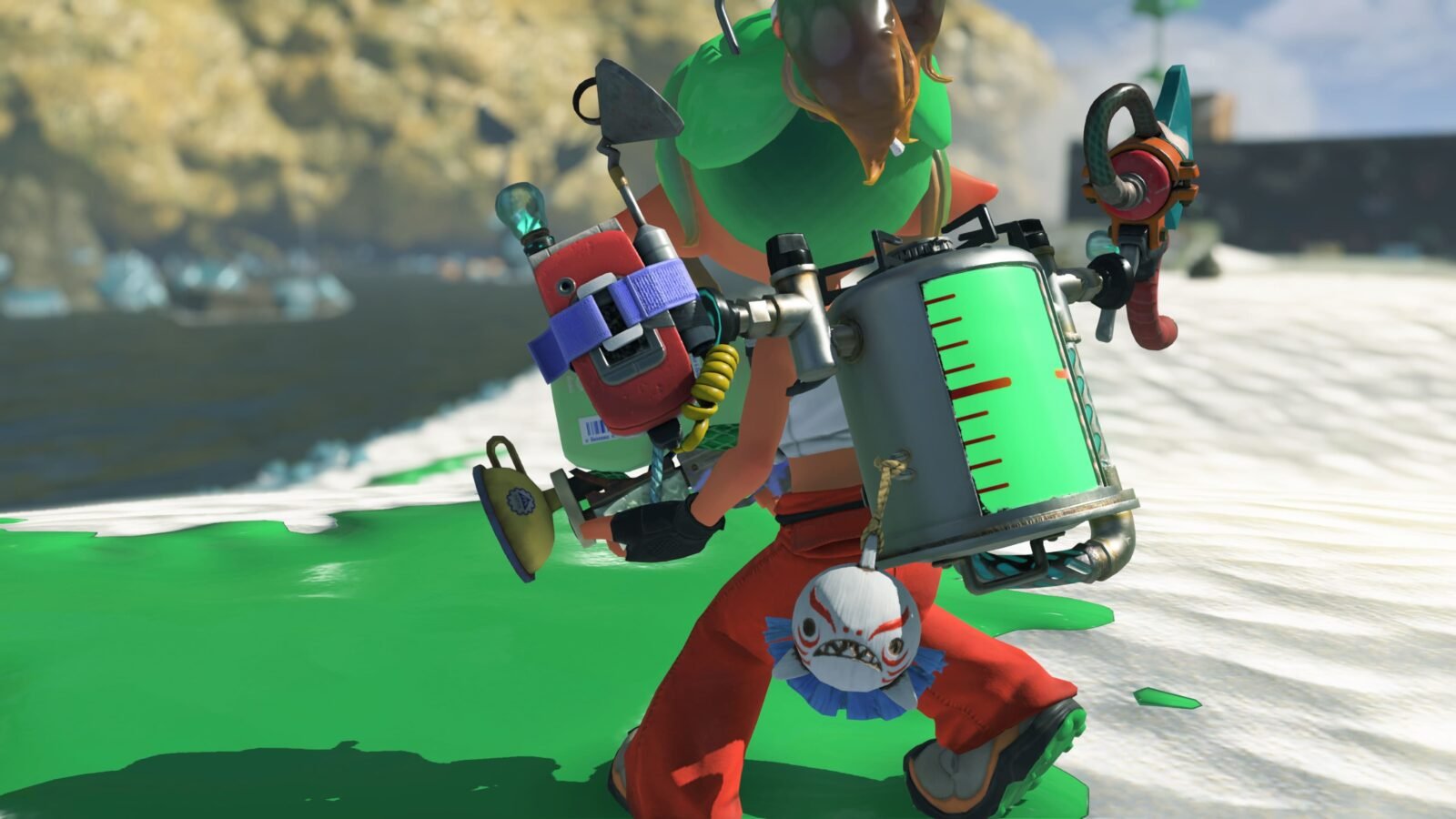
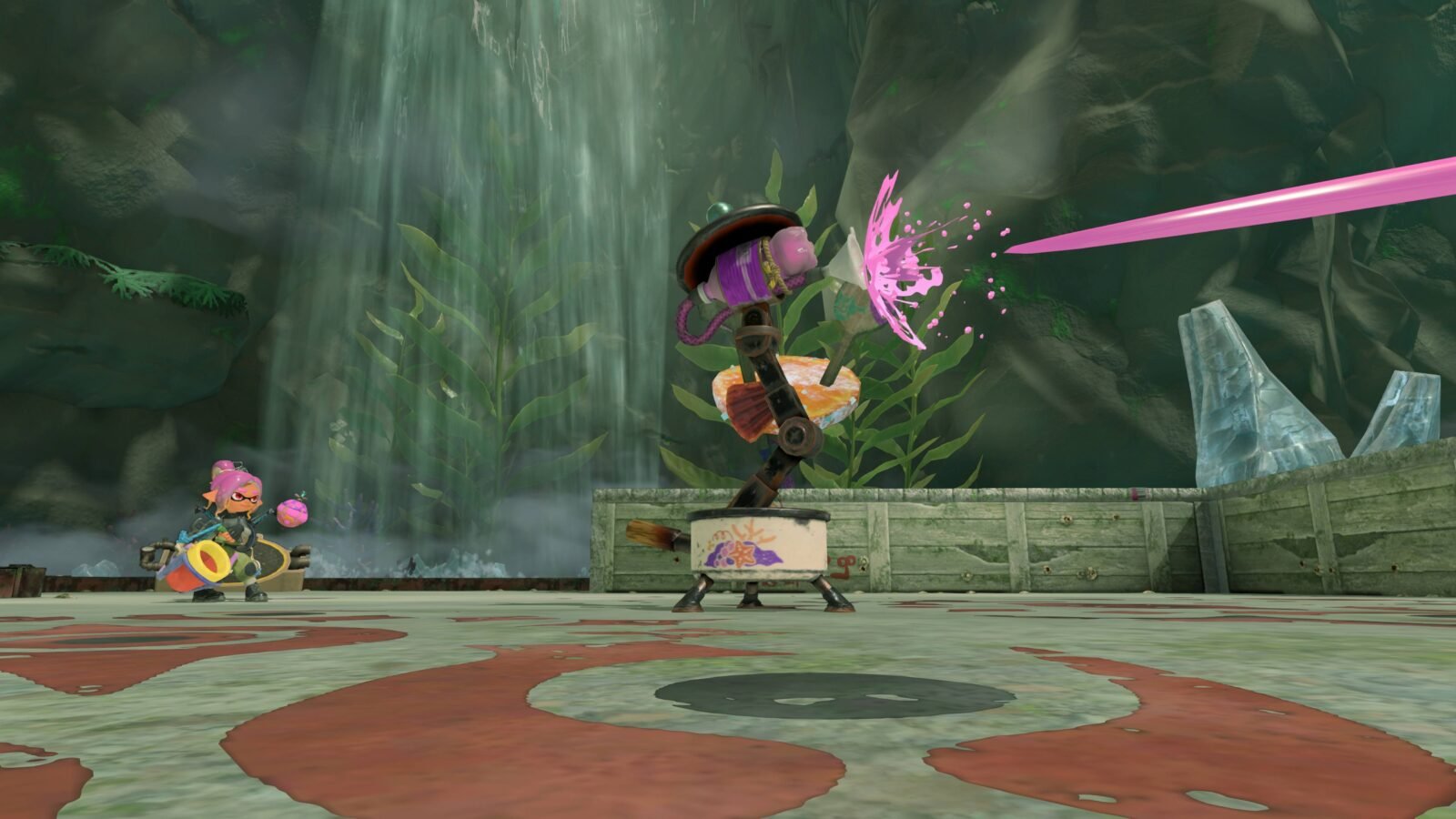
The first thing that grabs you is the visual language of the weapons themselves. Gone are the shiny, toy-store perfect shooters of the mainline games. In their place sit gloriously jury-rigged contraptions held together with hope, zip ties, and whatever scrap metal the Mechanic could scavenge that morning. A classic Splattershot might sport an ink tank that once held dish soap. A Stringer can look like it was liberated from a broken tennis racket and given a second life as a weapon of mass inking. It is charming in a way that feels deeply personal, like the game is winking at every player who has ever jury-rigged a controller or modded a piece of gear just to make it feel more theirs.
But the real star of the show is not the main weapons. It is the Gadgets. These secondary tools, slotted into one of three ink-tank classes (Speed, Power, or Tactical), turn every loadout into a living experiment. Speed Gadgets let you bounce around the battlefield like a caffeinated pinball, launching yourself out of danger with Jump Bombs or yanking yourself across gaps with a Flywire grappling hook that feels ripped straight from a Saturday-morning cartoon. Power Gadgets reward the reckless charge, letting you carve through packs of Salmonids with sweeping slashes that land with the weight of a freight train. And then there is the Tactical class, my personal obsession, which turns the battlefield into a chessboard of floating Bombloons that link together into devastating chains of explosive ink.
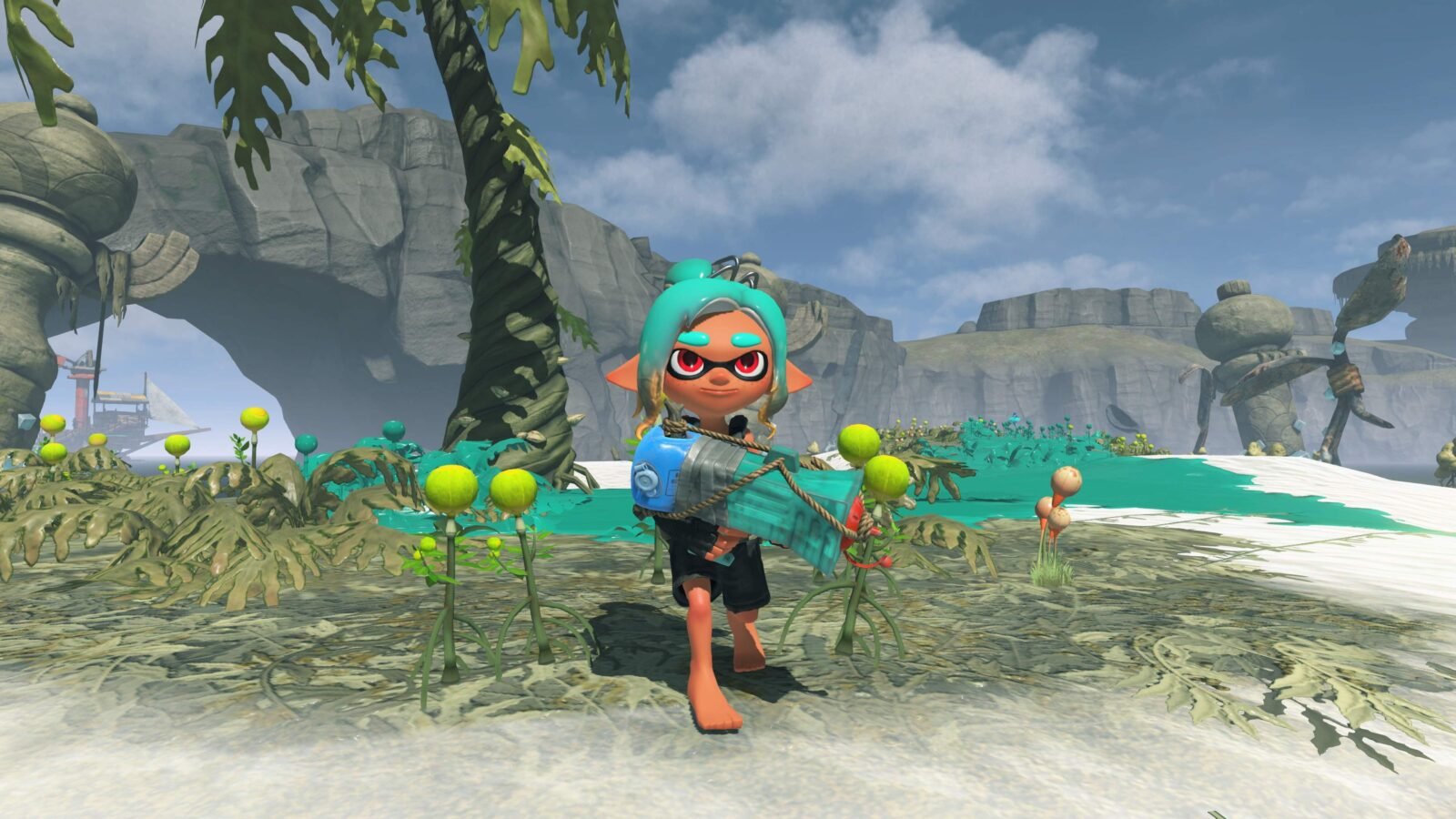
What makes the system sing is how deeply you can tinker with each piece. You do not just equip a Gadget and call it a day. You level it, slot skills into it, and slowly turn a simple tool into something that feels like it belongs in a boss-rush speedrun video. Want your Bombloons to detonate in a wider radius? Go for it. Prefer to keep them alive longer so the tethers between them can shred everything that walks through? That path exists too. And because you can equip two Gadgets at once, the combinations start multiplying into beautiful chaos. I spent an entire evening perfecting a build where I barely touched my main weapon at all, staying submerged in my own ink while Bombloons and orbiting Splatellites did the heavy lifting. It felt illegal. It felt perfect. And the game kept feeding me new skills and materials that made me immediately want to tear the whole thing apart and rebuild it differently.
The crafting menus could use a wishlist feature so I stop screenshotting every material list like a man possessed, but even that tiny friction cannot kill the high. Every successful mission drops meaningful loot that slots straight into the fantasy of constant improvement. You are never just grinding numbers. You are chasing the next clever interaction that will let you break a fight wide open.
The Salmonids Are Not Playing Around
This is not a campaign that holds your hand or pats you on the head for showing up. The Salmonid hordes in Raiders are aggressive, smart, and downright rude about how many of them will pile onto the screen at once. On the highest difficulty, Survivalist, every encounter becomes a tense puzzle of priority targeting, positioning, and Gadget timing. You will die. You will die a lot. And every death sends you back to the workbench with a fresh idea about how to not die next time. That loop is pure dopamine.
There are three difficulty settings, but they only change how much damage you take. The enemy placements, the level layouts, and the rewards stay identical. That decision is quietly brilliant. It means a more experienced player can jump into a friend’s session on the hardest setting while the friend stays on normal, and both still feel the same carefully tuned pressure. Failure is never a brick wall. Missions are short, usually just a few minutes, so retrying never feels like a punishment. Instead it feels like the game is daring you to come back smarter.
The level design itself is a masterclass in variety without ever becoming overwhelming. Linear stages mix platforming with sudden wave defense. Multi-floor dungeons put a hard timer on your aggression and force pure damage efficiency. Salmonid Dens turn specific enemy types into puzzle pieces that demand the right Gadget for the job. Crystal mining stages let you decide how greedy you want to be, extracting early with solid rewards or risking everything for the big jackpot. And then there are the Sampler Dungeons, little self-contained puzzle boxes that hand you a maxed-out version of a single Gadget and teach you exactly why it is special. They are the closest thing this series has ever come to Breath of the Wild shrines, and they are fantastic at both educating and inspiring.
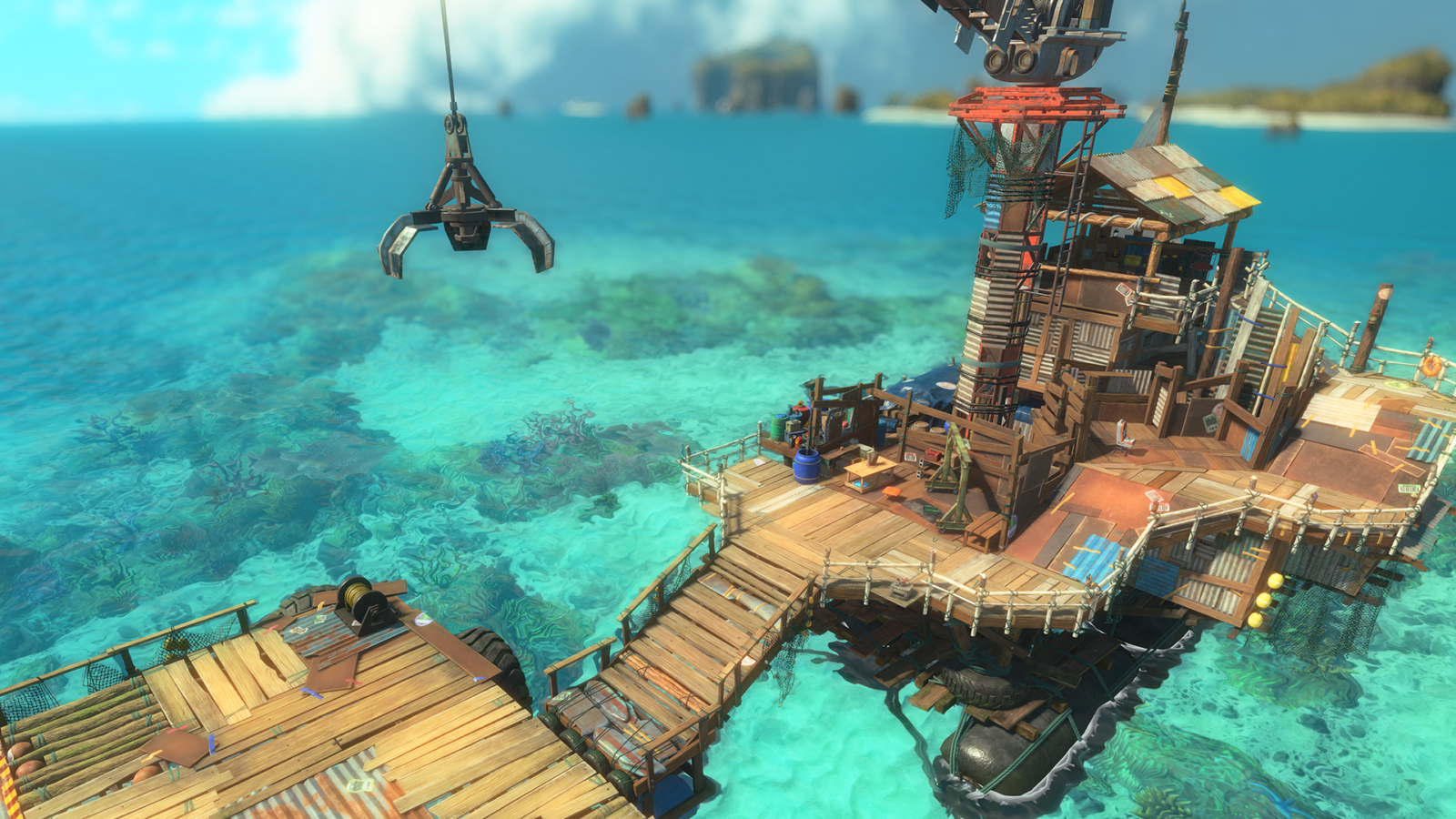
Spicy versions of every stage crank the enemy density into the stratosphere while somehow holding a rock-solid 60 frames per second. Watching a screen full of chaos stay silky smooth is the moment the Switch 2’s extra muscle becomes impossible to ignore. The art direction is the one area that feels a little muted compared to the neon fever dreams of the mainline multiplayer maps, but the mechanical density more than makes up for any visual restraint.
Four Squids, One Beautiful Mess
Online co-op is handled with a level of thoughtfulness that makes older Splatoon multiplayer systems look prehistoric. Up to four players can tear through the entire campaign together. Host chooses the mission, everyone keeps their own loot and progression, and the game scales enemy levels individually so a high-level player cannot simply steamroll a low-level friend’s content. You can even set your own difficulty independently. Need help? Fire a distress signal and random raiders from around the world can drop in for bonus rewards. There is even a little arcade machine back at base so nobody is just staring at loading screens. It is the kind of multiplayer implementation that feels like the developers actually played with friends and hated every friction point of the past.
That said, I still think the purest version of Raiders lives in single-player. The clever encounter design and puzzle-like enemy combinations shine brightest when you are alone with your build and your decisions. Throw three more trigger-happy friends into the mix and some of that delicate tension evaporates into pure chaotic fun. Both modes are excellent. They just scratch different itches. My personal recommendation is to experience the campaign solo first so you can fully appreciate how clever the systems are, then drag your friends through the endgame when you are ready to break everything on purpose.
Verdict
Splatoon Raiders takes everything that already made the series special and builds an entire action-RPG cathedral on top of it. The Gadget system is a customization playground that never stops rewarding curiosity. The combat is tense, readable, and endlessly replayable. The mission variety keeps the pace perfect from the first hour to the fiftieth. And the co-op implementation is so clean it feels like a quiet apology for every awkward friends-list system that came before. This is the strongest campaign the franchise has ever produced and one of the clearest early statements that the Switch 2 is ready to deliver experiences that feel next-generation in the ways that actually matter: depth, polish, and pure addictive joy.