

TL;DR: Episode 4 slows things down after a blistering start to Season 3, focusing on Ormund Hightower’s scheming, Aegon’s grief, and Daemon’s cunning deceptions while Rhaenyra grapples with ruling a fractured kingdom. It lacks the prior momentum but builds essential foundations with strong character work and intriguing setups for bigger conflicts ahead in this gripping fantasy saga.
House of the Dragon Season 3
In the sprawling saga of Westeros, where every whispered alliance and stolen glance carries the weight of impending doom, House of the Dragon Season 3 has roared onto our screens with the kind of blistering confidence that makes fantasy television feel alive again. After three explosive opening episodes packed with naval carnage, throne-room power plays, and enough dragon-scale drama to satisfy even the most jaded Game of Thrones loyalist, Episode 4 arrives like a deliberate deep breath in the middle of a battlefield charge. It is slower, more introspective, and deliberately focused on laying foundations rather than lighting the pyres, yet it crackles with the quiet tension of pieces sliding into place on a very dangerous chessboard. As someone who has rewatched the original series more times than I care to admit while nursing mugs of ale in dimly lit rooms, I found myself oddly captivated by this breather, even as it tested my patience for all-out spectacle.
What makes this episode fascinating is how it shifts the spotlight onto Ormund Hightower, portrayed with slippery charm by James Norton. Here is a character who feels like the universe’s next great schemer, the kind of calculated operator who understands that true power often hides behind feigned indifference and strategic misdirection. His takeover of Tumbleton and the intricate deception involving young Daeron paint him as a manipulator who plays the long game, far removed from the brute force of previous antagonists. Watching him navigate the unrest of conquered towns while keeping a tight leash on his young charge, you can’t help but sense the tectonic plates of the Dance of the Dragons shifting once more. It’s a refreshing reminder that not every villain needs a dragon on their shoulder or a crown on their head to sow chaos; sometimes a sharp mind and a willingness to exploit family bloodlines are more terrifying than fire and blood combined.
Meanwhile, the episode gives us poignant, almost haunting moments with familiar faces that deepen their arcs in ways that linger long after the credits roll. Aegon’s return to Rook’s Rest, confronting the desecrated remains of his beloved Sunfyre amid opportunistic scavengers, hits with surprising emotional resonance. There is something profoundly human about a broken king mourning his dragon while pocketing a single scale as a talisman of lost glory. It transforms Aegon from mere pawn into a figure of tragic complexity, one whose grief feels earned after seasons of turmoil. Similarly, Daemon’s journey to the Vale and his discovery involving Rhaena and the rogue dragon Sheepstealer showcase Matt Smith’s ability to layer cunning, paternal protectiveness, and raw Targaryen volatility into every calculated move. His decision to shield a devastating truth from Rhaenyra by presenting a charred shepherd’s head as a convenient scapegoat is classic Daemon—morally gray, strategically brilliant, and laced with the kind of family secrets that could unravel kingdoms.
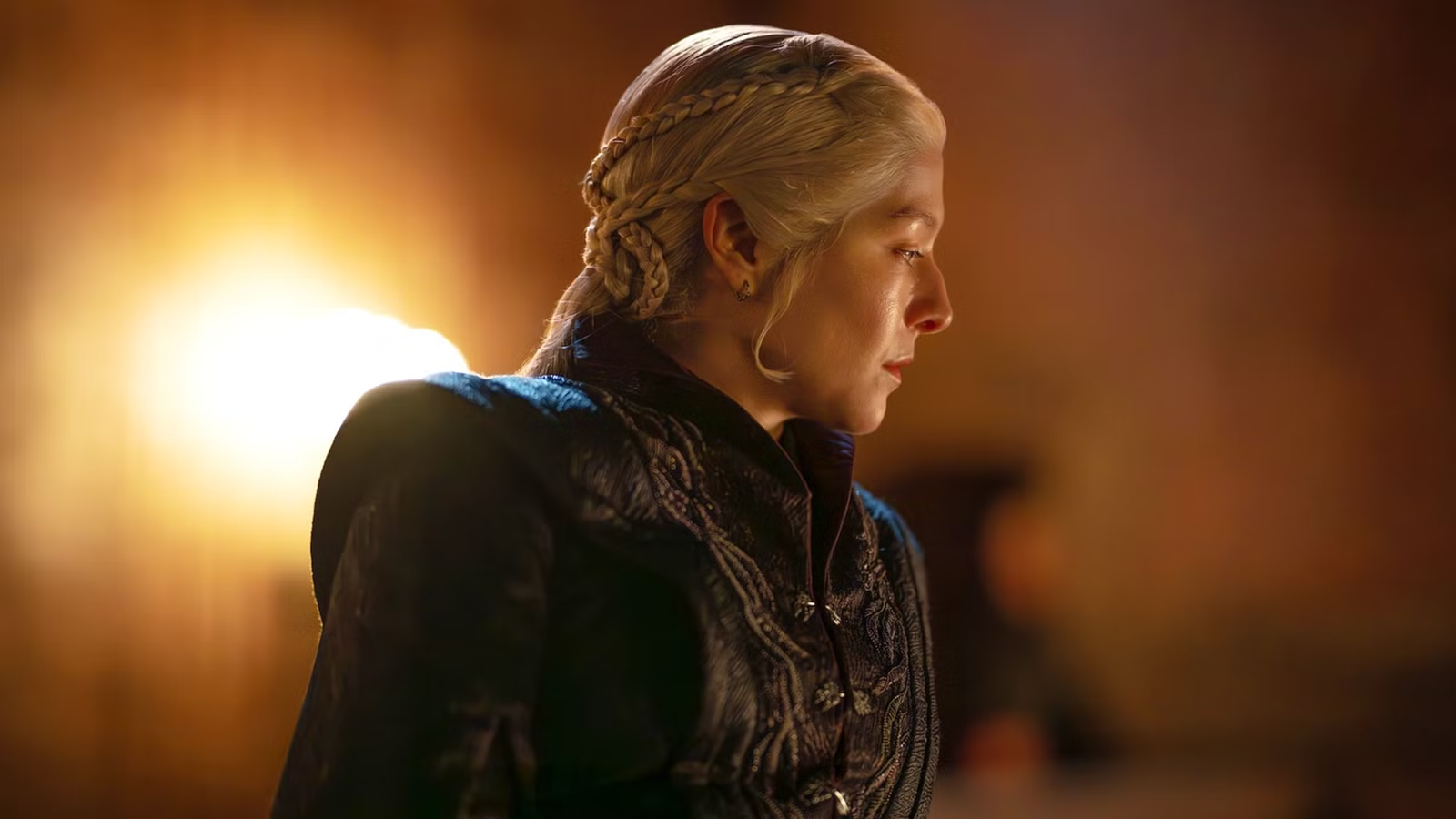
Back in the newly claimed King’s Landing, Emma D’Arcy’s Rhaenyra continues her evolution into a ruler burdened by the weight of legitimacy questions, empty treasuries, and three missing claimants to the throne. Her tentative alliance-seeking with Alicent and the subtle hints about hidden pregnancies add layers of courtly intrigue that reward attentive viewing. The episode smartly underscores how ruling a fractured realm demands not just military might but political finesse, something the Blacks are still struggling to master amid growing dissent and rumors about Rhaenyra’s own children. These quieter scenes breathe life into the political machinery of Westeros, reminding us that dragons may win battles, but whispers and betrayals often decide wars.
Of course, the slower pace does come with trade-offs. Aemond’s continued absence leaves a noticeable gap in dragon-fueled menace, and Ormund, while promising, has yet to fully step into the chilling presence of villains like his predecessors. The episode occasionally feels like it is marking time, setting up future fireworks rather than delivering them immediately. Yet even in these lulls, the series maintains its impeccable production values, from the haunting visuals of battle-scarred landscapes to the rich, lived-in costumes that make every council chamber feel authentically medieval and mythical. It is the kind of world-building that invites you to linger, imagining the off-screen machinations and the personal costs paid by every lord and lady caught in the crossfire.
What elevates House of the Dragon beyond mere spectacle is its unwavering commitment to character-driven storytelling, even when the dragons take a temporary backseat. This episode reinforces that the true heart of the show lies in the messy intersections of ambition, loyalty, and familial bonds stretched to their breaking points. As fans who grew up dissecting every prophecy and lineage in George R.R. Martin’s expansive universe, moments like these feel like catnip—subtle threads that promise epic payoffs down the line. The show remains a masterclass in balancing high-stakes fantasy with deeply personal drama, proving once again why it dominates streaming charts and water-cooler conversations alike.
Verdict
House of the Dragon Season 3 Episode 4 may not match the explosive highs of its immediate predecessors, but it smartly pivots to character development and political maneuvering that will make future battles land with even greater impact. Ormund emerges as a compelling new player, emotional beats with Aegon and Daemon shine brightly, and the series continues to weave an addictive tapestry of power struggles that keeps viewers invested in every twist of the Dance. It is a thoughtful palate cleanser that sets the stage for what promises to be an unforgettable season.