

Christopher Nolan is adapting Homer’s ancient epic The Odyssey for the big screen, with the film scheduled for release in regional cinemas on July 17, 2026. Following the commercial and critical success of Oppenheimer, the director returns with a large-scale production that draws on one of Western literature’s foundational texts, a story of heroism, homecoming, and human resilience that has influenced storytelling for millennia. Shot across six countries and captured entirely with IMAX film cameras, the project marks Nolan’s continued exploration of ambitious, visually immersive cinema.
Nolan has described the challenge of translating the mythic world of Ancient Greece into a modern blockbuster format as both daunting and energizing. The Odyssey follows Odysseus on his long journey home after the Trojan War, encountering gods, monsters, and trials that test loyalty, cunning, and endurance. In Nolan’s hands, the narrative is expected to emphasize grand spectacle alongside the intimate themes of family, fate, and identity that have defined the source material for centuries. Whether this approach adds fresh insight or risks simplifying the poem’s layered complexity remains to be seen, as previous cinematic adaptations of classical epics have often struggled to balance spectacle with substance.

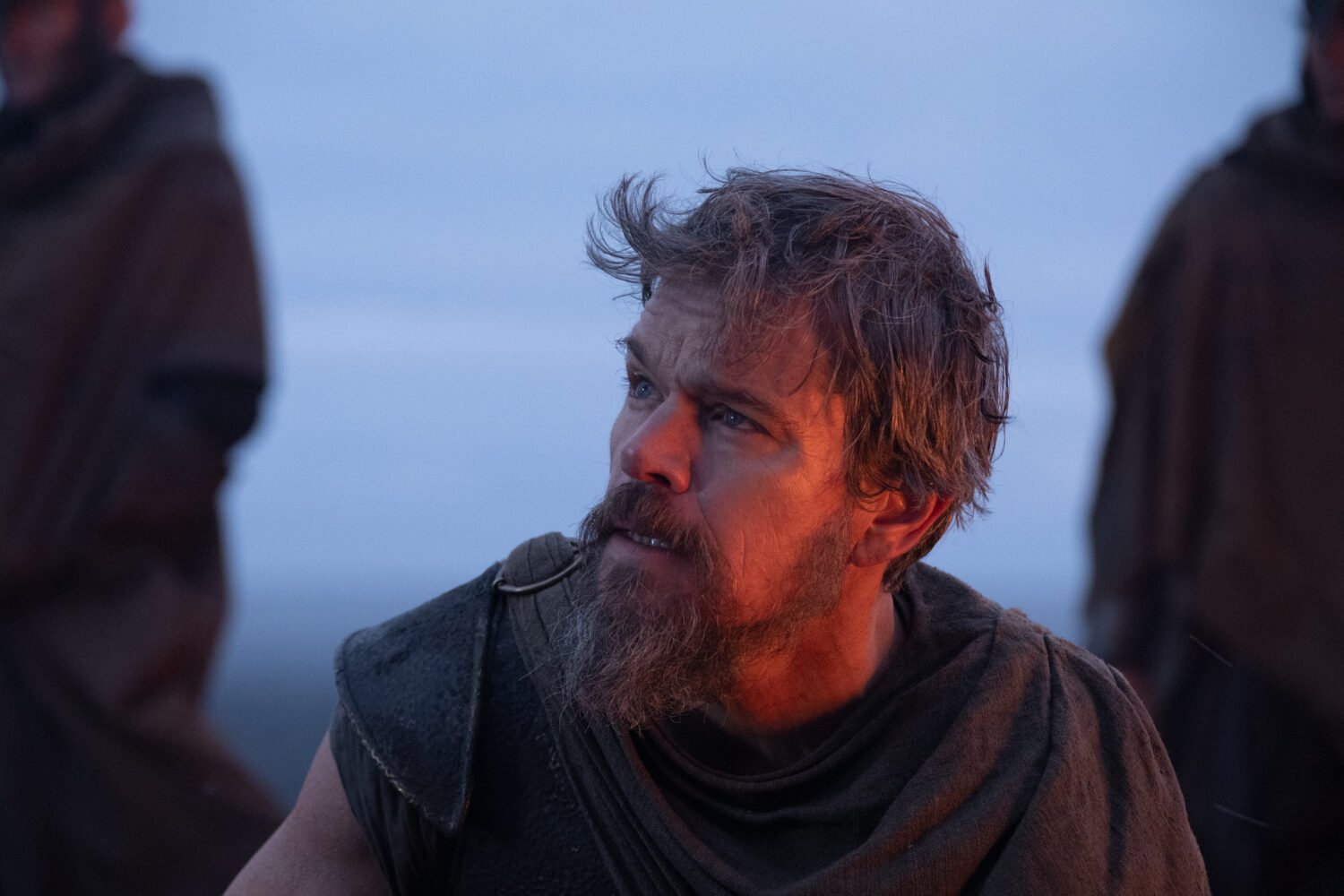
The cast brings together several prominent actors. Matt Damon portrays Odysseus, with Tom Holland as his son Telemachus and Anne Hathaway as Penelope. Zendaya appears as Athena, Charlize Theron as Calypso, Robert Pattinson as the suitor Antinous, and Lupita Nyong’o in dual roles as Helen of Troy and Clytemnestra. Supporting performances include Jon Bernthal as Menelaus, Mia Goth, Benny Safdie, and others. This ensemble suggests a high-profile production capable of drawing broad audiences, though the true test will lie in how effectively these performers embody archetypal figures from an ancient text.
Production details reflect Nolan’s established team. Hoyte van Hoytema returns as cinematographer, while key collaborators from Oppenheimer such as editor Jennifer Lame, composer Ludwig Göransson, and production designer Ruth De Jong contribute their expertise. The film is produced by Emma Thomas and Nolan through Syncopy, maintaining the director’s preference for practical effects and large-format photography where possible. These choices align with Nolan’s reputation for pushing technical boundaries, as seen in earlier works like Dunkirk and Interstellar, which prioritized tangible visuals over heavy digital reliance.

Nolan’s track record includes more than $6 billion in global box office earnings and multiple Academy Awards, with Oppenheimer standing out for its cultural impact and seven Oscar wins. His films often blend intellectual ambition with mainstream appeal, though they occasionally invite debate over pacing, exposition, or emotional depth. Bringing The Odyssey to contemporary screens invites similar scrutiny: can a mythic tale rooted in oral tradition thrive within the expectations of a summer blockbuster, or will Nolan’s distinctive style reshape it into something distinctly his own?
For audiences in the Middle East, the film offers another opportunity to experience Nolan’s work on the big screen, particularly in IMAX formats that highlight his commitment to cinematic scale. Its arrival continues a tradition of ambitious literary adaptations that test the boundaries between high culture and popular entertainment.