


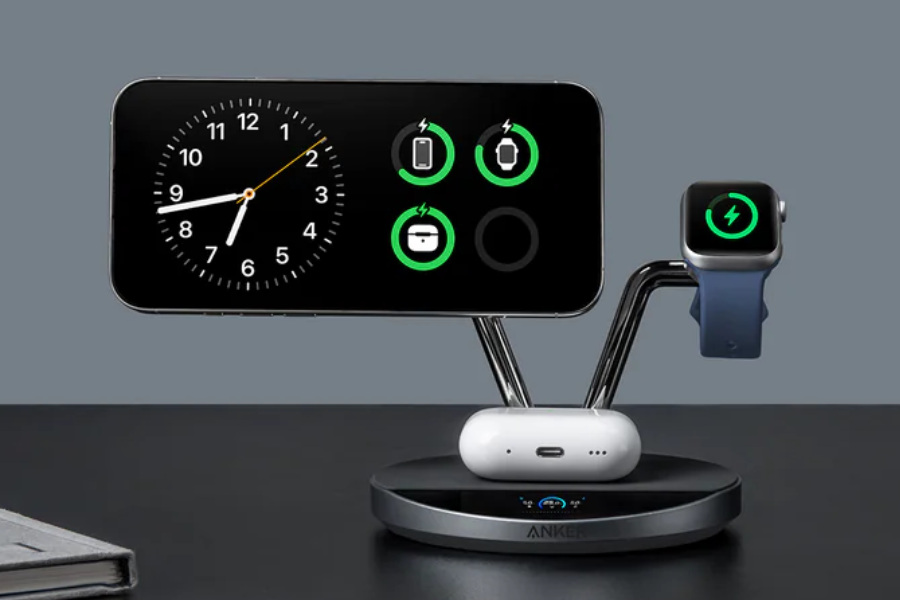
Anker has introduced a new 3-in-1 magnetic wireless charging station equipped with active air cooling, aimed at users who rely on multiple Apple devices throughout the day. Priced at an introductory 1,199 yuan, roughly $177, and now available in China, the device reflects ongoing efforts in the accessory market to address common frustrations with wireless charging, particularly heat buildup that can slow performance and affect battery longevity over time.
Measuring 169 by 125 by 138 millimeters and weighing 620 grams, the charger adopts a compact yet sturdy form in a Space Gray finish. It can simultaneously power an iPhone, Apple Watch, and AirPods, a practical setup for anyone juggling an ecosystem of devices. The inclusion of a 1.62-inch touchscreen on the base stands out, providing real-time readouts of charging power and temperatures. Users can adjust modes and settings directly on the display, with gesture controls via Anker’s interaction system: double-tap for sleep mode, longer presses for display off or Bluetooth reconnection, and an extended hold to reset. These touches add a layer of convenience, though they also introduce another electronic component that could potentially fail or add complexity in daily use.
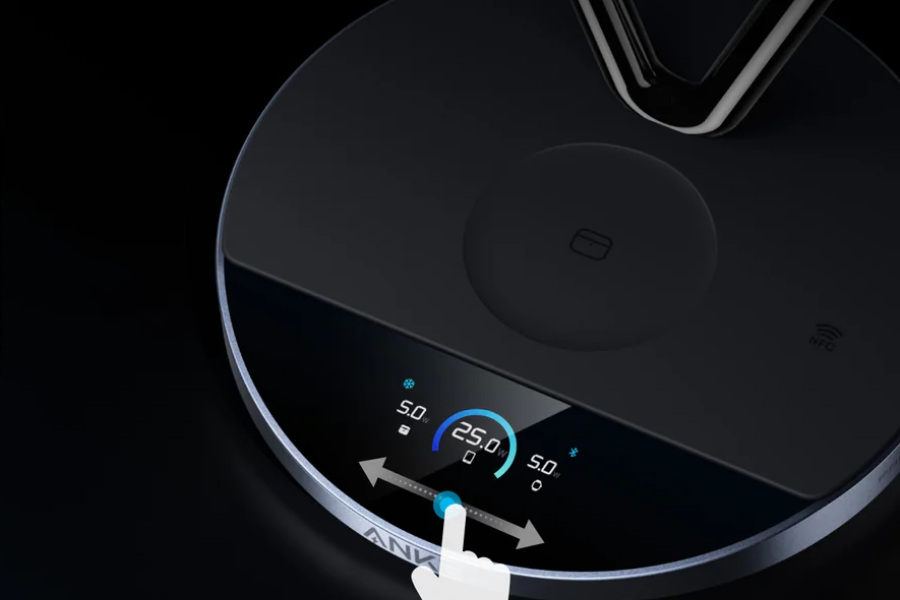
At its core, the charger employs thermoelectric cooling, or TEC, technology to manage heat during operation. Wireless charging has long struggled with thermal throttling, where elevated temperatures force devices to limit power intake for safety. By actively cooling the phone, this station aims for more consistent speeds, up to 25 watts for compatible handsets, alongside 5 watts each for the Watch and earbuds. A companion app extends monitoring options, while built-in safety features help prevent overcurrent or overheating issues. Power arrives via a USB-C port, keeping things standard rather than proprietary.
In a broader sense, this product builds on years of incremental improvements in multi-device chargers. Earlier magnetic pads from various makers offered basic alignment and modest speeds, but persistent heat concerns limited their appeal for heavy users. Anker’s approach with active cooling is a logical step, especially as flagship phones push higher wireless charging rates. Still, it is worth noting the trade-offs: the added weight and bulk compared to simpler stands, the reliance on a specific ecosystem, and questions about long-term durability of the cooling system and touchscreen in everyday environments. At this price point, buyers will want to weigh whether the extras justify stepping beyond basic pads that cost significantly less.
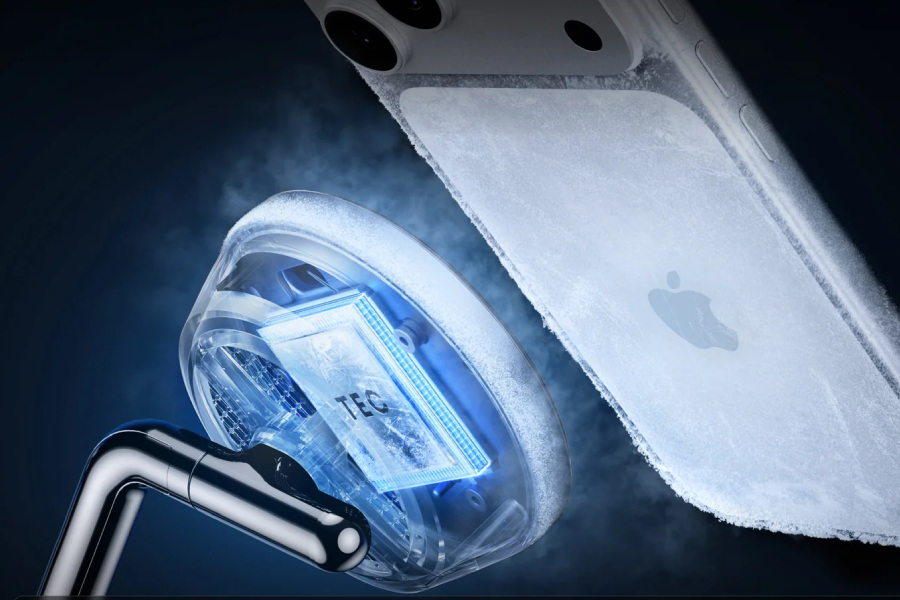
The station’s focus on real-time temperature feedback and customizable modes could appeal to those monitoring device health closely, echoing trends in wearables and smart accessories where data transparency helps users make better decisions. However, it remains to be seen how noticeable the cooling benefits prove in varied conditions, such as warmer rooms or extended sessions. For now, the launch highlights a maturing accessory category that prioritizes functionality over minimalism, even as many users still prefer simpler, cheaper alternatives without the bells and whistles.