
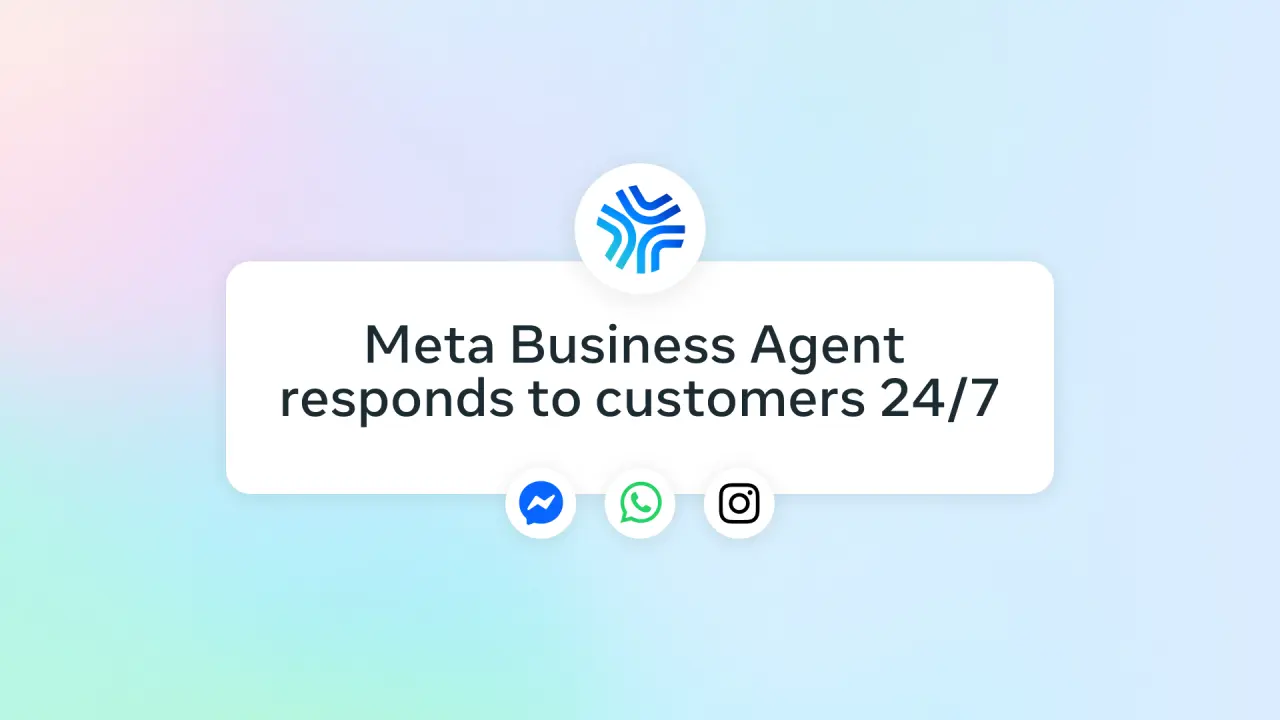
Meta has begun a global rollout of its Meta Business Agent, an AI-powered tool designed to assist small and medium businesses with customer interactions across WhatsApp, Instagram, and Messenger. The feature, previously tested as “Business AI” in select markets including India, Mexico, and Brazil since late 2024, now reaches a wider audience, reflecting the company’s push into automated customer service solutions amid intense competition in AI business tools.
The agent handles routine tasks such as answering customer queries, managing leads, booking appointments, and suggesting products from business catalogs. It can also deliver daily briefings on missed conversations and offer basic insights into chat performance. Early testing involved over one million active shops, providing Meta with substantial data to refine the system. Businesses can access it through the WhatsApp Business app, Instagram Pro, Messenger, and Meta Business Suite, with plans for gradual expansion of capabilities, including market research, product analysis, calendar integration, and competitive intelligence. A waitlist is available for those interested in future features.
This development arrives as companies increasingly turn to AI for operational efficiency. The ability to match a brand’s tone in responses represents a practical step toward more natural automated communication. Yet it also revives familiar concerns about AI reliability in customer-facing roles. Past experiments with chatbots have shown limitations in handling complex or emotionally charged interactions, often leading to frustration when systems misinterpret context or provide generic replies. Meta’s own history with data practices and platform moderation adds another layer of caution for businesses considering deeper integration.
Alongside the agent, Meta introduced the Meta Business Agent Platform, an infrastructure layer that allows companies to build and customize AI assistants at scale. It supports connections to external services like Shopify, Zendesk, and Shopee, with controls for security and performance metrics. This setup aims to give developers flexibility while maintaining guardrails, though the effectiveness will depend on how well businesses implement them. Notably, the rollout coincides with recent security incidents, including vulnerabilities in Meta’s AI support features that allowed unauthorized account access through simple prompts.
For many small businesses struggling with high inquiry volumes, such tools could reduce response times and operational costs. However, over-reliance on AI risks diminishing the human element that often builds genuine customer loyalty. In regions with varying digital infrastructure and data regulations, adoption may face hurdles related to privacy expectations and integration challenges. Meta’s broader AI ambitions, including agentic systems, signal a strategic bet on automation, but success will hinge on delivering consistent value without introducing new risks around data handling or job displacement in support roles.
The global expansion of Meta Business Agent underscores the rapid evolution of AI in everyday commerce. While it offers tangible workflow improvements, businesses would do well to approach it with clear boundaries and ongoing human oversight. As these technologies mature, the real test lies in whether they genuinely enhance customer experiences or simply shift burdens in new directions.