
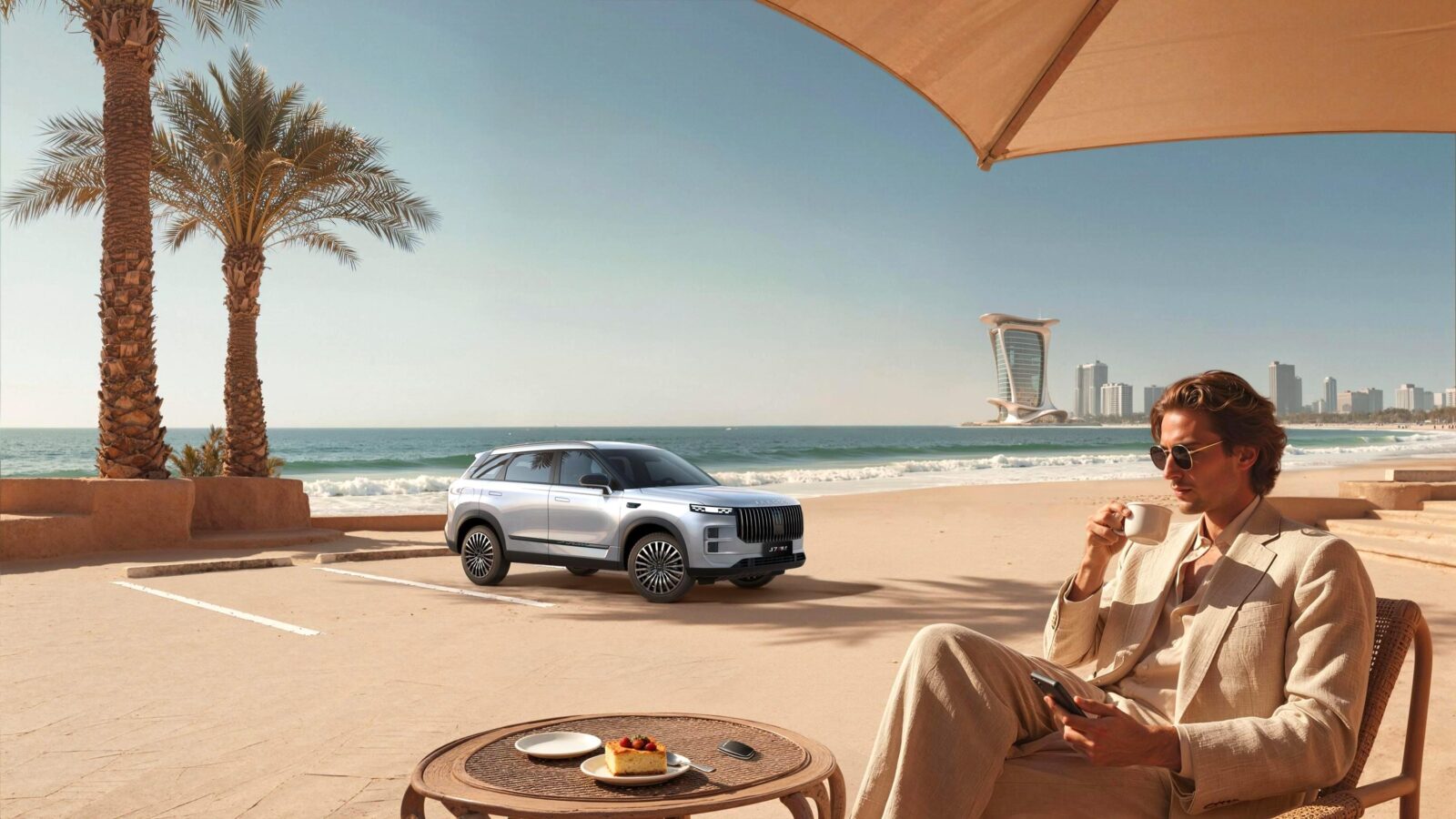
The OMODA & JAECOO VPD smart parking technology aims to address one of the more frustrating aspects of urban driving in the UAE: finding and managing parking in crowded, high-end locations. Introduced as part of the brand’s push into intelligent mobility, the Valet Parking Driver system allows vehicles to autonomously park themselves or respond to simple summons, moving to pickup points when called. Features such as “Come When Called” and “Leave When Waved” position the technology as a practical response to the demands of luxury lifestyles in places like Dubai’s shopping districts, hotels, and business areas.
Demonstrated at the Beijing Auto Show, the VPD system is designed for environments where extreme summer heat makes waiting outdoors uncomfortable. Instead of circling for spots or enduring high temperatures, drivers can stay indoors while the car handles the maneuvering. This reflects a broader trend in the automotive industry toward driver assistance features that reduce everyday stress, particularly in rapidly growing cities with limited parking infrastructure. However, real-world performance will depend on infrastructure readiness, regulatory approval, and consistent sensor reliability in dusty or high-traffic Gulf conditions.
The technology forms part of a larger intelligent mobility package that includes advanced driver assistance, smart connectivity, and AI-powered elements such as AiMOGA Robotics. While these developments signal continued investment in automation, they also join a competitive field where established players like Mercedes, BMW, and Tesla have offered similar self-parking and summon capabilities for several years. OMODA & JAECOO, operating under Chery International, frames VPD as an evolution tailored to modern urban and luxury needs, yet its ultimate usefulness will be measured by reliability rather than marketing claims.
In the UAE, the brand has sold over 5,000 vehicles and is expanding its retail and service network. Globally, it reached one million cumulative sales in three years, indicating strong commercial momentum in a crowded SUV and crossover market. OMODA targets tech-oriented urban buyers with futuristic design, while JAECOO focuses on premium off-road aesthetics. Both aim to blend connectivity with lifestyle appeal, though the industry has seen many such promises before, with varying levels of delivery on everyday usability.
As cities like Dubai continue investing in smart infrastructure, systems like VPD could integrate into larger ecosystems that ease congestion and improve convenience. Still, challenges remain around full autonomy, data privacy, and seamless operation across different venues. The technology arrives at a time when consumer expectations for vehicle intelligence are rising, yet actual adoption often lags behind demonstrations due to cost, complexity, and regulatory hurdles.
Overall, OMODA & JAECOO’s VPD represents another incremental step in the long progression toward more automated driving experiences, particularly relevant for premium urban markets in the Middle East. Its success will hinge less on concept appeal and more on consistent performance in real Gulf conditions.