
Sonos is pushing its multi-room audio platform deeper into AI and more flexible home listening with Sonos 27, a free software update that begins rolling out across its S2-compatible products. The release combines external AI control, redesigned app navigation and a clever new use for portable speakers, while laying the groundwork for a more ambitious voice assistant arriving later this year.
The most interesting addition is Sonos 27mcp, currently available in Early Access. It uses Model Context Protocol (MCP), the open standard designed to let AI systems interact with external tools and services. In practical terms, Sonos says this means users can connect their system to AI assistants including ChatGPT and Claude, allowing music and speaker controls to become part of conversations happening inside those platforms.
That approach is potentially more significant than simply adding another voice assistant. Rather than forcing users into a single AI ecosystem, Sonos is positioning its speakers as hardware that different assistants can control. Whether that proves genuinely convenient will depend heavily on how reliably those integrations work, but it reflects the broader shift toward AI agents being able to operate connected devices rather than merely answer questions.
Sonos is still developing its own AI, however. Sonos 27voice is scheduled for later this fall and is being designed specifically around music discovery and playback. The company says users will be able to make vague or contextual requests — describing a mood or partially remembering a song, for example — instead of relying on exact artist, album or track names. Custom AI agents with configurable models, personalities and voices are also planned for 2027.
Away from AI, portable surrounds could be Sonos 27’s most immediately useful feature. Two matching Move 2 or Sonos Play portable speakers can automatically become rear surrounds when positioned near a compatible Arc Ultra, Arc, Beam Ultra or Beam Gen 2 soundbar. Sonos Positioning Technology uses high-frequency audio signals to determine where the speakers are located, allowing them to change roles without permanently tying portable hardware to a home-theater setup.
The company is also introducing headphone linking with the Sonos Ace Ultra. The Early Access feature connects the headphones directly to a Sonos system over its new Headphone Engine 2 platform, reducing dependence on a nearby smartphone and allowing audio to move between headphones and speakers with a tap.
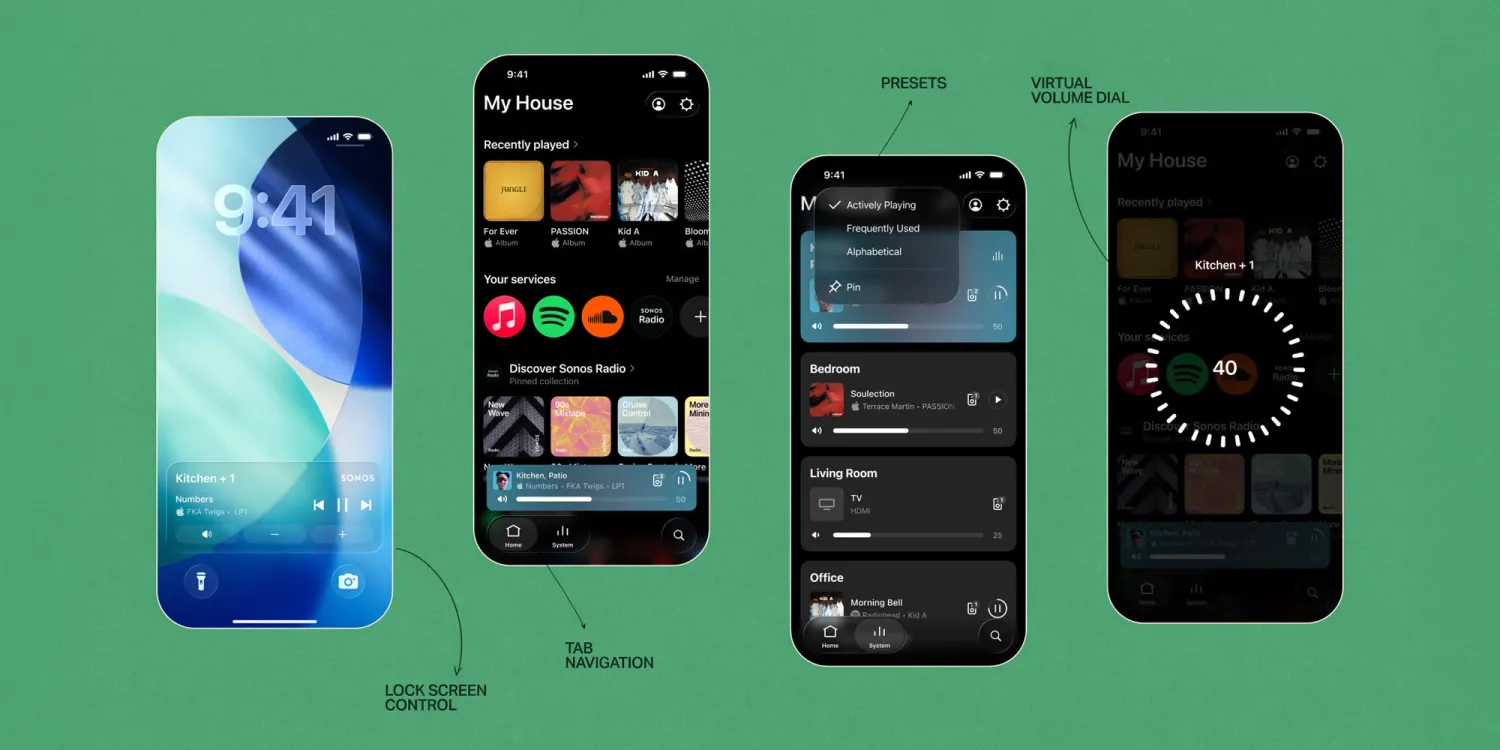
Sonos 27 also continues the company’s efforts to improve an app experience that has become an unusually important part of the Sonos story. The redesigned interface separates key functions into simpler navigation areas, supports swipe gestures and lets users pin frequently used rooms. Additional iPhone, iPad, Siri, Shortcuts and system-health improvements are also arriving.
Sonos 27 is available as a free update for Sonos S2 products, although individual features depend on compatible hardware. Sonos 27mcp and portable surrounds are available now, while headphone linking accompanies Ace Ultra and Sonos 27voice follows later this fall. The bigger test will be whether Sonos can make all these increasingly intelligent pieces feel simpler to use rather than adding another layer of complexity to the connected home.