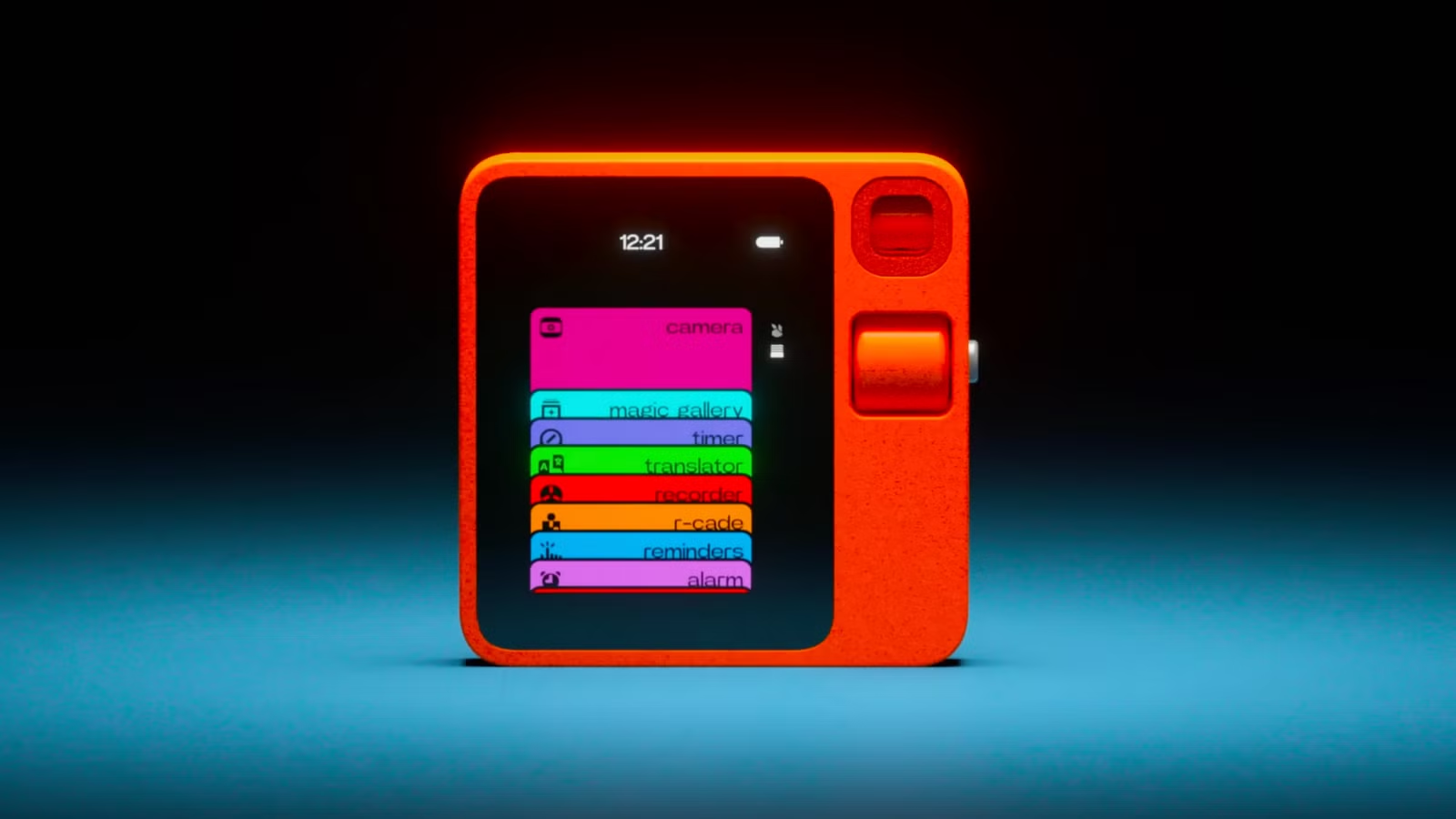
Rabbit, the startup behind the much-hyped but ultimately underwhelming Rabbit R1, is teasing a new device slated for release sometime in 2026. CEO Jesse Lyu confirmed in an interview that the company is developing what he describes as a “three-in-one” product, though he offered few specifics about its design or purpose.
The announcement comes after the R1’s brief stint in the spotlight in early 2024, when it was marketed as a compact AI assistant meant to simplify digital tasks through natural voice interactions. While the idea resonated with tech enthusiasts, the execution did not. The R1’s functions turned out to be easily replicable on smartphones, leaving many users questioning its necessity. Despite an appealing design and relatively low price, the device quickly faded from relevance, joining a growing list of AI hardware experiments that struggled to find staying power.
Lyu acknowledged that carrying an additional device is not ideal and admitted that many users remain hesitant to trust AI systems on their primary devices for sensitive actions like banking. This reality, he suggested, gives Rabbit a temporary opening to iterate before mainstream AI integration on smartphones makes such standalone gadgets obsolete.
The company appears to be exploring new form factors for its next device, ruling out wearables like glasses or pendants, which have become popular among other AI hardware startups in 2025. Instead, Rabbit seems intent on refining its approach with something distinct from the R1 — a product that could better justify its place alongside users’ existing tech.
Although the company continues to support the original R1, even releasing a rabbitOS 2 software update, it faces an uphill challenge in regaining consumer confidence. The initial device promised a reimagined way to interact with technology but ultimately exposed the limits of AI hardware without compelling utility.
If Rabbit’s next device does make it to market, it will have to overcome significant skepticism. With competitors like Humane and larger tech players already shaping the AI hardware landscape, Rabbit’s future depends on whether it can move beyond novelty and deliver a product that genuinely enhances the user experience — not just one that experiments with form.