


Meta has rolled out another set of AI features for Facebook users, focusing on a chatbot for everyday queries and expanded photo and video editing tools. The updates arrive as competition among social platforms intensifies, with each company layering generative capabilities onto their apps in hopes of boosting engagement. While the additions provide some practical utility, they largely extend familiar territory rather than breaking new ground in an increasingly crowded AI landscape.
The centerpiece is AI Mode, a straightforward chatbot designed to handle questions with responses drawn from content across Meta’s ecosystem, including Groups and Reels. The company positions it as offering “real perspectives and experiences” instead of generic search results, powered by its recently introduced Muse Spark technology. In practice, this means users might ask for summer vacation recommendations and receive suggestions informed by community posts or videos rather than broad web data. It joins a growing list of similar tools from competitors like Google’s Gemini, Anthropic’s Claude, and xAI’s Grok, each promising contextual relevance but often delivering comparable results for casual queries. Whether the Facebook integration yields meaningfully distinct answers remains to be seen, particularly given past challenges with platform-specific data quality and moderation.

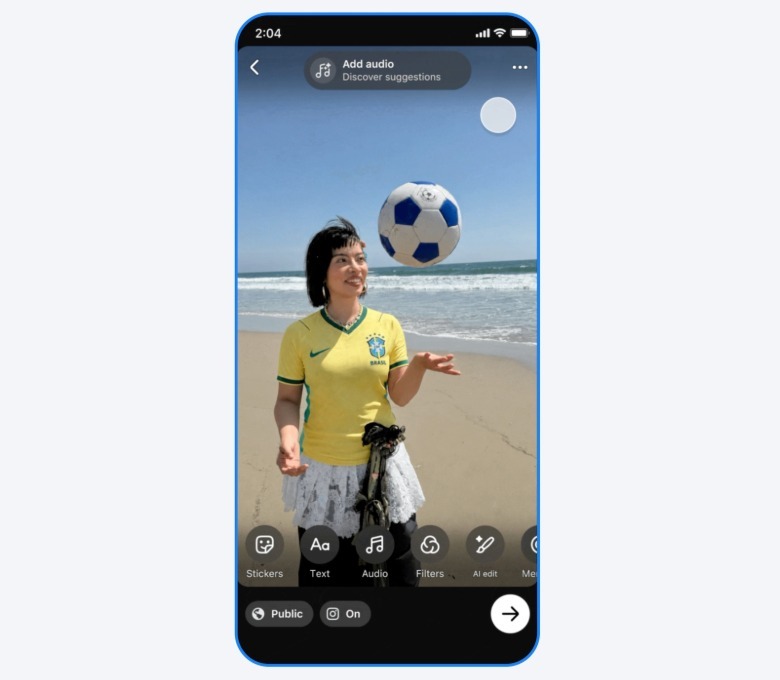
On the creative side, the update brings new collage cutout templates for editing photos from mobile camera rolls and transition effects for generating stylized video montages. Meta claims these can be produced with minimal effort, aiming to streamline content creation for sharing. Additionally, photo presets now allow AI-driven changes to clothing, hair, and accessories. The company highlights use cases like virtually trying on team jerseys for sports fans, a feature that taps into social sharing trends but raises questions about authenticity in an era already saturated with filtered and altered imagery. Such tools echo earlier experiments on platforms like Instagram and Snapchat, where similar editing functions have become table stakes rather than standout innovations.
These capabilities launch immediately for mobile Facebook users, with no confirmed web version yet. That limitation makes sense given the reliance on device camera rolls, though it restricts broader adoption for desktop-heavy users. In a broader context, Meta’s approach reflects the company’s ongoing push to embed AI throughout its family of apps following years of investment in large language models. Earlier efforts, such as image generation tools and chat assistants, have shown incremental improvements but also faced criticism over accuracy, bias, and potential for misuse in generating misleading content. Privacy implications linger as well, given Facebook’s vast data reserves, though the company has not detailed new safeguards specific to these features.
For power users who already live within the Facebook ecosystem, the tools could streamline quick queries and casual editing tasks without switching apps. Yet for most, they represent more of the same incremental enhancements seen across the industry—helpful in narrow scenarios but unlikely to reshape how people interact with the platform fundamentally. As AI features proliferate, the real test will be whether they deliver consistent value or simply add to notification fatigue and the sense that every app is trying to become everything at once. In a market where differentiation grows harder, Meta’s latest offering feels like a measured evolution rather than a compelling leap forward.