

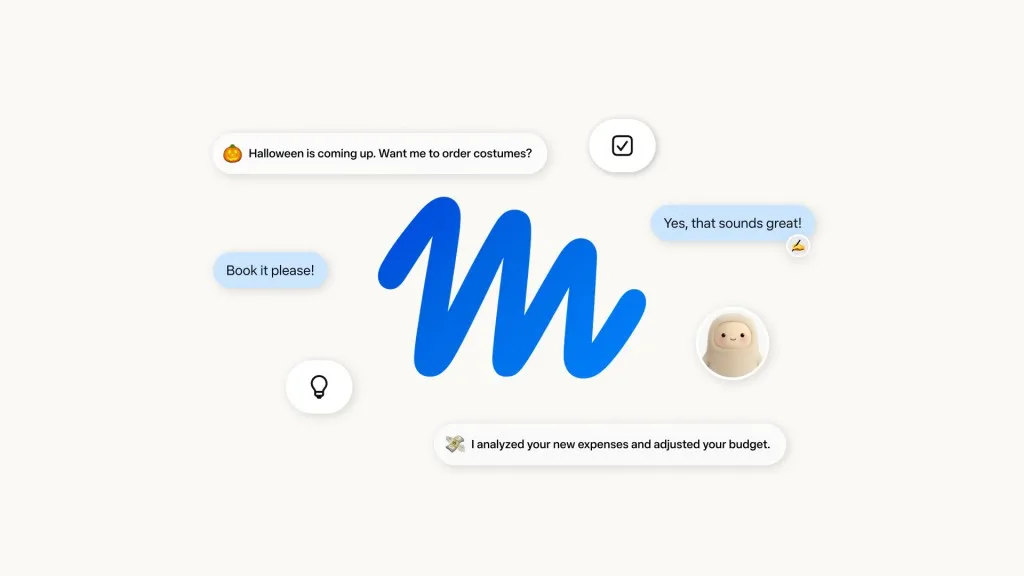
Meta is pushing AI beyond answering questions with Muse, a new personal agent designed to connect with everyday services and actually perform tasks on a user’s behalf. That includes handling emails, managing calendars, completing forms, booking travel and even making purchases.
The distinction matters. Generative AI assistants largely began as tools that produced information or content while leaving the final action to the user. Muse moves further into agentic AI, where software is given access to accounts and permission to complete multi-step jobs independently. Meta says Muse can connect with services spanning email, calendars, health and fitness, smart homes, shopping, music and events, while using a browser when an appropriate API isn’t available.
Muse can also continue working after its app has been closed, making it suitable for longer-running tasks rather than individual prompts. Meta says the agent can produce documents, PDFs, websites and interactive dashboards, while a goals feature can monitor ongoing objectives and recommend subsequent actions.
The service is initially targeting US users and is available through the web, iOS, Android and WhatsApp, with Meta planning support for its AI glasses later. That broad availability gives Meta several potential entry points into people’s routines, particularly through WhatsApp, where an AI agent could feel less like separate software and more like another conversation.
There is a free tier, although users are required to provide a payment card. Meta is also offering Power and Maximum subscriptions priced at $20 and $100 per month respectively, providing higher usage limits for people handing more tasks to the agent. Meta says users will receive warnings before their activity requires a paid plan.
Payments significantly raise the stakes. Muse supports purchases through Link by Stripe, with Shop Pay and 1Password integrations planned. An assistant suggesting a hotel is one thing; an autonomous system booking and paying for it introduces considerably greater consequences when something goes wrong.
That makes security and privacy central to whether Muse succeeds. Meta says the agent operates within a dedicated secure computer and browser, with another system called Sentinel monitoring its activity. The company also claims Muse cannot access users’ passwords or payment methods, and says Muse conversations are kept separate from its advertising systems. Certain sensitive actions, including purchases and sending emails, are also subject to approval controls.
Those protections will inevitably receive scrutiny because Muse requires users to hand over access to unusually revealing parts of their digital lives. Email, calendars, shopping activity and connected services can collectively provide a detailed picture of someone’s habits and relationships.
The larger challenge for Meta Muse, then, isn’t demonstrating that an AI agent can book a flight or send an email. Plenty of companies are racing toward that technical destination. The harder task is convincing people that giving an AI enough access to be genuinely useful is worth the privacy and security trade-off that comes with it.