
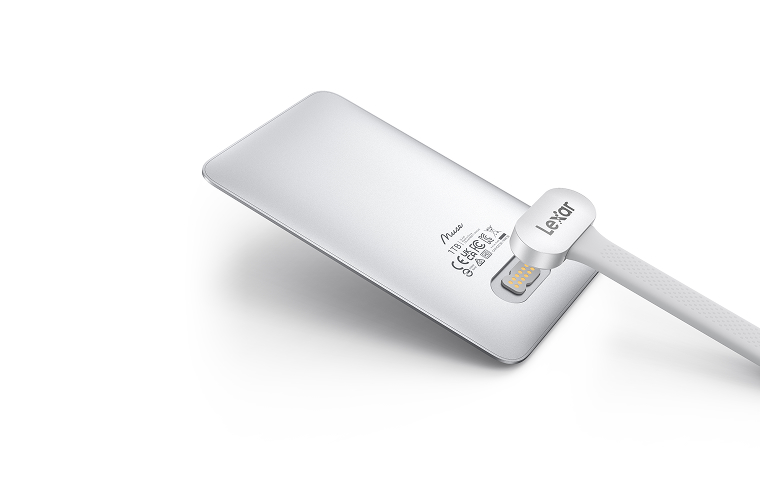
Lexar is taking a different approach to portable SSD design with the Muse, a remarkably thin external drive built to sit magnetically against the back of a smartphone rather than hang awkwardly from a USB-C cable.
Announced at IFA 2026, the Lexar Muse measures 80 x 48 x 3.8mm and tapers to just 1mm around its edges, while weighing 26.5g. Its aluminium body can attach to MagSafe-compatible iPhones using an included magnetic sleeve, creating a storage setup aimed squarely at people shooting large video files directly from their phones.
That use case has become increasingly relevant as smartphones have evolved into serious video cameras. Recording formats such as Apple ProRes can burn through internal storage quickly, making external SSD recording useful for longer shoots. The problem is that strapping a conventional portable SSD and cable to a phone isn’t exactly elegant, particularly when the device is mounted on a rig or being used handheld.
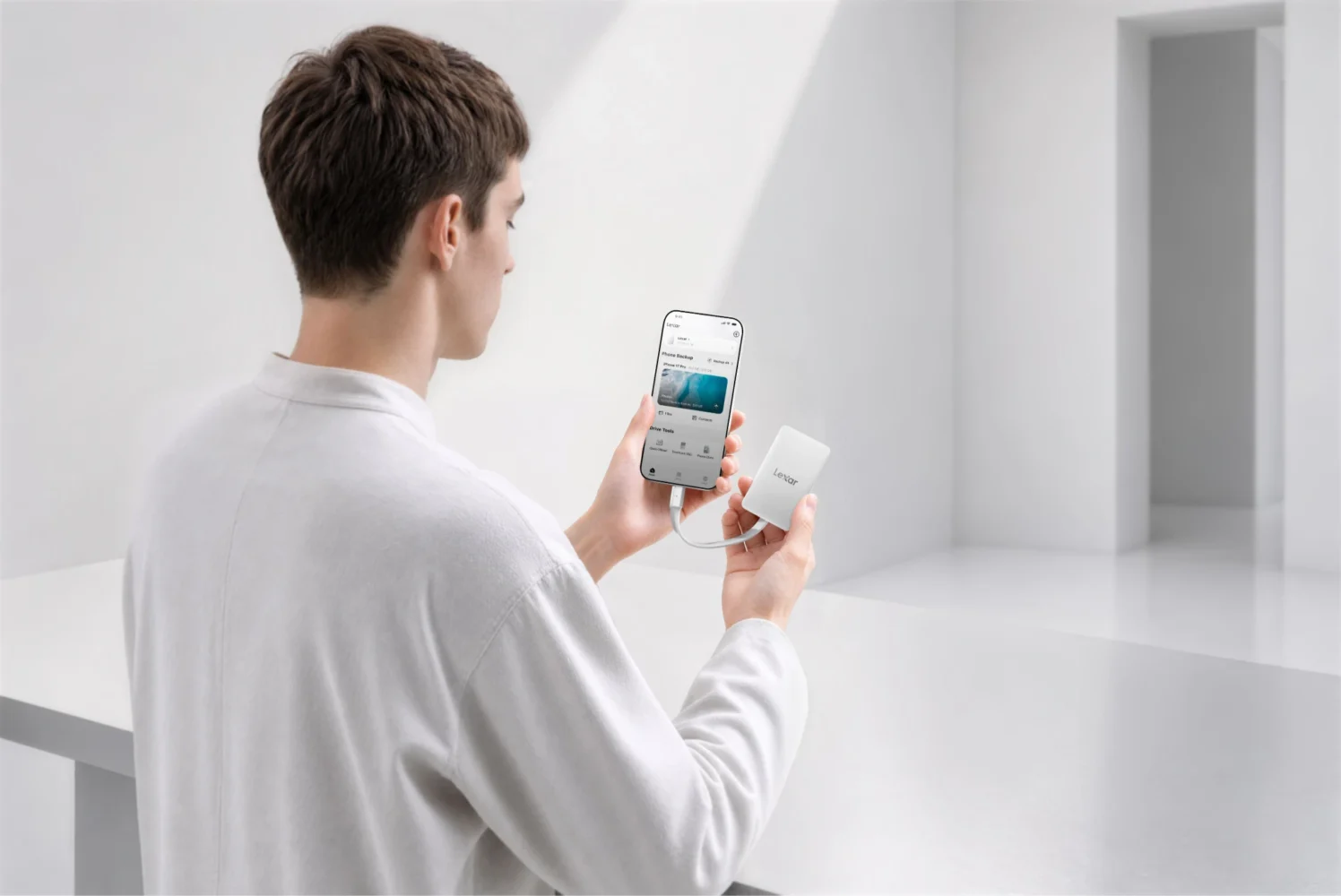
The Muse attempts to clean that up with a short connection system that runs from USB-C on the phone to a magnetic PogoPin connector on the SSD. Keeping the cable tucked close to the handset should make the setup easier to handle while reducing the chance of cables interfering with camera lenses or controls.
There is, however, an obvious trade-off. The proprietary PogoPin connection means the Muse becomes considerably less convenient if that particular cable goes missing. One of USB-C’s biggest practical advantages is being able to replace a forgotten cable almost anywhere, so Lexar is sacrificing some universality in pursuit of a neater physical design.
Performance is more conventional. Lexar rates the Muse for sequential read speeds of up to 1,050MB/s and writes of up to 1,000MB/s. The company says that is sufficient for recording Apple ProRes 4K video at 120fps directly to the SSD.
Compatibility extends beyond iPhones. Lexar says the drive works with USB-C hardware including iPads, Macs and PCs, alongside the iPhone 15, iPhone 16 and iPhone 17 families. A companion application will also provide automatic smartphone file backups.

The Muse isn’t trying to win the portable SSD speed race. Newer USB4 drives can reach several times its quoted transfer speeds, but that’s arguably missing the point. Lexar’s pitch is portability and integration with mobile filmmaking rather than maximum desktop transfer performance. For creators recording directly from a phone, shaving bulk from the setup could matter more than benchmark numbers they cannot practically exploit.
Lexar plans to release the Muse during the fourth quarter of 2026 in 512GB and 1TB capacities. Pricing hasn’t been announced, and that will be particularly important given the specialised magnetic design and proprietary connection.
The Muse is an interesting example of external storage adapting to smartphones rather than simply shrinking another desktop accessory. Whether that convenience outweighs having another unique cable to remember will largely depend on how aggressively Lexar prices it.