Google’s next streaming box may stop relying on the remote. A new report says the company is working on a second-generation Google TV Streamer with built-in microphones for hands-free “Hey Google” commands, presence sensing, a faster processor and more storage. Google has not confirmed the device, and there is no launch date or price yet.
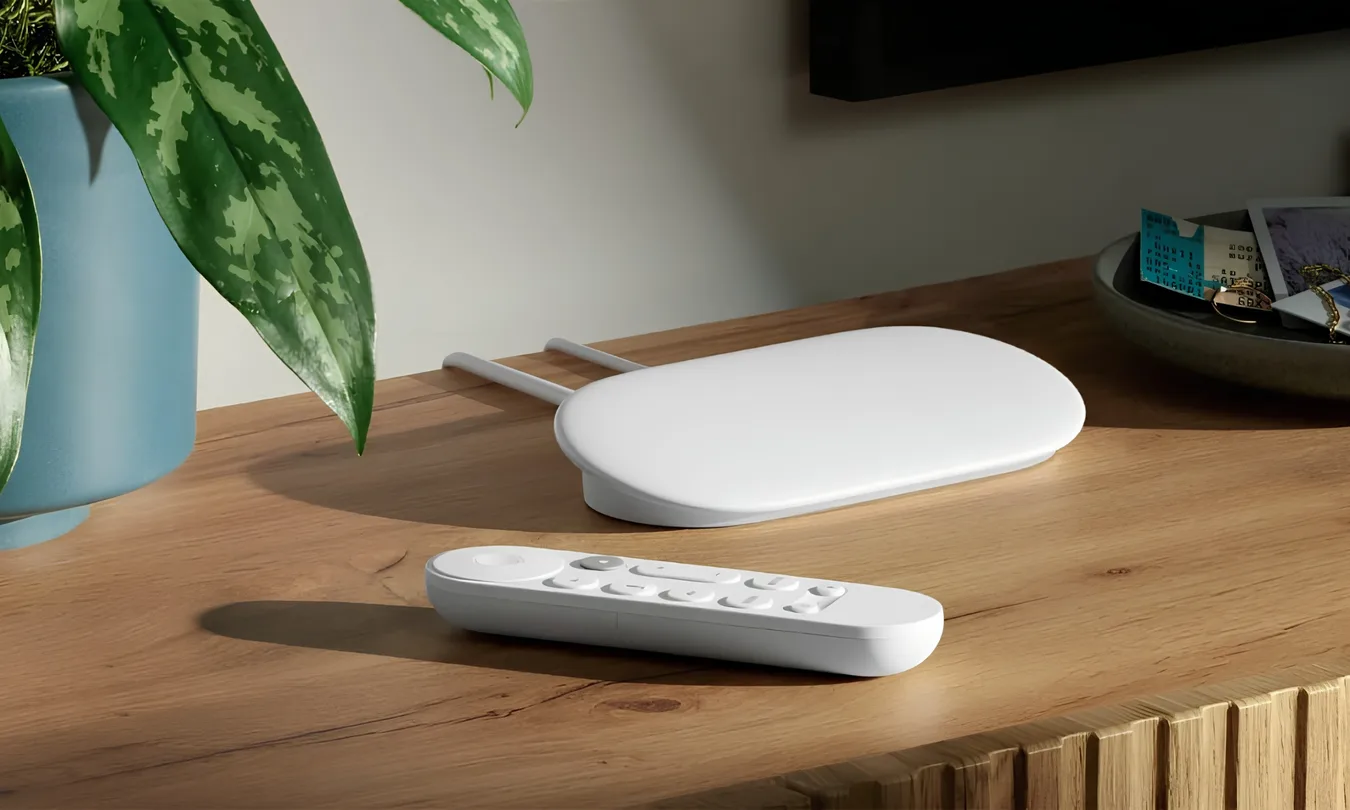
The microphones are the most practical change. Reported cutouts on the streamer’s slanted, pill-shaped body would let it hear voice commands directly, without anyone needing to find the remote and hold down a button. It is a small convenience, but one that Amazon’s Fire TV Cube has offered for years and that Google’s own smart speakers already provide.
Presence sensing is the more unusual addition. The streamer could reportedly detect when someone walks into the room and start a Google Photos slideshow, then switch to ambient information such as the time and weather as they get closer to the screen. TCL has already offered something similar on its Google TV hardware. Putting it into Google’s own streamer suggests the company sees the TV as more than a screen that sits dark until movie night.
Physically, the box is expected to look much like the current one, just slightly narrower. Inside, it should get a faster chip and more than the current model’s 32GB of storage, though the exact specifications are unclear. The remote will reportedly keep its design but gain two new shortcut buttons next to the existing YouTube and Netflix keys. The handy Find My Remote button stays on the back of the streamer.
The timing raises questions. Google increased the price of the current TV Streamer by $50 in August, which made an already expensive streaming box harder to justify against cheaper Roku, Fire TV and Chromecast-era alternatives. A better-equipped successor could make that price easier to accept, or it could arrive at an even higher price. For now, nobody knows.
Google also does not seem to be alone in this direction. Apple is reportedly testing built-in microphones for its next Apple TV 4K, ahead of its home-focused event on 13 October. Both companies appear to be turning the box under the TV into a listening hub for the wider smart home rather than just a streaming device.
That idea will make sense to some households and worry others. An always-listening device in the living room that also senses when someone walks in will lead to privacy questions. How Google handles opt-ins, on-device processing and controls may matter as much as any spec upgrade. The gap between the Chromecast with Google TV 4K and the current streamer was four years, but Google has given no sign of how long this refresh will take.