
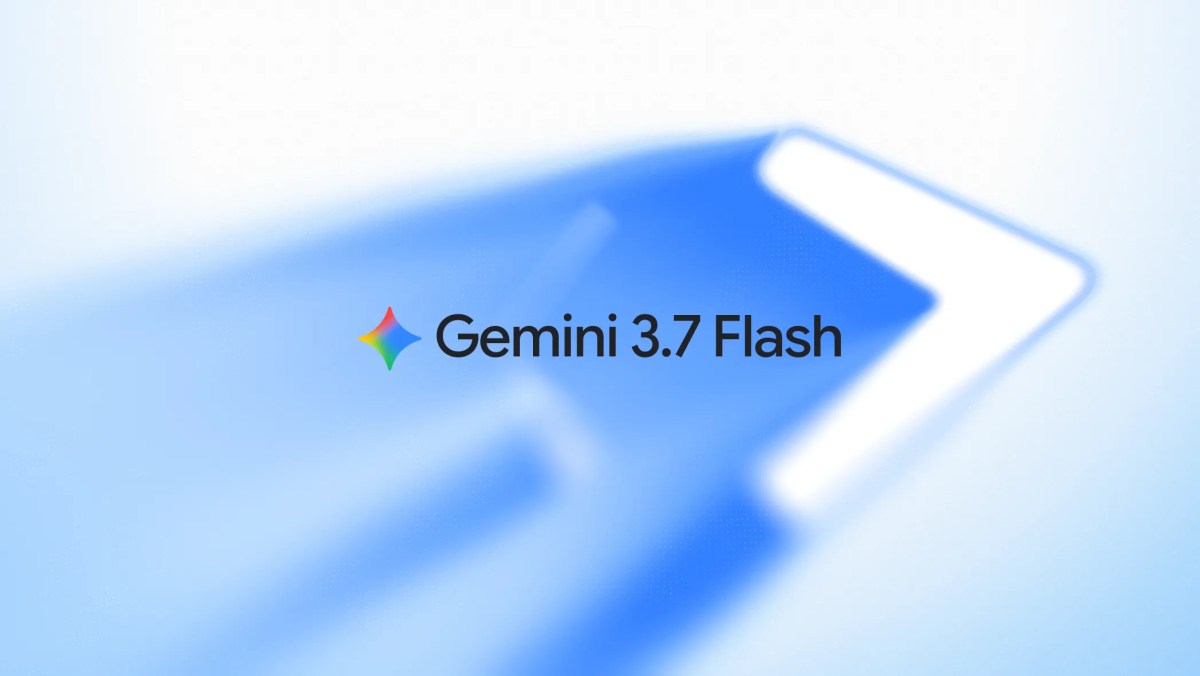
Google is moving unusually quickly with its Gemini model updates. Just three weeks after introducing Gemini 3.6 Flash, the company has released Gemini 3.7 Flash, a new version aimed primarily at coding, AI agents and professional knowledge work.
The short gap between releases is notable. Rather than treating every Gemini update as a major generational change, Google appears increasingly comfortable shipping smaller model revisions as improvements become available. Gemini 3.7 Flash reflects that approach, with the company pointing to developer feedback and algorithmic changes as the main drivers behind the update. Google says some of those underlying improvements will also make their way into future Gemini models.
Coding is one of the main areas receiving attention. Google says Gemini 3.7 Flash performs better than Gemini 3.6 Flash on software engineering tasks, including debugging and resolving issues. Web development has also been improved, with the model designed to produce more functional layouts and applications with fewer rounds of prompting.
Those claims will need to be tested outside Google’s own evaluations, particularly as coding has become one of the most competitive areas of generative AI. Model makers are increasingly optimizing their systems not simply to generate snippets of code, but to work through larger development tasks, interact with tools and operate as autonomous or semi-autonomous agents.
Gemini 3.7 Flash also targets more traditional knowledge work. Google says reasoning and accuracy have improved across areas including finance, law and biosciences. That could make the model more useful for research-heavy workflows, although stronger benchmark or internal performance does not remove the need to verify AI-generated information, especially in professional fields where errors can have significant consequences.
The new model is also being deployed immediately inside Gemini Spark, Google’s always-available AI agent introduced earlier in 2026. Spark will use Gemini 3.7 Flash for workflows that combine multiple skills and tasks, with Google claiming the upgrade should improve efficiency, accuracy and output quality. Access to Gemini Spark remains tied to Google AI Pro and Ultra subscriptions.
The rapid move from Gemini 3.6 Flash to Gemini 3.7 Flash also illustrates how AI release cycles are changing. Traditional software versions can remain current for months or years, while major AI providers are now iterating on models at a much faster pace as new training methods, feedback and efficiency improvements emerge.
For users, that pace brings better capabilities without necessarily requiring a completely new product. For developers, however, frequent model changes also mean continuously evaluating whether newer versions genuinely improve real-world workflows rather than simply producing stronger benchmark numbers. Gemini 3.7 Flash will now have to prove that its faster release cycle translates into meaningful improvements when developers put it to work.