

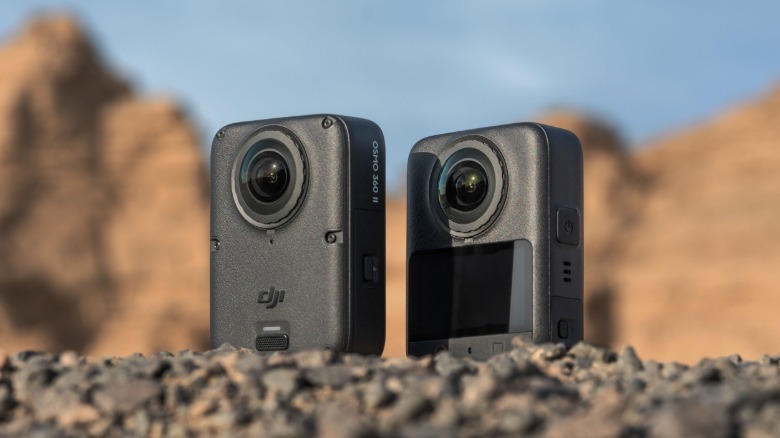
DJI is pushing its 360-degree camera line further into serious action-camera territory with the Osmo 360 II, unveiled at IFA 2026 with a larger sensor, faster 8K recording and one particularly welcome hardware change: replaceable lenses.
At the centre of the Osmo 360 II is a new 1-inch square HDR sensor. DJI says the unusual sensor format maintains the 360-degree field of view associated with a conventional 1-inch rectangular sensor while enabling 8K video recording at up to 60fps. The company claims up to 14.5 stops of dynamic range, with 2.4μm pixels.
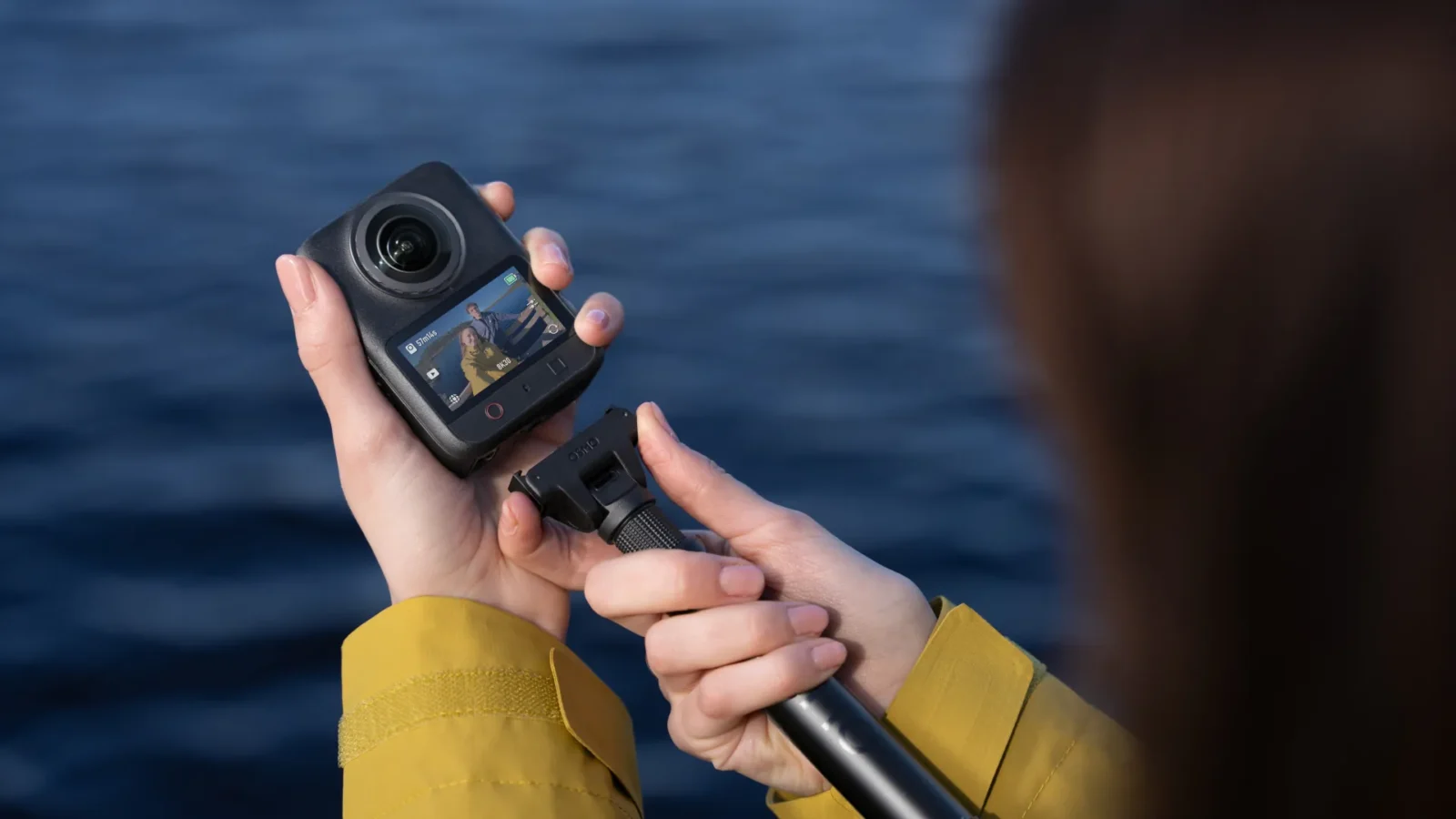
Those specifications should give creators considerably more flexibility, particularly when shooting scenes with difficult highlights and shadows. Low-light performance is also receiving attention through AI SuperNight 2.0, which combines computational processing with AI-assisted noise reduction. As usual with manufacturer claims around computational imaging, we’ll need real-world footage before knowing how much detail survives that processing.
The Osmo 360 II isn’t limited to conventional 8K capture. It can shoot 120MP HDR 360-degree stills and create 16K timelapses, while an 8K/120fps Vortex mode targets more stylised action footage. DJI also uses AI frame interpolation to offer what it describes as up to 64x slow motion, equivalent to cropped 8K footage running at 480fps. Importantly for anyone planning more involved post-production, every video format supports 10-bit colour, with D-Log M available for grading.
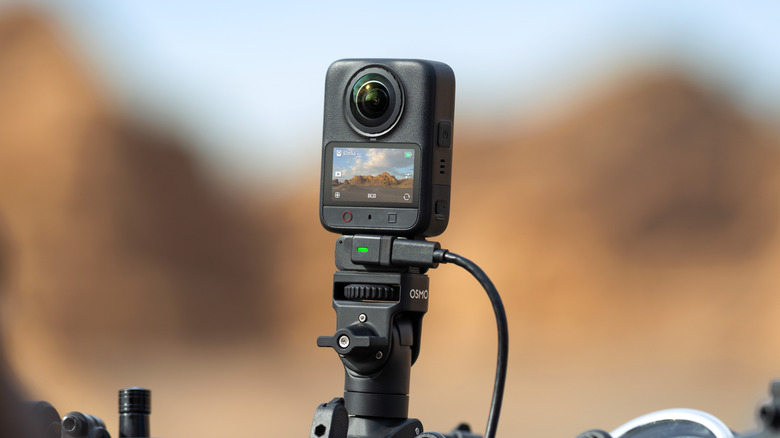
DJI has also introduced Spotlight Follow, designed to keep a selected subject centred as the camera moves or rotates. The feature could make reframing 360-degree footage less laborious, particularly for solo creators filming action sequences.
The hardware is built with outdoor use in mind. At 183g, the Osmo 360 II can survive water depths of up to 10 metres without an additional housing and operate at temperatures down to -20°C. There’s 105GB of internal storage, reducing dependence on removable media for shorter shoots.
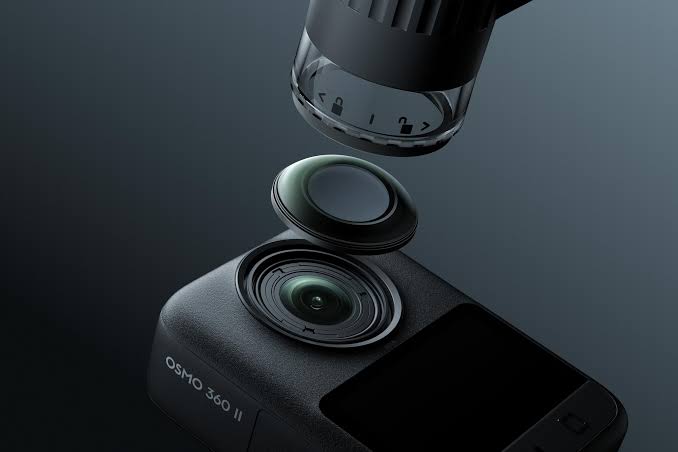
But replaceable lenses may prove to be one of the most practically important upgrades. 360 cameras place their protruding lenses in vulnerable positions, and scratches can quickly become visible across footage. Allowing a damaged lens to be swapped rather than potentially compromising the entire camera addresses an obvious weakness of the category.
Battery performance is rated at up to 100 minutes when recording 8K footage at 30fps. DJI also claims the battery can reach 80% charge in 22 minutes. Integration with the DJI Mimo app and direct connectivity with compatible DJI microphones round out the creator-focused features.
The Osmo 360 II arrives as 360 cameras increasingly compete not just on resolution, but on how easily footage can be captured, reframed and repaired after an inevitable encounter with the ground. 8K/60fps grabs the headline, but replaceable lenses could be the feature owners appreciate long after the specification sheet stops feeling new.