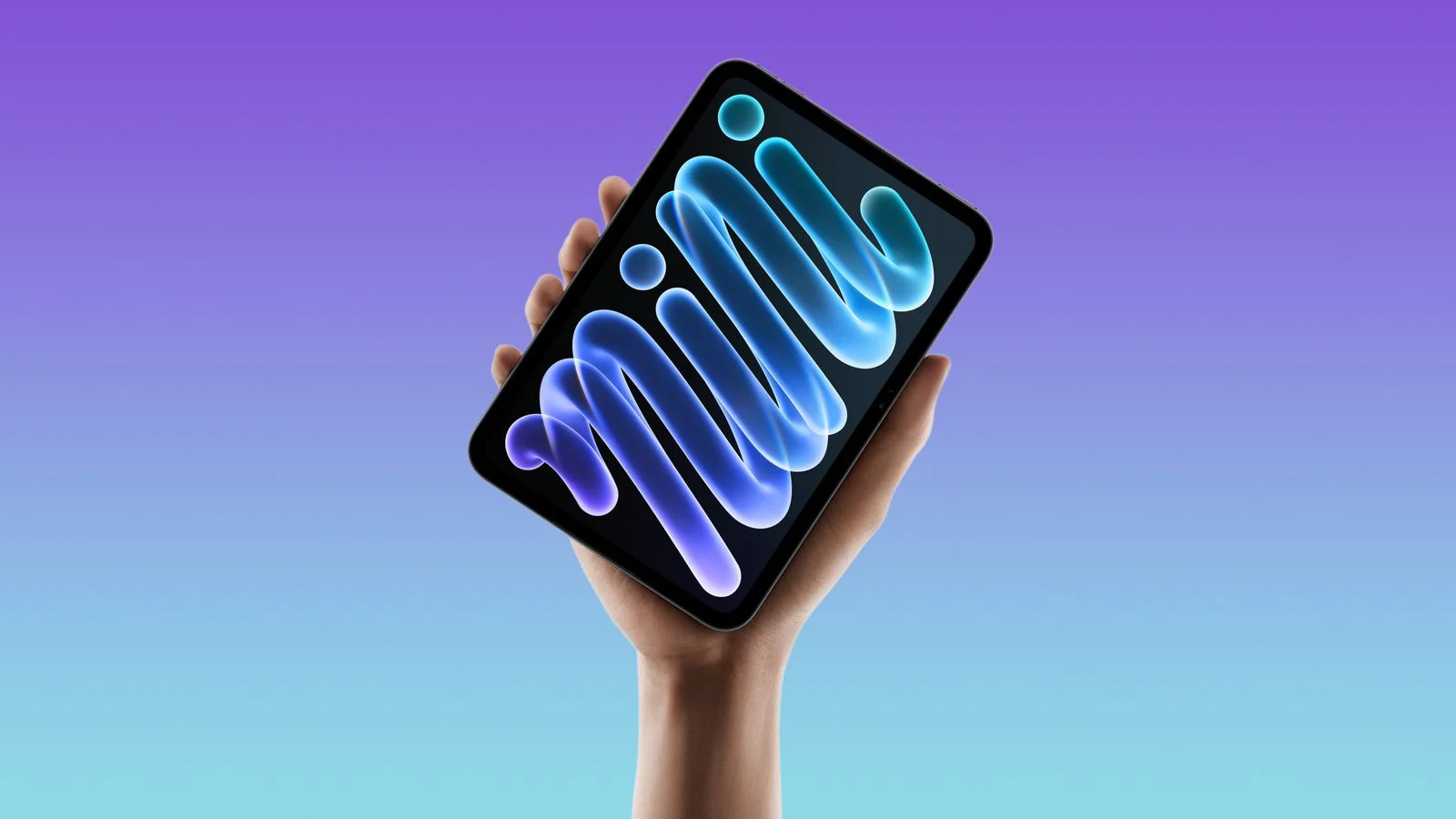
Apple’s new iPad mini finally has the OLED screen fans have wanted for years, but it stops short of the one display feature many buyers were watching for. The 8.5-inch panel runs at a fixed 60Hz, with no ProMotion, and Apple is now openly defending that choice.
ProMotion, which lets a display shift between 10Hz and 120Hz depending on what’s on screen, remains limited to the iPad Pro within Apple’s tablet lineup. That gap is getting harder to justify. Apple has offered ProMotion on the iPad Pro since 2017, has since extended 120Hz to the standard iPhone 17, and plenty of Android tablets at lower prices ship with high refresh rate screens as standard.
Speaking in a YouTube interview with creator Christopher Lawley, Apple’s vice president of hardware design, David Pakula, argued that a display shouldn’t be judged on refresh rate alone. His case rests on pixel response time. According to Pakula, OLED pixels switch more than ten times faster than those on an LCD, which cuts motion blur noticeably compared with the outgoing iPad mini. Combined with gains in contrast, brightness and color, he believes the overall result outweighs the missing spec.
There is something to that. Pixel response and refresh rate are separate measures, and a quick-switching OLED at 60Hz will look cleaner in motion than a slower LCD at the same rate. But faster pixels don’t add frames. Scrolling, animations and Apple Pencil input still update 60 times per second, and anyone who has used a 120Hz iPhone or iPad Pro will likely feel the difference straight away.
The rest of the screen upgrade is substantial on paper. Apple lists peak brightness at 600 nits for standard content, up from 500 nits, rising to 1,200 nits for HDR. The contrast ratio is rated at 2,000,000:1, since OLED pixels switch off fully to produce true black. Pixel density holds at 326 pixels per inch, with P3 wide color support carried over. A nano-texture finish is also available.
Beyond the display, the tablet brings an A20 Pro chip, a thinner and lighter body, IP67 water and dust resistance, a landscape front camera, a speaker system that does away with visible grilles, and Apple’s N1 chip with Wi-Fi 7 and Bluetooth 6.
Pre-orders are open now, with US pricing starting at $699 and availability from November 6. That’s a steep climb from the $499 starting price of the previous model, and at that level, buyers may reasonably expect a 120Hz panel to be part of the package. Whether Apple saves ProMotion as the headline upgrade for the next iPad mini is a question it hasn’t answered.