


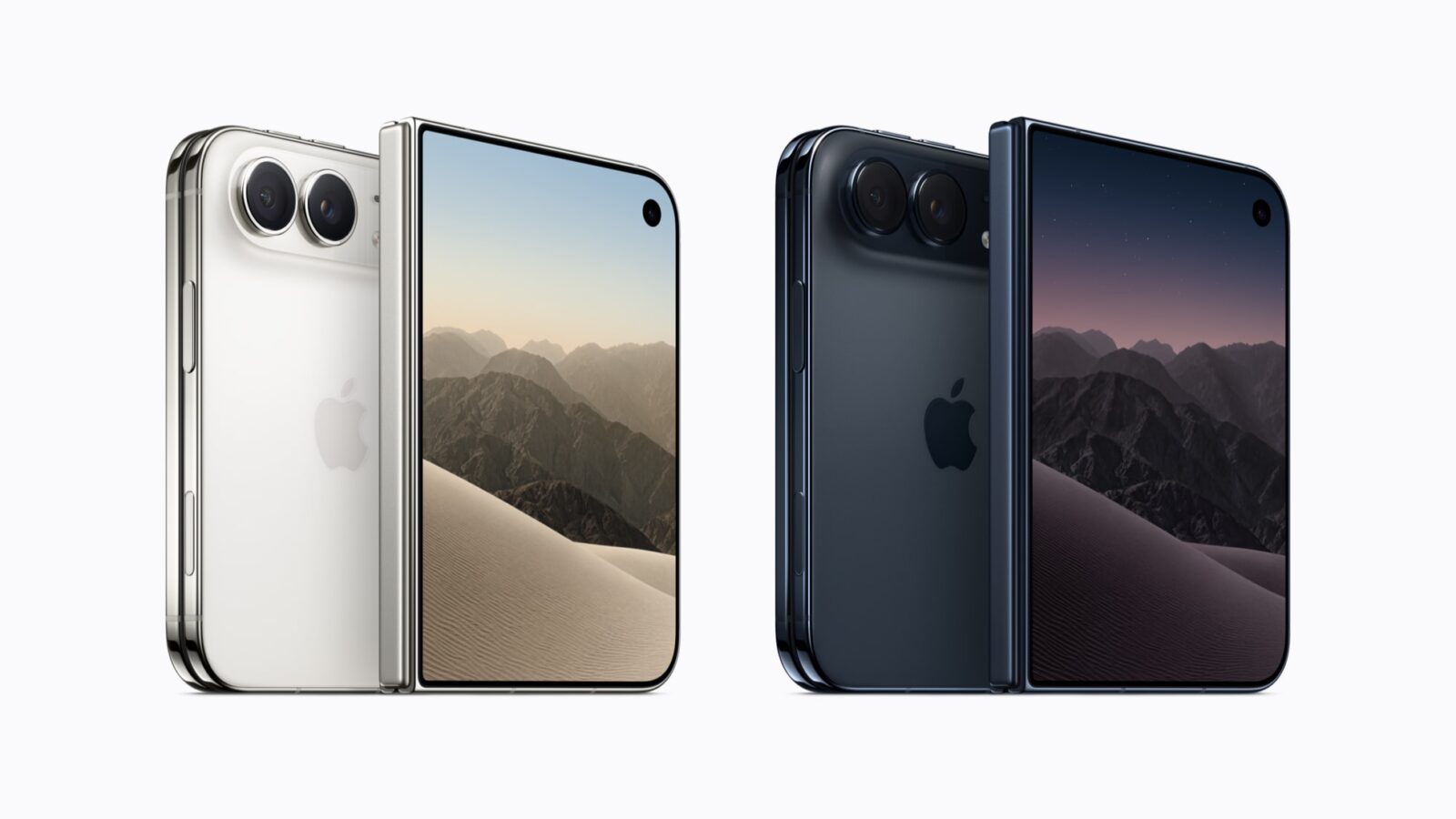
Apple’s first foldable iPhone is already a major departure from the familiar slab-shaped smartphone, but the thinking behind the iPhone Duo apparently started with something decidedly less futuristic: a notebook.
Apple’s design team has offered more detail on how it approached the iPhone Duo, including the physical proportions, hinge behaviour and software experience that connects its external and internal displays. The goal appears to have been less about making an iPhone that happens to fold and more about ensuring that opening it feels like expanding the device already in your hand.
Vice President of Industrial Design Molly Anderson said notebooks influenced the hardware because their compact, familiar format offers a useful reference for something designed to provide more working space without becoming awkward to carry.
That thinking extends to some surprisingly specific geometry. The iPhone Duo’s proportions are based on the international A-series paper system, meaning its overall proportions remain consistent between its folded and unfolded states. Apple has also developed a hinge with variable resistance, designed to make the Duo relatively easy to begin opening before encouraging it to remain fully open and flat.
The bigger challenge may be software. Foldable phones have existed for years, so Apple isn’t entering unexplored territory. What it needs to demonstrate is that its interpretation of the category can make the transition between phone and larger-screen device feel unusually coherent.
Vice President of Human Interface Design Steve Lemay explained that controls were deliberately kept recognizable and in predictable locations when moving between displays. The transition animation reinforces that idea by making the inner screen appear to expand from beneath the external display rather than presenting users with an abruptly different interface.
Interestingly, Apple looked beyond the iPhone when developing that experience. Lemay identified both the iPad and Mac as influences, suggesting the Duo is effectively borrowing interface concepts from across Apple’s established computing platforms.
That could become particularly important once third-party developers get involved. Apple expects developers to discover applications for the foldable format that its own designers have not anticipated, potentially influencing how the product evolves after launch.
It is a sensible admission because foldable hardware alone no longer guarantees novelty. The iPhone Duo enters a category that already has years of experimentation behind it, leaving Apple to prove that its combination of hardware, interface design and developer ecosystem can justify arriving relatively late.
The iPhone Duo launches October 23, with pre-orders opening October 16.