
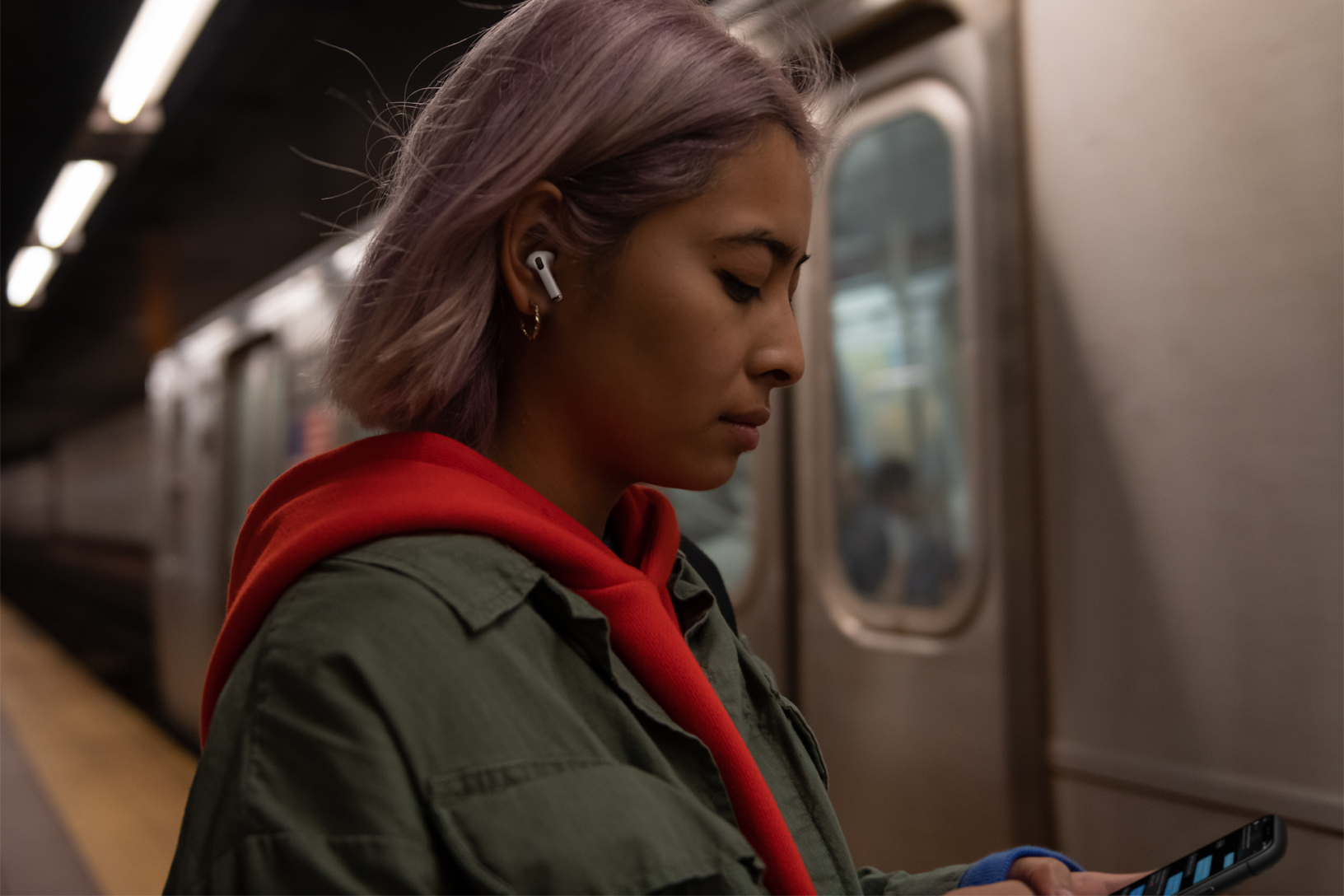
Apple may be preparing to give future AirPods something earbuds have never really needed before: cameras. The idea sounds excessive until you look at where the company appears to be taking Siri and its wider wearable strategy.
Reports suggest Apple is developing AirPods equipped with infrared cameras or sensors that can understand the environment around the wearer. These would not necessarily work like conventional cameras for shooting photos and videos. Instead, their purpose could be to give Siri and other AI features a better sense of what is happening nearby, potentially allowing the earbuds to respond to objects, gestures and spatial information.
That could make future AirPods considerably more useful as an AI interface. Today, voice assistants mostly depend on what users tell them. Cameras and environmental sensors could let an assistant work with additional context, creating interactions closer to the emerging concept of visual intelligence already appearing across smartphones and smart glasses.
Apple has been gradually pushing AirPods beyond their original role as wireless headphones. Recent models have introduced hearing-focused features, while heart-rate monitoring has extended the product into fitness tracking. Adding visual or spatial sensing would move AirPods another step toward becoming wearable computers rather than straightforward audio accessories.
There are obvious technical benefits. A pair of camera-equipped AirPods could potentially help Siri understand where the wearer is looking, identify surrounding objects or improve spatial interactions without requiring someone to pull out an iPhone. The same sensing technology could also complement Apple’s reported smart glasses plans, giving the company multiple wearable devices capable of feeding contextual information into its AI systems.
The privacy questions, however, are considerably harder to ignore.
Apple is reportedly wrestling with similar concerns around its planned smart glasses. Rival products have already demonstrated how uncomfortable camera-equipped wearables can make people who do not know whether they are being recorded. Meta’s Ray-Ban glasses, for example, use a visible indicator when recording, but that has not ended concerns about discreet filming or attempts to obscure the notification light.
AirPods could make the issue even more sensitive simply because they are already everywhere. Earbuds attract far less attention than smart glasses, and putting cameras or camera-like sensors inside them could make it difficult for bystanders to know what information a device is collecting.
Apple could reduce those concerns by limiting the hardware to infrared sensing rather than traditional photography, processing information on-device and preventing the system from storing identifiable footage. Reports around Apple’s broader wearable plans suggest the company is considering precisely those kinds of safeguards, although nothing has been officially announced.
That distinction will matter. An infrared sensor helping Siri understand a room is very different from a camera silently recording everyone inside it, even if both technologies can be described loosely as “camera-equipped AirPods.”
Apple has built much of its consumer reputation around privacy, so any move into always-aware wearables will put that positioning under unusual pressure. Making Siri understand the world around you could finally make the assistant more useful. Convincing everyone else in the room that they are not being watched may prove to be the harder engineering problem.