
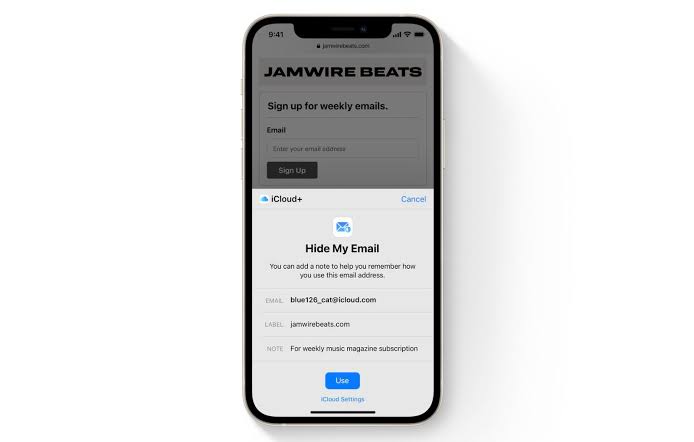
Apple has reversed a planned change to Hide My Email after criticism from users and developers, deciding that iCloud+ aliases will continue using the standard icloud.com domain instead of moving to a separate private.icloud.com address.
The company had announced the change in June as part of a broader effort to align Hide My Email and Sign in with Apple under a shared domain. Under the original plan, new aliases created through both services would eventually use private.icloud.com.
That might have looked like a tidy technical change, but it carried a meaningful privacy trade-off.
Hide My Email currently creates random aliases that forward messages to a user’s real inbox. Because those aliases use the same icloud.com domain as ordinary iCloud email addresses, websites cannot easily block them at the domain level without also risking disruption for legitimate iCloud users.
Moving the service to private.icloud.com would have made those aliases much easier to identify. That, in turn, could have given websites and online services a simple way to reject people who use Hide My Email instead of handing over their real address.
Apple has now abandoned that part of the plan. The company says Hide My Email addresses will remain on icloud.comafter it reviewed community feedback.
Sign in with Apple is still changing, however. New relay addresses created through that service will move from privaterelay.appleid.com to private.icloud.com later this year. Existing relay addresses will continue to work and forward messages as before.
That distinction is important because the two services solve slightly different problems. Sign in with Apple is tied to account authentication and already uses a clearly identifiable relay domain. Hide My Email, by contrast, can be used much more broadly for forms, shopping, newsletters and other situations where a user simply does not want to disclose a primary address.
Apple is advising developers that support Sign in with Apple to update email validation systems, allowlists and account logic so that private.icloud.com is accepted alongside the older privaterelay.appleid.com domain.
The reversal is a relatively small infrastructure decision, but it shows how easily privacy tools can lose effectiveness when their technical implementation makes them simple to detect. Hide My Email works best when websites have little incentive or ability to discriminate against users who enable it.
Keeping the aliases on icloud.com preserves that ambiguity. In this case, user pushback appears to have convinced Apple that a cleaner backend arrangement was not worth weakening one of iCloud+’s more practical privacy features.